





Credit cards that don’t charge interest — ever — have carved out a niche in recent years. Different from cards that offer only one-time 0% intro APRs, these cards don't even allow you to carry a balance, making it difficult to fall into a debt spiral. That built-in guardrail is typically best for credit beginners or second-chance seekers who can't qualify for more traditional cards.
Of course, even with traditional cards that do have an APR, interest charges are avoidable if you pay off the balance in full every month. But when you're just learning how to manage credit, that may be easier said than done.
Still, there's usually a trade-off with these newer cards: You may need to link a bank account, or pay a monthly fee that could end up being more expensive than interest. You may not get a very big credit limit, or you might face limits on where you can use the card. The card may not feature comprehensive credit reporting or may not offer an upgrade path. It might even be invite-only.
But if you think you'd benefit from some credit-management training wheels, here are some credit cards that don't charge interest.
Cards that require a linked account
Secured Chime Visa® Credit Card
The $0-annual-fee Secured Chime Visa® Credit Card charges no interest, and it doesn't require a credit check or minimum security deposit upfront. It reports your payments to all three major credit bureaus, and it even earns rewards if you meet certain requirements.
A Chime Checking Account is required to be able to spend with the card. The amount you add is the amount you have available for spending.
Note that there's no upgrade path to a better card from Chime when you're ready.
See more from Chime®
Chime says the following:
The secured Chime Visa® Credit Card is issued by The Bancorp Bank, N.A. or Stride Bank, N.A., pursuant to a license from Visa U.S.A. Inc. and may be used everywhere Visa credit cards are accepted. Please see the back of your card for its issuing bank.
Based on a representative study conducted by Experian® in Sept 2025, the top 10% of members who made their first purchase with Credit Builder, an earlier version of Secured Chime Visa® Credit Card, between April and August 2024, observed a FICO® Score 8 increase of 71 points after approximately 8 months. Average increase of 28 points across all participants in the study. Credit score improvement not guaranteed. Paying on time may increase your score, while late payment may decrease your score. Other credit activity can impact your score. Credit score is one of many factors creditors may consider in evaluating credit applications.
On-time payment history can have a positive impact on your credit score. Late payment may negatively impact your credit score. Chime will report your activities to Transunion®, Experian®, and Equifax®. Impact on your credit may vary, as Credit scores are independently determined by credit bureaus based on a number of factors including the financial decisions you make with other financial services organizations.
Money added to the Secured Chime Visa® Credit Card will be held in a secured deposit account as collateral for your Secured Chime Visa® Credit Card, and you can spend up to this amount. You can use money deposited in your Secured Deposit Account to pay off your charges at the end of every month.
Out-of-network ATM withdrawal and OTC advance fees may apply. View The Bancorp agreement or Stride agreement for details; see back of card for issuer.
SpotMe® on Credit is an optional, no interest / no fee overdraft line of credit tied to the Secured Deposit Account available to qualifying members with an active Secured Chime Visa® Credit Card. To qualify for the SpotMe on Chime Card service, you must receive $200 or more in qualifying direct deposits to your Chime® Checking Account each month and have activated your physicalSecured Chime Visa® Credit Card or Chime Visa® Debit Card. Qualifying members will be allowed to overdraw their Secured Deposit Account up to $20, but may later be eligible for a higher limit of up to $200 or more based on Chime account history, direct deposit frequency and amount, spending activity and other risk-based factors. The SpotMe on Chime Card Limit will be displayed within the Chime mobile app and is subject to change at any time, at Chime’s or its banking partners’ discretion. Although Chime does not charge any overdraft fees for SpotMe on Chime Card, there may be out-of-network or third-party fees associated with ATM transactions and fees associated with OTC cash withdrawals. SpotMe on Chime Card won’t cover non-card transactions. SpotMe on Chime Card Terms and Conditions.
With qualifying direct deposits, earn 5% cash back as a Chime Prime member or 2% cash back as a Chime Plus member on up to $1,500 of eligible Secured Chime Visa® Credit Card purchases. See the Secured Chime Visa® Credit Card - Cash Rewards Program Addendum for limitations and details on earning cash back on your monthly selected category.
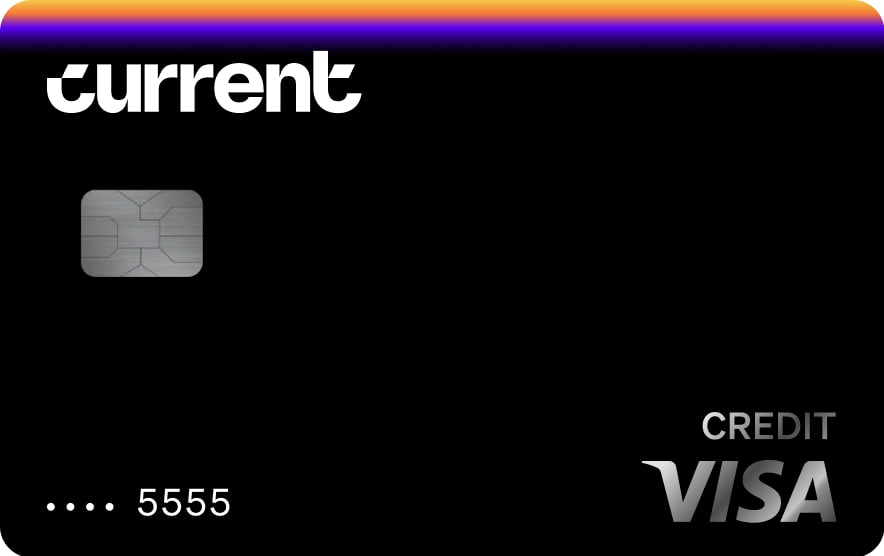
Current Build Card
The Current Build Card has no APR and charges an annual fee of $0 (see terms). There's no credit check or minimum security deposit, and it reports to the three main credit bureaus. It's also possible to earn rewards with the card if you meet specific criteria.
You'll need to open a Current account to get the card, and the money in that account serves as your security deposit and credit limit.
There's no way to upgrade to a different Current card.
Varo Believe Secured Credit Card
The $0-annual-fee Varo Believe Secured Credit Card doesn't charge interest, doesn't require a credit check, and doesn't have a minimum security deposit requirement. It reports to all the major credit bureaus, and it's possible to earn limited rewards through card-linked offers with select merchants.
To be eligible for the Varo card, you must have a Varo account, which allows you to set the card's credit limit. The account doesn’t charge a fee, but you'll need to have received direct deposits of at least $200 in the past 31 days to qualify.
There's no upgrade path.
Cred.ai Card
The $0-annual-fee Cred.ai Card (aka the "Unicorn Card") isn't as simple to grasp as other cards given the company’s marketing jargon. What you need to know is that you can avoid interest charges when the card is paired with a Cred.ai deposit account. The money in that account sets your spending limit on the card, and having the account also enrolls you in automatic payment and the "Cred.ai Guaranty," which covers any interest or fees you might otherwise incur if autopay were to fail for some reason.
There's no upgrade option, and unlike some other cards on this list, this one doesn't earn rewards. But there's no credit check, and it reports payments to all three major bureaus.
Cards with no Social Security number requirement
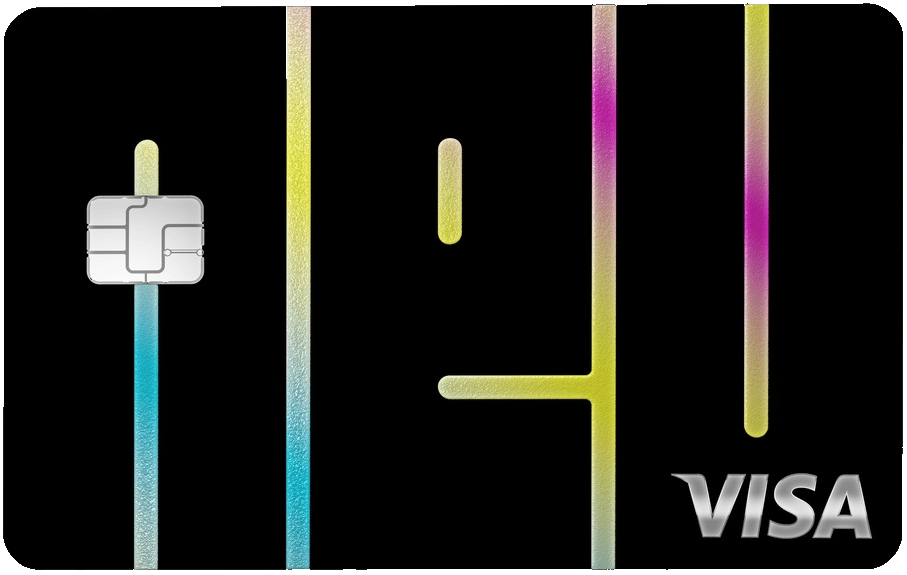
Neu Card 1
The Neu Card 1 doesn't charge interest, but it has an annual fee of $84 ($7 monthly fee). Still, it might be a good fit for international applicants because, unlike most other cards, you don't need a U.S. credit history or Social Security number to qualify. The card also earns 3% cash back on air travel purchases, and travel rewards are a rare feature on a card meant for beginners.
The Neu Card 1 also reports payments to the three credit bureaus. And while there is a version of the card — the Neu Card 2 — that doesn't charge a monthly or annual fee, you can't upgrade to it. (And that version does indeed charge interest.)
Other cards that require a monthly or annual fee
Grow Credit Mastercard
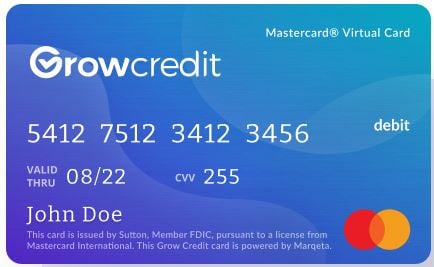
The Grow Credit Mastercard can help you build credit when you use it to pay for qualifying subscription services like Netflix, Spotify, etc. (Typically, those kinds of payments aren't factored into your credit reports.) The card doesn’t charge interest, but it does require a monthly membership fee, which ranges from $3.99 to $12.99. The more expensive the plan, the higher the spending limit you'll have and the more subscriptions you'll be allowed to pay with it. The card reports to all three credit bureaus.
There's no credit check and you don't need to open a separate account with Grow Credit. But you will need to link an existing bank account through a third-party service (Plaid) to determine your eligibility for the card.
Note, too, that you won't be able to use the card for anything that's not included in your membership plan. There's also no upgrade path to a better card with Grow Credit.
TD Clear Visa Platinum Credit Card
The TD Clear Visa Platinum Credit Card is the rare card from a traditional bank — not a startup or fintech — that doesn’t charge interest. But it’s also among the most expensive on this list, and it doesn't earn rewards to help offset some of that cost.
Instead of an APR, you'll owe a monthly fee that can range as high as $20. The higher the fee, the higher the credit limit. (The credit limit you receive is based on your creditworthiness, so there will be a credit check.) The card doesn't charge a late-payment or foreign transaction fee.
Just keep in mind that as with other cards on this list that charge monthly fees, you'll owe that amount regardless of whether you actually use the card for purchases.
Ava Credit Builder Card
The Ava Credit Builder Card doesn't charge interest and doesn't require a credit check. But there's a cost involved, and you'll face limits on where you can use it and how much you can spend with it. It’s linked to a membership service that gives you access to Ava products for $96 annually ($8 per month) if you pay upfront. If you choose not to pay upfront, the cost is $10 per month.
The card limits your spending to the Ava store and Ava-approved merchants. It reports payments to the three major credit bureaus, but there's no upgrade path to a better product from Ava when you're ready to move on.
Super.com Card
The Super.com Card is a secured card that doesn't charge interest and doesn't require a credit check. You'll need to connect a debit card or bank account and use it to fund your Super.com deposit account, which determines your credit limit with the card.
Technically, the card doesn't charge an annual fee, but to get it, you'll need a Super+ membership. and that costs $15 per month. Membership includes things like discounts in certain spending categories and other perks. It does earn modest rewards, and payments are reported to the three major credit bureaus. But there's no upgrade path to other Super.com products.
Kikoff Credit Card
The Kikoff credit card is a secured card that has no APR, but it requires a paid Kikoff subscription. The Kickoff Premium plan costs $20 per month, and the Ultimate plan is $35 per month. Both of these plans offer different credit-building features, including payments reported to all three main credit bureaus if you deposit enough.
As with other cards on this list, you'll need to link a funding source for the card, and the amount you deposit becomes your credit limit. There is no upgrade path to a different Kikoff card once you're ready.
Atlas Card
The Atlas Card is predictable because instead of interest, it charges a membership fee of $8.99 per month (you can save $18.88 on fees by paying $89 annually). It requires a deposit account held by Evolve Bank & Trust, which you can fund with an external bank account connected through Plaid. The card's spending limit is determined by the amount of money available in the account.
It reports payments to all three major credit bureaus, and it also offers rewards that vary based on membership tier. (The higher the tier, the bigger the rewards.)
As of this writing, though, the Atlas Card isn't available in Nevada, South Dakota or Vermont.