Trovy, a financial technology platform that offers home equity lines of credit (HELOCs), also provides borrowers with the $0-annual-fee Trovy Card. Issued by Cross River Bank, it’s a credit card you can use wherever Mastercard is accepted, providing a way to tap into your home equity for purchases.
As its name implies, a home equity line of credit allows you to borrow against your equity in your home — that’s the value of your home minus what you still owe on your mortgage. HELOCs charge lower interest rates than credit cards because they’re secured loans. In other words, there’s an asset for the bank to seize if you don’t make payments.
Because the Trovy Card is connected to a HELOC, it’s not an unsecured credit card, and that means it also charges lower interest rates (5.59% to 14.24% as of June 2026). And it’s not the only HELOC card around. Another one, the Aven Credit Card, shares some similar features.
There can be advantages to using a HELOC, but you’re putting your home at risk if you’re unable to repay what you’ve borrowed. Though Trovy offers a simple application process, it’s important to first consider whether a HELOC is a good option for your situation.
Here are five things to know about the Trovy Card.
1. Your home equity is your collateral
The Trovy Card can be used for purchases and cash advances, and in both instances you’d be borrowing against your HELOC.
Because credit limits are based on your home equity (in addition to your credit history and other financial information), they can be quite large compared to unsecured credit cards. With the Trovy Card, you can get a credit limit of $10,000 to $250,000. The interest rate varies, but it’ll be between a minimum of 5% and a maximum of 18%.
2. The card earns cash back
The Trovy Card offers:
2% cash back on home-related purchases.
1% cash back on all other purchases.
You can redeem points for a statement credit, or a deposit into a bank account, at a value of 1 cent per point. Other redemption options may be available, but point values can vary.
3. You can use your HELOC to pay off other debts
While a HELOC is often used to help fund home improvement projects, it can also be used to consolidate other debts and pay them off at a lower interest rate.
Trovy allows you to opt into applying HELOC funds toward credit cards or personal loans during the application process. (Other loans — such as mortgages, auto and student loans — are not eligible.)
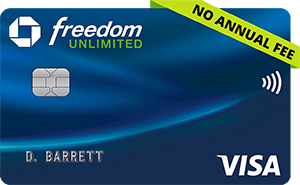
There’s a 3% balance transfer fee if you do this, which will be added to your HELOC balance. While that's a reasonable fee, you can find credit cards with similar fees that feature lengthy 0% intro APR promotions on transferred balances. The $0-annual-fee Chase Freedom Unlimited®, for example, offers a 0% intro APR on purchases and Balance Transfers for 15 months, and then the ongoing APR of 18.24%-27.74% Variable APR. The balance transfer fee is 3% or $5, whichever is greater, in the first 60 days; 5% or $5, whichever is greater, after that.
The Chase Freedom Unlimited® also earns cash-back rewards on eligible spending.
4. There are eligibility requirements
Trovy HELOCs require a minimum credit score of 640. Your combined loan-to-value ratio (how much you’re borrowing against your home compared to its value) and debt-to-income ratio also have caps.
Certain types of properties are ineligible, including co-ops, mobile homes, commercially-zoned real estate, multifamily properties, manufactured houses, mixed-use properties and raw land. Otherwise, primary and secondary residences, and investment properties, can be eligible, but they must be valued at $100,000 or more. Properties can’t be held in LLCs or business entities.
Trovy HELOCs aren’t available in every state.
5. There’s a fixed-rate installment plan option
The interest rate on the Trovy Card is variable, but you can convert a balance of $100 or more into a fixed-rate installment plan. Loans are available with terms ranging from five to 25 years.