Bilt Rewards and Chase Ultimate Rewards® both let you turn everyday spending into points you can redeem for travel at a set rate or transfer to frequent flyer and hotel loyalty programs, often with a chance to get more value.
Chase has built its reputation with a broad lineup of travel cards, strong welcome bonuses and familiar transfer partners. Meanwhile, Bilt offers a smaller set of cards, the ability to earn points on rent and mortgage payments, and a deep bench of transfer partners.
Both programs bring real strengths to the table, and plenty of people carry cards from both rather than choosing one. Which one ends up mattering more for you depends on your spending, travel habits and preferences.
An overview of Bilt Rewards vs. Chase Ultimate Rewards®
Both Bilt Rewards and Chase Ultimate Rewards® are transferable currencies, which means you're earning one flexible currency, not miles or points tied to a single rewards program.
You can move them to a partner program instead, and depending on how you plan your redemptions, you can get much more value than sticking with the base programs. Here's where each program shines, and where it comes up short.
Bilt Rewards
Bilt Rewards is best known as the only major rewards program that lets you earn points on rent and mortgage payments without paying a transaction fee. All three Bilt credit cards allow you to earn up to 1.25 points per dollar spent on your housing payments.
Bilt also runs one of the biggest transfer networks around, with 18 airline programs and seven hotel programs, almost all of them at a 1:1 ratio. Atmos Rewards, which is a shared loyalty program for Alaska Airlines and Hawaiian Airlines, doesn't currently partner with any other major rewards program. Alternatively, you can book travel through Bilt Rewards at a redemption rate of 1.25 cents per point.
The catch is that Bilt's card lineup is brand new and still finding its footing. Bilt relaunched its credit cards in January 2026, swapping out the original no-fee Wells Fargo card for three new cards serviced by Cardless, with annual fees ranging from $0 to $495.
Maximizing your rewards on housing payments requires you to pick between two different earning structures, and figuring out which one nets you more points can be a challenge. For people who just want a card that works without extra homework, that complexity alone could be enough to look elsewhere.
How the cards compare
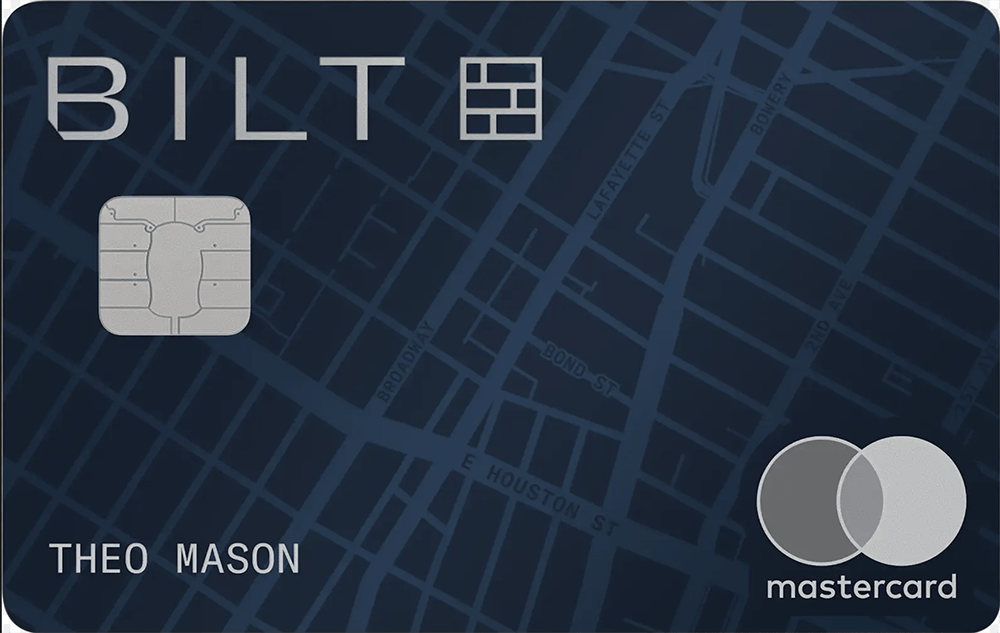
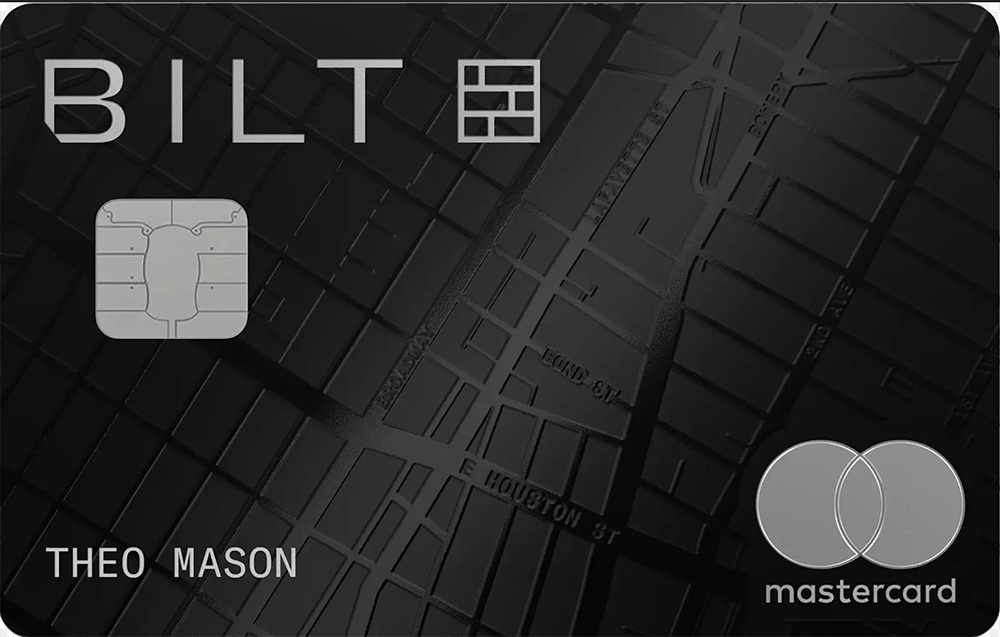
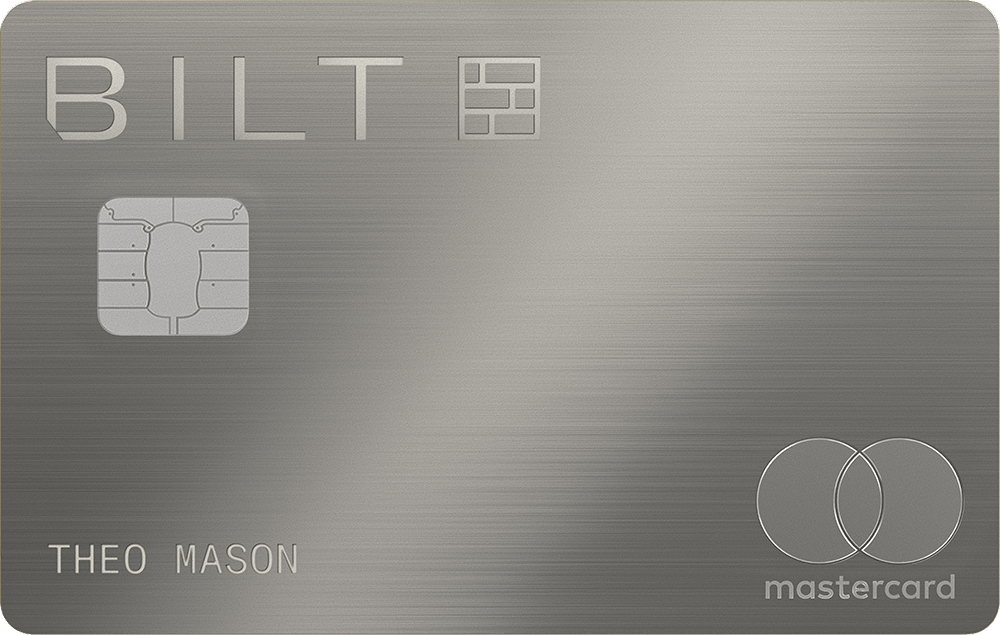
Annual fee
- $0
- $95
- $495
Bilt Points on rent/mortgage payments
Bilt Points on other spending
- 1x points on everyday purchases. (You'll also earn 4% back in Bilt Cash on these purchases, if you choose that option.)
- 3x points on your choice of dining or grocery (on up to $25K in spending per year in the grocery category). Your choice category may be changed once a year.
- 2x points on travel.
- 1x points on everyday purchases. (You'll also earn 4% back in Bilt Cash on these purchases, if you choose that option.)
- 2x points on everyday purchases. (You'll also earn 4% back in Bilt Cash on these purchases, if you choose that option.)
Welcome offer
Anniversary bonus
Additional perks
- Multiple transfer partners.
- Multiple transfer partners.
- $100 Bilt Travel portal hotel credit, split semi-annually, per calendar year. (Minimum two-night stay required.)
- Multiple transfer partners.
- $400 Bilt Travel portal hotel credit, split semi-annually, per calendar year. (Minimum two-night stay required.)
- Access to participating Priority Pass lounges and landings. (Two guests allowed on every visit.)
Authorized user fee
APR
Foreign transaction fee
- $0
- $0
- $0
Chase Ultimate Rewards®
Chase Ultimate Rewards® has been around far longer, with a wider bench of well-known cards to show for it. The Chase Sapphire Preferred® Card (annual fee: $95) and Chase Sapphire Reserve® (annual fee: $795) anchor the personal side.
The Chase Freedom cards also earn Ultimate Rewards® points, though they can't transfer those points on their own. Pair one with a card that does, and you can combine the points and send them to a partner from there.
Chase has 14 transfer partners, including 10 airlines and four hotels, and it's a mix of household names like Southwest, United, Hyatt and Marriott alongside a few international carriers, like Aer Lingus and Iberia. Most transfer at a 1:1 ratio.
Booking travel through Chase nets you just 1 cent per point, but some cards offer a Points Boost feature that can push certain Chase Travel bookings up to 1.5 or 2 cents per point.
How the cards compare


Annual Fee
Earn rates
• 5x points on all Chase Travel℠ purchases (exclusions apply).
• 5x on Lyft rides and Peloton equipment (for a limited time; terms apply).
• 3x points on dining, takeout and eligible delivery worldwide.
• 3x points for online grocery purchases (exclusions apply).
• 3x points for vacation homes booked through platforms like Airbnb and Vrbo.
• 3x points on gas and EV charging.
• 3x points on some streaming services.
• 2x points on all other travel.
• 1x point on all other purchases.
• 8 points per $1 spent on all travel booked through Chase.
• 4 points per $1 spent on bookings directly through an airline or hotel.
• 3 points per $1 spent on dining, takeout and eligible delivery worldwide.
• 1 point per $1 spent on all other purchases.
Redemption bonus
Travel credits
- $100 in statement credits every account anniversary toward hotel stays purchased through Chase's travel portal.
- Up to $500 in credit for The Edit (Chase’s high-end hotel portal). This comes in the form of two $250 credits a year.
- $300 annual travel credit.
- $120 in Lyft credit, available at $10 a month, through Sept. 30, 2027.
Other travel benefits
- Travel protections, including auto rental collision damage waiver and baggage delay insurance.
- Statement credit for Global Entry, TSA PreCheck or NEXUS application fee every four years.
- No foreign transaction fees.
- Chase Sapphire Lounge and Priority Pass Select lounge access.
- Statement credit for Global Entry, TSA PreCheck or NEXUS application fee every four years.
- Travel protections, including auto rental collision damage waiver and baggage delay insurance.
- Complimentary IHG One Rewards Platinum Elite status through Dec. 31, 2027.
- No foreign transaction fees.
Other benefits
- Up to $120 in DoorDash promos, in the form of one $10 promo on non-restaurant orders each month.
- Complimentary DashPass for at least one year when you activate through Dec. 31, 2029.
- Up to $300 in credit at restaurants in the Sapphire Reserve Exclusive Tables program. This, too, comes as two separate credits — $150 in each half of the year.
- Up to $300 in statement credit for StubHub, in the form of two $150 credits a year through Dec. 31, 2027. Enrollment required.
- Complimentary Apple TV and Apple Music subscriptions through June 22, 2027.
- Up to $120 in credit toward Peloton membership, available at $10 a month, plus you earn 10 points per dollar on eligible Peloton purchases through Dec. 31, 2027.
- Up to $420 in DoorDash promos, in the form of two $10 promos on non-restaurant orders and one $15 promo on a restaurant order each month. Promotion runs through the end of 2029.
- Complimentary DashPass for at least one year when you activate through Dec. 31, 2027.
Still not sure?
Choosing between Bilt and Chase points
Neither program wins across the board. Which one earns you more value depends on how you spend, what kind of trips you book, and how much complexity you're willing to put up with to squeeze the most value out of your travel rewards.
Start with the card
With Chase, the math is fairly straightforward. Pick a card that offers point transfers based on your top spending categories and perks you'll actually use. If you want to go all-in on Ultimate Rewards®, you can round out your wallet with other Ultimate Rewards® cards that earn stronger rewards in different categories.
For example, you can use the Chase Sapphire Preferred® Card for dining, gas, streaming services and online grocery purchases, the Chase Freedom Flex® for its rotating 5% categories on up to $1,500 in combined purchases every three months you activate, and the Chase Freedom Unlimited® for its base 1.5% rewards rate. Chase makes it easy to pool all of your points earned with each card into one account and then transfer to partners from there.
If you travel a lot and want airport lounge access thrown in, the Chase Sapphire Reserve®'s benefits — such as a $300 annual travel credit, airport lounge access, and a host of lifestyle credits and perks — can offset a meaningful chunk of that annual fee.
With Bilt, the math starts with how much of your monthly budget goes toward rent or a mortgage. Bilt's housing rewards make the most sense for people who already pay several thousand dollars a month in rent or a mortgage and want a low-effort way to turn that expense into points — though figuring out which path to take to maximize rewards is a bit complex.
The $0-annual-fee Bilt Blue Card is a reasonable entry point, with decent bonus rewards on dining with Bilt partner restaurants and on hotels and flights booked through the Bilt Travel Portal. At the other end, the Bilt Palladium Card charges a $495 annual fee and offers a minimum of 2 points per dollar on everyday spending, plus $400 in annual Bilt Travel hotel credits and Priority Pass lounge access, which can offset a good chunk of that fee.
Compare transfer partners
On average, transferring to an airline or hotel partner gets you the most value out of either currency. Here's how the two sets of cards stack up:
Complete list of Bilt transfer partners
British Airways Club (Avios).
Preferred Hotels I Prefer.
Full list of Chase transfer partners
Airlines
Aer Lingus (1:1 ratio).
Air Canada (1:1 ratio).
Air France-KLM (1:1 ratio).
British Airways (1:1 ratio).
Iberia (1:1 ratio).
JetBlue (1:1 ratio).
Singapore (1:1 ratio).
Southwest (1:1 ratio).
United (1:1 ratio).
Virgin Atlantic (1:1 ratio).
Hotels
Hyatt (1:1 or 4:3 ratio; varies by card).
IHG (1:1 ratio).
Marriott (1:1 ratio).
Wyndham (1:1 ratio).
Bilt has considerably more transfer partners than Chase, and nearly every Chase partner is also a Bilt partner. The only two Chase has that Bilt doesn't are JetBlue TrueBlue and Singapore Airlines KrisFlyer.
Weigh your other redemption options
Transferring to a partner program is usually the best use of either currency, but it's not the only option.
Chase generally wins on flexibility here. Every card that earns Ultimate Rewards® points — not just the three that transfer — allows you to redeem rewards for cash back or statement credits at a flat 1 cent per point. Chase's travel portal also offers at least 1 cent per point toward flights, hotels and rental cars, and the Points Boost feature can push select bookings up to 1.5 cents or even 2 cents, depending on your card.
Bilt, on the other hand, doesn't allow cash redemptions. You can use your points to book travel through Bilt at a rate of 1.25 cents per point, beating Chase's baseline rate. Beyond travel, you can also redeem points to cover an upcoming rent or mortgage payment, pay down student loans with several major servicers, buy gift cards, shop with Amazon or Lyft or put money toward a home down payment at a rate of 1.5 cents per point. However, most other options tend to be worth less.
You don't have to pick just one
You don't have to settle on one program and stick with it forever. Someone who rents an apartment or owns a home and travels every so often might get real value out of Bilt's housing rewards feature while still keeping a Chase card for its Points Boost feature and more flexible cash-back option.
Keep track of the annual fees for each card in your wallet to ensure you're getting enough value to offset the cost. It's also important to avoid getting cards with too many overlapping bonus rewards rates and benefits.
How to maximize your rewards
You want a travel credit card that prioritizes what’s important to you. Here are some of the best travel credit cards of 2026:
Flexibility, point transfers and a large bonus: Chase Sapphire Preferred® Card
No annual fee: Wells Fargo Autograph® Card
Flat-rate travel rewards: Capital One Venture Rewards Credit Card
Bonus travel rewards and high-end perks: Chase Sapphire Reserve®
Luxury perks: American Express Platinum Card®
Business travelers: Ink Business Preferred® Credit Card