Any time you fly, you have to decide whether to check a bag, carry one on, or both. Many factors go into the decision, including where you’re going, how long you’ll be gone and who’s traveling with you. The main differences include size limitations and your access to the bag during the flight.
A carry-on bag goes on the plane with you and must fit in the overhead compartment. Checked luggage is relinquished to the airline at the airport and stored in the plane’s cargo hold area, which is inaccessible to you during your flight. When the flight lands, if you only packed a carry-on, you walk off the plane with it and you're set to start (or end) your vacation. If you checked luggage, you'll need to head to baggage claim to retrieve it.
Here are some differences between the two types of luggage, plus questions to ask when weighing the pros and cons of checked baggage versus carry-ons.
What is a carry-on bag?
A carry-on bag is a bag you bring with you on the airplane that gets placed in the overhead compartment during the flight. Examples of carry-on bags include a rolling suitcase, a duffel bag or a large backpack.
Airlines publish the maximum dimensions allowed for carry-on bags. For example, American Airlines states that a carry-on bag's dimensions cannot exceed 22 by 14 by 9 inches, including handles and wheels. The carry-on must also fit into the sizer at the airport; if it doesn’t, you'll be required to check it.
What is allowed in a carry-on bag?
In addition to knowing the size restrictions for your carry-on, you also need to know what you can and can’t pack in it since it’s traveling with you in the airplane cabin.
Airline websites list objects you're not allowed to pack in your carry-on. Examples include firearms, scissors with a cutting edge larger than 4 inches and certain tools. If you’re traveling with any of these items, they must packed in your checked luggage.
The items in your carry-on must also comply with the guidelines specified by the Transportation Security Administration (TSA). These guidelines may be stricter than those of the airline.
When you go through security at the airport, the TSA will scan your belongings to ensure you follow the rules. As you pack for your trip, you can check the TSA website for a detailed list of items allowed in a carry-on versus a checked bag.
» Learn more: 14 must-pack items we refuse to travel without
TSA liquid rule
The TSA allows you to bring liquids in containers that hold 3.4 ounces (100 milliliters) or less. They all must fit into one quart-size resealable bag. Anything larger will need to be packed in your checked luggage.
Liquids, aerosols, gels, creams or paste flagged during a TSA scan may require additional screening.


» Learn more: TSA carry-on restrictions you need to know
Carry-on vs. personal item
The difference between a carry-on and a personal item can be blurry. Both are bags you bring with you on the plane and place either in the overhead bin or underneath the seat in front of you.
However, the maximum size for personal items is smaller than that for carry-on bags. For instance, American Airlines states that a personal item must be 18 by 14 by 8 inches or smaller (as compared to the maximum size of 22 by 14 by 9 inches for carry-on bags).
Examples of personal items on a plane include small purses or handbags, briefcases, or laptop bags. You can bring one of these in addition to your carry-on. Diaper bags, breast pumps, child seats, strollers or medical devices do not count as a personal item or carry-on.
» Learn more: 5 tips to succeed at carry-on only travel

By signing up, you will receive newsletters and promotional content and agree to our Terms of Use and acknowledge the data practices in our Privacy Policy. You may unsubscribe at any time.
Are carry-on bags free?
Many airlines will allow you to bring a carry-on bag and personal item for free. However, some airlines may only allow a personal item that fits under your seat for free. Anything larger (e.g. a bag that's too big to fit under the seat but can fit into the overhead compartment) may require extra payment. For example, Allegiant Air allows a small personal item for free (up to 8 by 14 by 18 inches), but charges between $10 and $75 for a carry-on bag (up to 10 by 16 by 22 inches). Basic economy flyers on United Airlines aren't allowed to bring a carry-on bag.
If you're flying on an airline that charges for carry-on bags and you try to bring one without paying, the airline will require you to check it at the gate, and there'll likely be a fee attached.
» Learn more: A quick guide to airlines with free baggage
What is a checked bag?
A checked bag is a piece of luggage you hand over to an airline check-in agent at the airport. It'll be placed in the airplane's cargo hold. Bags can get checked for a variety of reasons. They might be too big to be a carry-on or contain items not allowed to be transported in a carry-on.
Checked bag dimensions
How big can a checked bag be? Although checked bags can be larger than carry-on bags, they also have maximum allowed weights and dimensions. Typically, airlines allow checked bags that weigh up to 50 pounds and whose dimensions (length + width + height) are 62 inches or less.
Airlines allow overweight bags (up to 70 pounds), but you may have to pay extra for heavier baggage unless you’re flying in a premium cabin or have elite status. For example, United allows passengers flying in business class, first class or Polaris, or elite members in any cabin to bring a bag that weighs up to 70 pounds for free.
Overweight bags are accepted by United on a case-by-case basis. Oversized bags are also subject to airline policy and will require an additional payment.
» Learn more: Which airlines have the best (and worst) fees?
How much does it cost to check a bag?
Unlike a carry-on bag, checked bags usually require payment unless you can get an exemption. The fee for checking a bag depends on the airline, your destination and how many pieces you’re checking.
There are ways to avoid paying for a checked bag on other airlines. These include purchasing a ticket in a premium cabin, holding a credit card that allows free checked bags, holding elite status with an airline or using a military discount.
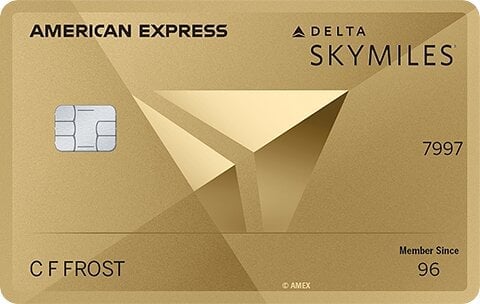
For example, passengers traveling on a Delta flight within the U.S. in main cabin or Delta Comfort have to pay $45 for the first checked bag and $55 for a second checked bag, both of which must be lighter than 50 pounds. Delta elite status holders, active military members and those with an eligible Delta SkyMiles American Express card receive at least one free checked bag, oftentimes more.
Free checked bag credit cards
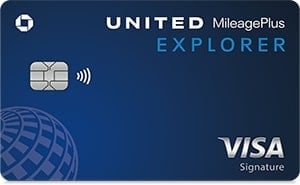
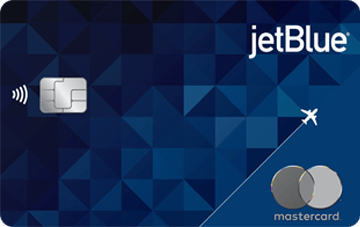
There are many airline cards out there that offer a free checked bag when flying. Here is a sampling of a few of these cards.
Credit cards with free checked bags

Annual fee
Checked bag benefit
Still not sure?
» Learn more: Tips to avoid paying checked baggage fees
How big is your bag and how much do you need to pack?
Now that you know the basics of checked versus carry-on bags, you’ll need to decide what type of bag makes sense for your trip. This probably depends on where you’re going, how long you'll be gone and what kind of trip it is. If you have more to pack than will fit in a carry-on, you’ll need to check your bags with the airline.
How much do you hate waiting in lines?
Going to the airport always means waiting in lines. But your decision between checked bags or carry-ons affects which lines you have to wait in and for how long.
For instance, if you aren’t checking a bag, you can skip the lines at the check-in counter and proceed directly to airport security with your carry-on bag and an electronic ticket. A carry-on bag is just one more item that security personnel may need to search.
If you've checked your bags and aren't traveling with any carry-ons, you could potentially move faster through the TSA lines. However, you will have to wait for your checked bags at baggage claim when you arrive at your destination, instead of just leaving the airport after landing.
» Learn more: What delayed baggage compensation can you get?
Are you ready to lug a carry-on through the airport?
Once you’re past security, your bag choice will affect your airport experience. While waiting for your plane, traversing the airport to catch a connecting flight or visiting an airport lounge, lugging around a carry-on can be a hassle. If you’re traveling by yourself, visiting the restroom is more complicated with carry-on luggage.
Is it better to travel light?
Traveling light could improve your overall waiting time. If you fly with a carry-on only, you won't have to wait at baggage claim for your luggage.
On the other hand, if you’re flying on a smaller regional jet, bringing carry-on luggage may mean a longer wait time. That's because the roll-aboard carry-on you’re used to stowing in the overhead compartment on major airlines may not fit in the overhead compartment of a smaller aircraft. If that's the case, you'll have to check your bag at the gate, which means you'll have to wait after the flight on the jet bridge, crowded in with everyone else who had to gate-check a carry-on.
Carry-on vs. checked bag final thoughts
The difference between a carry-on and a checked bag is more than just the size of the luggage. When deciding which type of bag to bring on your next flight, consider the kind of trip you’re taking, the baggage fees, wait times and your willingness to lug bags.
Carry-on-only travel and checked bags both have pros and cons. Weigh all the considerations to find your sweet spot of cost, time and airport experience to get the best choice for you. If you need to check a bag, and are worried about incurring extra costs, there are plenty of cards that offer a free checked bag on your flight.
For rates and fees of the Delta SkyMiles® Gold American Express Card, please visit American Express' rates and fees page.
How to maximize your rewards
You want a travel credit card that prioritizes what’s important to you. Here are some of the best travel credit cards of 2026:
Flexibility, point transfers and a large bonus: Chase Sapphire Preferred® Card
No annual fee: Wells Fargo Autograph® Card
Flat-rate travel rewards: Capital One Venture Rewards Credit Card
Bonus travel rewards and high-end perks: Chase Sapphire Reserve®
Luxury perks: American Express Platinum Card®
Business travelers: Ink Business Preferred® Credit Card