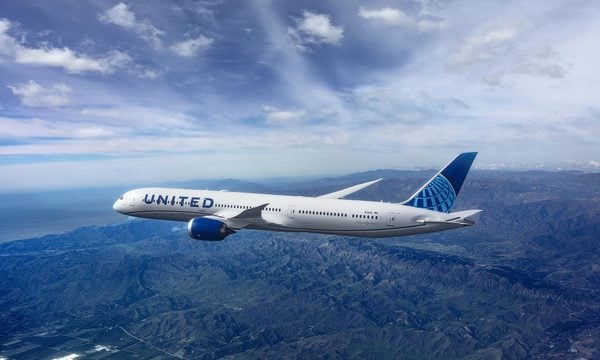
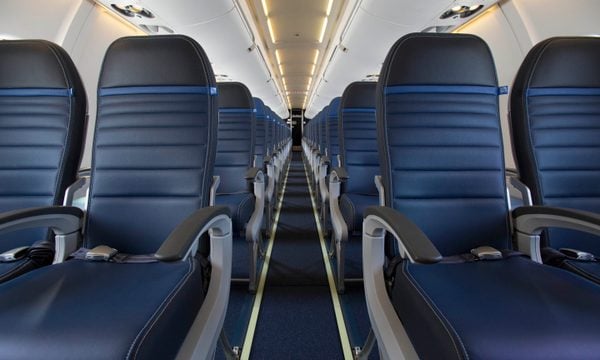
United Airlines and American Airlines are two of the largest carriers in the United States, competing closely with Delta Air Lines for domestic and international travelers. While the two airlines offer similar route networks and in-flight experiences, there are meaningful differences when it comes to loyalty programs, fees, credit cards and overall value.
If you’re deciding which airline to book for your next trip or which rewards program to focus on, here’s how United and American compare.
Where they’re based and where they fly
Winner for route options: United
United
United operates flights to more than 380 destinations globally. Through its membership in Star Alliance, travelers also gain access to flights across more than 1,150 destinations served by partner airlines.
United hub cities include:
Chicago.
Denver.
Houston.
Los Angeles.
Newark, New Jersey.
San Francisco.
Washington, D.C.
» Learn more: United Airlines partners: What to know
American
One of the “Big Three” U.S. airlines, American flies to more than 350 destinations worldwide. It is also a founding member of the Oneworld alliance, which expands its reach to more than 900 destinations through partner airlines.
American hub cities include:
Charlotte, North Carolina.
Chicago.
Dallas-Fort Worth.
Los Angeles.
Miami.
New York.
Philadelphia.
Phoenix.
Washington, D.C.
» Learn more: The complete guide to American Airlines partners
Reliability
Winner for reliability: United
Flight delays, cancellations and other operational hiccups can have a big impact on your trip. While disruptions happen across all airlines, understanding which carrier performs more consistently can help set expectations around on-time arrivals, cancellations and baggage handling.
Based on operational data for United and American Airlines from July 2024 through June 2025, here’s how the two airlines compare:
Airline | On-Time % | Cancellation % | Mishandled luggage % |
|---|---|---|---|
United | 78.84%. | 1.34%. | 0.69%. |
American | 75.31% | 2.00% | 0.71% |
Airline loyalty programs
Winner for value of program and rewards: American
Although United doesn’t pass along fuel surcharges on partner award redemptions, American earns a slight edge in this category thanks to its published award charts, strong mileage value and a more flexible path to elite status that doesn’t require a minimum number of flight segments.
American Airlines AAdvantage
Earning redeemable miles
For flights operated by American Airlines, redeemable miles are earned based on elite status and airfare spend, a structure that is similar to United’s.
General member: 5 miles per $1.
AAdvantage Gold: 7 miles per $1.
AAdvantage Platinum: 8 miles per $1.
AAdvantage Platinum Pro: 9 miles per $1.
AAdvantage Executive Platinum: 11 miles per $1.
When flying on Oneworld partner airlines and crediting flights to American, mileage earnings vary by carrier, with some partners awarding miles based on distance flown and fare class and others based on ticket price.
United, by comparison, awards redeemable miles based on distance flown when crediting Star Alliance partner flights.
Earning elite status
Elite status with American Airlines is based on Loyalty Points, which are accumulated at a rate of 1 point for every eligible AAdvantage mile earned. Here’s how many Loyalty Points are required to reach each AAdvantage elite status tier.
AAdvantage Gold: 40,000
AAdvantage Platinum: 75,000
AAdvantage Platinum Pro: 125,000
AAdvantage Executive Platinum: 200,000
Although these thresholds may look high, Loyalty Points can be earned easily in a variety of ways, including:
Flying with American and its partners.
Booking hotels, vacation packages and cruises.
Shopping through the AAdvantage eShopping portal.
Dining at restaurants that participate in AAdvantage Dining.
Using a co-branded American Airlines credit card.
When flying with American Airlines and select partners, Loyalty Points are earned either based on the cost of the ticket (excluding government-imposed taxes, fees and extras like bags or seat selection) or based on the distance flown, depending on the airline and fare.
American’s approach to earning elite status differs from United’s, which uses a separate system of Premier Qualifying Flights (PQFs), which are based on flight segments, and Premier Qualifying Points (PQPs). And unlike United, American Airlines does not require travelers to fly a minimum number of flight segments to qualify for status.
» Learn more: The guide to American Airlines elite status
Redeeming miles
American Airlines publishes award charts for flights operated by the airline and on partner carriers, setting a minimum number of miles required for a redemption. While this adds transparency, there’s no guarantee that flights will be available at the stated minimum price.
American also passes along carrier-imposed surcharges on certain partner airlines, which can significantly increase out-of-pocket costs when redeeming miles. This is particularly noticeable on partners like British Airways, where taxes and fees can add hundreds of dollars to an award ticket.
Based on NerdWallet’s recent valuations, American miles are worth about 1.7 cents each. As with United, travelers will generally want to aim for redemptions that meet or exceed that value, keeping in mind that added surcharges can reduce the overall value of an award.
» Learn more: How to redeem miles on American Airlines
United MileagePlus
Earning redeemable miles
On United and United-marketed flights, redeemable miles are earned based on the price of the ticket (including carrier imposed surcharges) and the member’s elite status. Taxes and fees are excluded from the calculation.
Below is a breakdown of how many miles you earn when crediting flights to United MileagePlus.
General member: 3 miles per $1.
Premier Silver: 5 miles per $1.
Premier Gold: 6 miles per $1.
Premier Platinum: 7 miles per $1.
Premier 1K: 9 miles per $1.
If you hold an eligible United credit card, you'll earn an additional 3 miles per $1 on top of the above rates, even if you don't purchase the flight with your card.
The number of miles you earn per dollar ranges from 3 to 12, depending on your United elite status and whether you hold a United credit card. For example, if you have Premier Gold status, hold an eligible card and purchase a flight that costs $150, with $20 of that total being taxes, you would earn 1,170 miles ($130 x 9).
When flying on Star Alliance partner airlines and crediting flights to United, mileage earnings are instead calculated as a percentage of the distance flown and the fare class that was booked.
» Learn more: How to earn United miles: 32 easy ways
Earning elite status
MileagePlus members can achieve United elite status by accumulating Premier Qualifying Flights (PQFs), which are based on flight segments, and Premier Qualifying Points (PQPs).
PQPs can be earned in several ways, including:
Flying on United or United Express, where PQPs are earned at a rate of 1 per dollar spent on base airfare and carrier-imposed surcharges (excluding taxes and fees).
Purchasing eligible seating, paid upgrades or Economy Plus subscriptions on United-operated flights, which also earn PQPs at a 1:1 rate.
Spending on eligible United co-branded credit cards, subject to card-specific earning rates and annual caps.
Flying on partner airlines or redeeming miles for award tickets, where PQPs are earned using different formulas and are subject to per-flight caps.
To qualify for elite status, members must meet specific PQF and PQP thresholds and fly at least four segments on United- or United Express-operated flights. Note that PQFs are not awarded on basic economy tickets.
Premier Silver: 15 PQFs and 5,000 PQPs, or 6,000 PQPs.
Premier Gold: 30 PQFs and 10,000 PQPs, or 12,000 PQPs.
Premier Platinum: 45 PQFs and 15,000 PQPs, or 18,000 PQPs.
Premier 1K: 60 PQFs and 22,000 PQPs, or 28,000 PQPs.
These requirements show that United allows travelers to qualify for elite status either through spending alone or through a mix of spending and flight activity.
Redeeming miles
Although United doesn’t publish an award chart, the airline offers a wide range of redemption options thanks to its broad reach as a Star Alliance member. If you’re trying to maximize the value of your miles, booking a saver award will generally be your best bet.
A notable feature of United’s program is that it doesn’t pass along fuel surcharges and certain taxes on partner airline tickets, which can make MileagePlus a strong option for booking partner flights.
Based on NerdWallet’s recent valuations, United miles are worth 1.2 cents apiece. That means you’ll generally want to aim for redemptions that meet or exceed that value, though premium cabin awards can sometimes deliver even higher returns.
» Learn more: United award travel: What you need to know
Extra fees
Winner for lowest fees: American
Unfortunately, extra fees are now a standard part of flying, though costs vary by airline. Below, we compare American Airlines and United across several common categories: checked bag fees, average seat selection costs and carry-on bag charges for basic economy tickets.
Here’s how the two airlines compare:
Airline | One checked bag (domestic) | One carry-on bag in basic economy (domestic) | Average seat selection |
|---|---|---|---|
United | $45 (if added 24 hours before departure), $50 otherwise. | Not allowed, and must be checked for a fee. | $58.49. |
American | $45 (if paid online), $50 otherwise. | $0. | $33.33. |
American Airlines wins as the more affordable carrier. Not only can you bring a carry-on bag when flying basic economy, but average seat selection fees are nearly half of what United charges.
American's checked bag policy is also more flexible. As long as the bag is purchased online, passengers can add it for $45 at any time before departure. United, meanwhile, charges more for checked bags not purchased at least 24 hours before departure.
» Learn more: Which airlines have the best (and worst) fees?

By signing up, you will receive newsletters and promotional content and agree to our Terms of Use and acknowledge the data practices in our Privacy Policy. You may unsubscribe at any time.
Basic economy
Winner for best basic economy tickets: Tie
Basic economy tickets offer cheaper fares, but these discounts often come with added restrictions, such as limits on earning miles and free carry-on bags. Here’s how United’s and American’s basic economy policies compare:
Airline | Markup | Free overhead carry-on | Earning redeemable miles | Elite status qualification rate | Elite upgrades | Boarding group |
|---|---|---|---|---|---|---|
United | $9 - $50. | No, unless the passenger is flying to select international destinations, has elite status or certain United credit cards. | Not allowed, unless you hold an eligible United credit card or elite status. | 100% of Premier Qualifying Points (PQPs) and 0 Premier Qualifying Flights (PQFs). | Not eligible. | Group 6 (final boarding group). |
American | $40 - $50. | Yes. | Not allowed. | 0%. | Upgrades are available for elite members. | Group 9 (final boarding group). |
United allows passengers to earn redeemable miles (as long as you have an eligible United card or elite status) and PQPs, and the markup to move from basic economy to standard economy may be lower than on American Airlines. However, United doesn’t allow upgrades on basic economy fares and doesn’t include a free carry-on unless the passenger is an elite member, holds a qualifying United credit card or is flying on select international routes.
American Airlines includes a free carry-on and allows upgrades on basic economy tickets, but passengers won't earn redeemable miles and these flights don’t count toward elite status. In addition, the markup between basic economy and standard economy fares may be higher.
Neither airline is a clear winner in this category. Travelers who prioritize a free carry-on or an upgrade may prefer American Airlines, while those who want to earn miles and PQPs, and qualify for a free carry-on may find United to be a better fit.
» Learn more: United Basic Economy: What you need to know
In-flight experience
Winner of the sky: Tie
American
American features several seat offerings, including economy, Main Cabin Extra, premium economy, Flagship First and Flagship Business. Of the three major U.S. carriers (United, American and Delta), American is the only one that offers an international first class product — although the airline has said it plans to phase out the cabin.
Onboard service includes complimentary nonalcoholic drinks to everyone on flights. Passengers on flights longer than 250 miles receive free snacks, while those in premium cabins can expect complimentary alcohol and meals (depending on the length of the flight). Longer flights include meals for all passengers.
In-flight entertainment varies by aircraft, with seatback screens available on some planes and streaming on your own device required on others. American offers free high-speed Wi-Fi to AAdvantage members on domestic and select international flights as of January 2026.
Notably, American’s Main Cabin Extra seats, which are available for free to elite members, offer extra legroom and complimentary alcohol. United’s comparable Economy Plus seats also provide extra legroom, though complimentary beer and wine is limited to select international flights.
» Learn more: The best airline for in-flight entertainment
United
United offers several seat types and cabin experiences, including economy, Economy Plus, Premium Plus, United First, and United Business. The airline’s lie-flat business class, called United Polaris, is its highest class of service.
Free soft drinks, juices, tea and coffee are available on every flight. Travelers on flights longer than 300 miles receive free snacks. International long-distance flights provide complimentary meals and some alcoholic drinks. Passengers in premium cabins receive elevated meal offerings.
Many aircraft feature seatback entertainment screens, while also allowing passengers to stream movies and TV shows to their personal devices. Passengers can stream entertainment and use free messaging, but browsing the internet costs at least $8 per flight unless you are on a plane equipped with Starlink Wi-Fi, which is free.
Credit card offerings
Winner for best credit card: American
Although both airlines offer strong credit card lineups, American Airlines wins this category because it does not cap the number of Loyalty Points that can be earned through credit card spending. On widely held cards like the Citi® / AAdvantage® Platinum Select® World Elite Mastercard®, cardholders can earn an unlimited number of Loyalty Points through spending alone.
United Airlines, by comparison, caps the number of PQP that can be earned on lower-annual-fee cards such as the United℠ Explorer Card at 1,000 PQP. While United’s higher-tier cards allow for more PQP earning, members would still need flight activity to meet the minimum segment requirement for elite status.
American
American currently has four personal credit cards and one business credit card open to new applicants, all issued by Citi. Although United has more unique benefits on its cards, American’s loyalty program means you’re able to earn top-tier elite status solely through spending. This is a feature that United’s cards lack.
Here’s a look at three of the best American credit cards:
Annual fee | $99, waived for the first 12 months. | $350. | $695. |
Welcome offer | Earn 50,000 American Airlines AAdvantage® bonus miles after spending $2,500 in purchases within the first 3 months of account opening. | Earn 60,000 American Airlines AAdvantage® bonus miles after $4,000 in purchases in the first 3 months of account opening. | For a limited time, earn 125,000 American Airlines AAdvantage® bonus miles after $15,000 in purchases in the first 5 months of account opening. |
Earnings on American Airlines purchases | 2x miles per $1. | 3x miles per $1. | 4x miles per $1. 5x after spending $150,000 in a calendar year. |
Other earnings | 2x miles per $1 spent at restaurants and gas stations. 1x mile per $1 everywhere else. | 6x miles per $1 spent on eligible AAdvantage Hotels bookings. 2x miles per $1 spent at restaurants, including takeout and delivery, and on eligible Rides and Rails purchases, including taxis, rideshares and public transit. 1x mile per $1 everywhere else. | 10x miles per $1 spent on car rentals and hotels booked through American Airlines. 1 mile per $1 everywhere else. |
In-flight purchases | Get 25% back. | Get up to $100 in statement credits on eligible domestic flights. | Get 25% back. |
Free checked bag | Yes. | Yes. | Yes. |
Priority boarding | Group 5. | Group 5. | Group 4. |
Priority check-in | - | - | Yes. |
Earn elite status | Earn 1 Loyalty Point per eligible AAdvantage mile. | Earn 1 Loyalty Point per eligible AAdvantage mile. Earn 5,000 additional Loyalty Points for every four eligible paid flights on American (up to 15,000 a year). | Earn 1 Loyalty Point per eligible AAdvantage mile. Earn 10,000 additional Loyalty Points after reaching 50,000 Loyalty Points during the status qualification year. Earn another 10,000 Loyalty Point bonus after reaching 90,000 Loyalty Points during the same qualification year. |
Additional benefits | Up to $180 in statement credits on Turo purchases through October 2026. | $99 annual companion certificate. Four Admirals Club lounge passes annually. Up to $340 in annual credits on Turo and Splurge Credit merchants. Up to $120 Global Entry or TSA | Admirals Club membership. Up to $360 in annual credits with Lyft, Grubhub and Avis or Budget. Up to $120 Global Entry or TSA PreCheck credit every four years. |
» Learn more: The best airline credit cards right now
United
United has four personal credit cards and two business credit cards available to passengers. Notably the United Club℠ Card and United Club℠ Business Card allow cardmembers to earn up to 28,000 PQP, which is the amount needed to reach its top-tier Premier 1K elite status.
Here are three of the best United credit cards:
Annual fee | $0 intro for the first year, then $150. | $350. | $695. |
Welcome offer | Earn 70,000 bonus miles after you spend $3,000 on purchases in the first 3 months your account is open. Plus, earn 10,000 bonus miles when you add an authorized user in the first 3 months your account is open. | Earn 500 Premier qualifying points after your first purchase and 80,000 bonus miles after you spend $4,000 on purchases in the first 3 months your account is open. Plus, earn 10,000 bonus miles when you add an authorized user in the first 3 months your account is open. | Earn 90,000 bonus miles after you spend $5,000 on purchases in the first 3 months from account opening. Plus, earn 10,000 bonus miles when you add an authorized user in the first 3 months your account is open. |
Earnings on United purchases | 3x miles per $1. Earn an additional 3x miles on United airfare (excluding taxes and fees) even if you don't pay with the card. | 4x miles per $1. Earn an additional 3x miles on United airfare (excluding taxes and fees) even if you don't pay with the card. | 5x miles per $1. Earn an additional 3x miles on United airfare (excluding taxes and fees) even if you don't pay with the card. |
Other earnings | 2x miles per $1 dining and hotels. 1x mile per $1 everywhere else. | 5x miles per $1 on hotel stays at Renowned Hotels and Resorts. 2x mile per $1 on dining, all other travel and eligible streaming services. 1x mile per $1 everywhere else. | 5x miles per $1 on hotel stays at Renowned Hotels and Resorts. 2x miles per $1 spent dining and all other travel. 1x mile per $1 everywhere else. |
Free checked bag | 1 | 2 | 2 |
Ability to earn Premier Qualifying Points (PQPs) | Up to 1,000. | Up to 18,000. | Up to 28,000. |
United Club access | 2 times per year. | No. | Unlimited. |
Priority boarding | Yes. | Yes. | Yes. |
Travel insurance | Yes. | Yes. | Yes. |
Other United benefits | 25% back on eligible in-flight purchases. Up to $120 Global Entry, TSA PreCheck or NEXUS fee credit every four years. Up to $500 in annual credits. | 25% back on eligible in-flight purchases. Up to $120 Global Entry, TSA PreCheck or NEXUS fee credit every four years. Up to $850 in annual credits. 10,000 mile anniversary bonus. | 25% back on eligible in-flight purchases. Up to $120 Global Entry, TSA PreCheck or NEXUS fee credit every four years. Up to $875 in annual credits. Complimentary premier upgrades on award tickets. 10% discount on Economy Saver Awards. IHG One Rewards Platinum Elite status. |
» Learn more: The best airline credit cards right now
United vs. American Airlines: The results
American Airlines narrowly comes out ahead in this competition. While the in-flight experience is largely similar and United performs better in some areas, American’s stronger loyalty program, lower fees and more flexible path to elite status give it an overall advantage.
Information related to the United Club℠ Business Card has been collected by NerdWallet and has not been reviewed or provided by the issuer of this card.
How to maximize your rewards
You want a travel credit card that prioritizes what’s important to you. Here are some of the best travel credit cards of 2026:
Flexibility, point transfers and a large bonus: Chase Sapphire Preferred® Card
No annual fee: Wells Fargo Autograph® Card
Flat-rate travel rewards: Capital One Venture Rewards Credit Card
Bonus travel rewards and high-end perks: Chase Sapphire Reserve®
Luxury perks: American Express Platinum Card®
Business travelers: Ink Business Preferred® Credit Card