




What is cash stuffing?
Cash stuffing — also called the envelope system — is a budgeting method where you put physical cash into envelopes, each labeled for a specific expense, to portion out your monthly income.
This money management system has been around for years, but cash stuffing has taken on new life from high-profile exposure on TikTok.
The concept is simple: Take a few envelopes, write a specific expense category on each one — like groceries, rent or student loans — and then put the money you plan to spend on those things into the envelopes. When an envelope runs out of cash, that’s your signal to pause spending in that category until you add more money.
Traditionally, people have followed the envelope system on a monthly basis, using cash and envelopes. More recently, people have adopted digital methods, including spreadsheets and apps like Monarch Money or YNAB.
Meet MoneyNerd, your weekly news decoder
So much news. So little time. NerdWallet's new weekly newsletter makes sense of the headlines that affect your wallet.
How does cash stuffing — or envelope budgeting — work?
Cash stuffing doesn’t have to be complicated, but it does require some organization and planning on your part. The three steps below outline how you can begin your envelope budgeting journey.
1. Start with a budget
A solid budget can make the cash stuffing method smoother by ensuring you have enough money to cover your expenses.
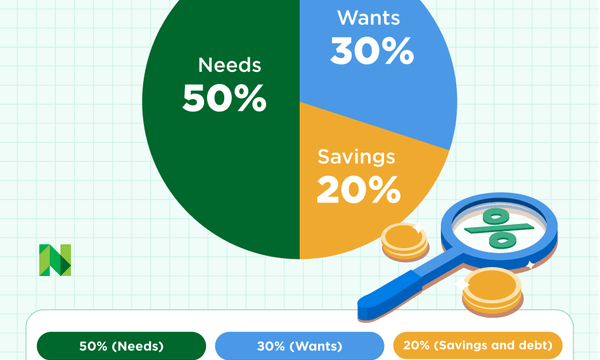
One option is the 50/30/20 budget, where you put 50% of your after-tax income toward needs like rent and groceries, roughly 30% toward wants like travel and eating out, and at least 20% toward savings and debt repayment.
Say you take home $3,500 a month. This is what your budget might look like:
- $1,750 in your needs envelopes.
- $1,050 in your wants envelopes.
- $700 in your envelopes for savings and debt repayment.
Keep in mind that this is just one budgeting strategy and you can divvy up your money as you see fit.
2. Create your envelope categories
Think about the types of expenses you have and sort them into categories. You get to decide how broad or specific to be here. You can have a general “utilities” envelope, for example, or you can have a, "electric bill” envelope, a “water bill” envelope and a “gas bill” envelope.
Label an envelope for each category and fill it with the amount of cash you’ve allotted for that expense. That's the "cash stuffing" part of the process.
3. Limit spending to the envelopes
When you pay for something, use money only from the corresponding envelope. For example, if you set aside $50 in an envelope marked “coffee,” and you buy a $5 latte at Starbucks, you’ll take the money from the envelope. That leaves you with $45 left to spend on coffee for the month.
You can refill your envelopes once a month or after you get your paycheck.
The pros of using an envelope budget system
Avoid overdraft fees and debt
The cash stuffing envelope system helps avoid the overdraft fees and debt that can come with frequent debit and credit card swiping. Physically dividing up your money also makes you aware of exactly how much you have available to spend, which helps curb overspending on impulse purchases.
Reduce one-click spending
Cash-only users are more likely to feel an emotional connection to their money. Because cash is visible, touchable and instantly parts with you, it’s easier to know how much you’re spending.
The envelope method is rising in popularity for this very reason: people are looking to add "friction" to their spending because it makes them think twice about what they're buying and helps them stay on budget. Extra trips to the ATM aren't always convenient, and not all stores take cash. Online shopping is nearly impossible. These all make spending your money a little harder than with a credit card and digital payment methods.


The cons of the envelope system
Making regular trips to the bank or ATM to withdraw money can be time-consuming and leave you vulnerable.
Carrying large sums of cash puts you at risk of loss or theft — and you'll probably have to figure out a way to organize and carry your envelopes with you on the go.
You’ll also miss out on the protection and rewards that credit cards can offer.
Protect your savings allotment by putting it into a savings account, preferably one that pays a good interest rate, rather than keeping it in an envelope where it could be easily lost or stolen.
Who might benefit from the cash stuffing envelope system?
The envelope system can help new budgeters and impulsive spenders. It lets you set goals and gauge how much you spend and save.
We recommend this method to people who want to take charge of their finances in a hands-on way.