Best Value Airline Rewards Programs in 2026
Alaska and JetBlue lead the way on the cash value of the miles you earn through flying.

Many or all of the products on this page are from partners who compensate us when you click to or take an action on their website, but this does not influence our evaluations or ratings. Our opinions are our own.
Updated · 2 min read

Written by
Lead Writer 




Edited by
Editor & Content Strategist 


Nerdy takeaways
- Alaska Airlines offers the most rewarding domestic airline program, in terms of the value of points earned.
- Alaska still grants reward points based on the number of miles flown versus flight cost.
- Among the three big domestic airlines, American Airlines holds the edge.
Airline rewards programs are complicated. You can often earn points and miles in various ways, whether flying or spending money on the airline’s credit card. Then, you might redeem those points for flights on that airline or one of its partners. When you boil it all down, there are three simple questions left to determine which program is the most valuable:
- How many points or miles do you earn per dollar spent on airfare?
- How much are those points or miles worth?
- Where can those rewards take you?
After all, that’s what an airline loyalty program is about: Rewarding frequent flyers with value (in this case, points or miles) that they can use for future trips.
NerdWallet set out to determine the best value rewards programs for U.S. airlines with those questions in mind. Factoring in the amount of points or miles earned per dollar spent on airfare and how much those currencies are worth, we arrived at a single “rewards rate” for each program. This rewards rate shows which airlines offer the best bang for your travel buck when purchasing airfare. We also looked at route networks, the ability to earn miles through flying and credit cards, and qualitative factors.
The best airline rewards program in 2026: Atmos Rewards
Atmos Rewards, the joint loyalty program for Alaska Airlines and Hawaiian Airlines, is the most rewarding domestic airline program in 2026. That’s largely due to the fact that it still awards points based on distance flown, rather than dollars spent. If you’re someone who looks for flight deals, this method of calculation will work to your advantage.
But the results were close, and JetBlue Airways' TrueBlue program and American Airlines' AAdvantage program weren't far behind.
In 2026, Atmos Rewards is introducing "choice earn," meaning program members can choose how they earn points, whether by distance flown, dollars spent or segments taken.
Here’s the catch: You can only choose one method for the entire year. Most people will benefit most from either distance flown (if you travel long distances on cheap fares) or dollars spent (if you buy pricey tickets, whether they’re close-in bookings or premium seats).
The new dollars spent metric will award passengers 5 points per $1 spent, the industry standard adopted by the “big three” full-service carriers of American Airlines, United Airlines and Delta Air Lines. JetBlue Airways and Southwest Airlines offer 6 points per $1 spent on standard economy fares.
Get the 'Cheat Codes' to Cheaper Travel
Unlocking the secret to saving a ton on travel is easier than you think. 📤 Our free newsletter shows you how in 5 min. or less.

Which airline rewards program offers the best rewards rate?
To determine these rankings, we collected hundreds of data points from real-world airline routes to determine the value of points or miles for each airline. Then, we combined these results with the number of points/miles earned per dollar spent on base airfare.
Here’s how the airline programs stacked up:
- Atmos Rewards (Alaska and Hawaiian Airlines).
- JetBlue TrueBlue (JetBlue Airways).
- Southwest Rapid Rewards (Southwest Airlines).
- American AAdvantage (American Airlines).
- Delta SkyMiles (Delta Air Lines) and United MileagePlus (United Airlines), tied.
Again, Atmos Rewards comes out on top because of its favorable earnings structure on flights, combined with point values. If you wanted to earn rewards quickly through flying, flying with Alaska and Hawaiian Airlines and using their loyalty program would be the most efficient way to do it. But these results don't account for earning points with co-branded or general travel credit cards. On that front, Atmos Rewards lags behind other airlines.
Which airline program offers the easiest path to earning more points and miles outside of flying?
In recent years, airlines have become increasingly focused on their loyalty programs, offering credit cards that allow you to earn extra points or miles based on how much you charge to your card. If you have a credit card with transferable rewards, you might be able to transfer those to the domestic airline partner of your choice.
Outside of flying, that is often the fastest way to rack up airline points and miles, especially when you use the card to pay for travel on that airline. NerdWallet looked at each airline’s suite of credit cards, as well as the transferable currencies each airline partners with, to determine which airlines offered the best ability to earn points.
Here’s how the airline programs stacked up:
- JetBlue TrueBlue (JetBlue Airways).
- Southwest Rapid Rewards (Southwest Airlines).
- Delta SkyMiles (Delta Air Lines).
- AAdvantage (American Airlines).
- United MileagePlus (United Airlines).
- Atmos Rewards (Alaska and Hawaiian Airlines).
JetBlue was the clear winner in this category, given the high points-earning rates on its own JetBlue co-branded cards (regardless of whether they have an annual fee), as well as the number of bank program partnerships it has. If you have Citi Thank You points or Chase Ultimate Rewards®, you can transfer them to JetBlue TrueBlue at a 1:1 ratio. Other partners include American Express Membership Rewards and Capital One miles, but NerdWallet typically recommends avoiding those transfers because they offer a ratio that is less than 1:1.
What about the Big 3?
If you choose to become loyal to one of the big three U.S. airlines (American, Delta or United), the good news is that they all offer similar, middling rewards rates.
Based on NerdWallet’s research, you can see that the programs that ranked the best were typically the loyalty programs of smaller airlines that don’t offer all the bells and whistles of the big three, such as a robust international route network and premium cabin seats (although many are quickly working to change that in the coming year).
These results make sense because smaller loyalty programs want to offer better perks and entice customers to keep flying with that airline.
Cards for earning airline miles



Annual fee
$0 intro for the first year, then $150.
$99.
$0 intro for the first year, then $150.
$99.
Earning rates
• 5 miles per $1 on prepaid hotels booked through United.
• 2 miles per $1 on United purchases.
• 2 miles per $1 at restaurants and hotels (when booked directly with hotel).
• 1 mile per $1 on all other purchases.
• 2 points per $1 on Southwest purchases.
• 2 points per $1 at gas stations and grocery stores on the first $5,000 in combined purchases per anniversary year.
• 1 point per $1 on all other purchases.
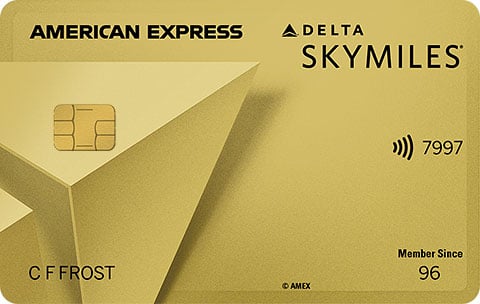
• 2 miles per $1 on purchases made directly with Delta and at U.S. supermarkets and restaurants worldwide (including takeout and delivery in the U.S.).
• 1 mile per $1 on all other eligible purchases.
Terms apply.
• 6 points per $1 with JetBlue.
• 2 points per $1 at restaurants and grocery stores.
• 1 point per $1 on other purchases.
• 1 Mosaic tile per $1,000 spent.
Still not sure?
What does this mean for me?
If you travel a lot for work or are a leisure traveler who maximizes travel rewards, these rankings should make a big impact on where you put your loyalty. Once you pick an airline, you'll also want to consider opening one of that airline's credit cards to earn even more points and miles on your spending.
Choosing the right airline loyalty program for you will involve other factors, such as the number of flights from your home airport or your willingness to pay extra fees for additional services, but the rewards rate can help tip the scales.
Methodology
How we picked the programs to evaluate
Eligible airlines were required to be based in the U.S. and have a publicly available rewards search calendar with availability between 15 days and 180 days from the time of search. The airline must also be a full-service carrier ranked in the top six for airline domestic market share between May 2024 and April 2025. Full-service carriers offer multiple cabin types, and generally don’t charge extra for items like carry-ons.
Six airlines fit these criteria: Alaska Airlines, American Airlines, Delta Air Lines, JetBlue Airways, Southwest Airlines, and United Airlines.
How we chose the winner
We looked at the rewards rate, ability to earn miles, route network and rankings by each member of the travel content team. Each factor was scored separately, and an overall rating was determined based on an equal weighting across categories.
How we rated and weighted each factor:
- Rewards rate (25%). We determined the dollar value and earnings rate of miles in each program in August 2025. To determine the rewards rate, we multiplied the value of each mile by the earnings rate and then multiplied by 100. For example, if an airline’s rewards miles were worth $0.01 apiece (the value of rewards miles) and 10 miles were earned per dollar spent (the earnings rate of miles), its program would have a 10% rewards rate. (In this example, the two equations would be: first $0.01 x 10 = 0.1, then 0.1 x 100 = 10, or 10%.)
- Ability to earn miles (25%). Each rewards program was scored on the ability to earn miles through flying and credit card spending (through airline-branded cards or general travel cards). Some of the airline-branded cards reviewed include products from NerdWallet partners, but this did not influence our selection of the winner.
- Route network (25%). The number of domestic and international destinations served by each airline were provided by FlightConnections and a monthly average of domestic cities served was calculated.
- Travel team (25%). In addition to quantitative metrics, we also considered qualitative factors. The qualitative portion is based on a composite of editorial team members’ review using the same criteria listed above.
How we verified our data
We independently spot-checked data collected to ensure accuracy. Information about loyalty programs was verified on the airlines’ websites.
To view rates and fees of the Delta SkyMiles® Gold American Express Card, see this page.
How to maximize your rewards
You want a travel credit card that prioritizes what’s important to you. Here are some of the best travel credit cards of 2026:
- Flexibility, point transfers and a large bonus: Chase Sapphire Preferred® Card
- No annual fee: Wells Fargo Autograph® Card
- Flat-rate travel rewards: Capital One Venture Rewards Credit Card
- Bonus travel rewards and high-end perks: Chase Sapphire Reserve®
- Luxury perks: American Express Platinum Card®
- Business travelers: Ink Business Preferred® Credit Card
Article sources
NerdWallet writers are subject matter authorities who use primary,
trustworthy sources to inform their work, including peer-reviewed
studies, government websites, academic research and interviews with
industry experts. All content is fact-checked for accuracy, timeliness
and relevance. You can learn more about NerdWallet's high
standards for journalism by reading our
editorial guidelines.
Limited Time Only: Earn $1,000 Toward Travel!
Capital One Venture Rewards Credit Card 
Travel
For a limited time, the
Capital One Venture Rewards Credit Card is offering new cardholders an especially rich bonus: Enjoy $250 to use on Capital One Travel in your first cardholder year, plus earn 75,000 bonus miles once you spend $4,000 on purchases within the first 3 months from account opening - that’s equal to $1,000 in travel!
More like this