






Debt collection tactics can be annoying — or even unfair and against the law.
When a debt goes unpaid for months, the original creditor will often sell it to an outside agency. The buyer is known as a third-party debt collector.
Paying a collector too fast could be a mistake. A single small payment can restart the legal clock on an old debt in many states, handing the collector the right to sue you for the full amount.
Before you pay a dollar, confirm the debt is yours, accurate and still legally collectible.
Meet MoneyNerd, your shortcut to smart money moves
NerdWallet's twice-weekly newsletter offers practical, no-fluff guidance to help you spend smarter, save more, and make confident money decisions. Delivered free to your inbox.
6 steps for dealing with a debt collector
Debt collection is one of the top complaints consumers file with the Consumer Financial Protection Bureau. The agency received 387,400 in 2025.
The Fair Debt Collection Practices Act sets rules for consumer debt collection. It generally applies only to third-party collectors only. Here's how to exercise your rights.
1. Don't give in to pressure to pay on first contact
Debt collectors may pressure you to act quickly, but don’t. Don’t pay, don't promise to pay, and don't give any payment information the collector may use later. Ask for information on the debt and say you'll call back to discuss it later.
Making a single payment — even just $5 or $10 — is an acknowledgment of the debt and can have serious repercussions. If the debt is past the statute of limitations (time-barred), for example, making a payment will reset that clock in many states, which could lead to a lawsuit or wage garnishment.
2. Gather the facts
Many sold debts have errors about the amount owed or even who owes it. If a debt collector contacts you, gather a few key of pieces information to make sure it’s legit:
- Collectors must send written validation notice within five days of first contacting you. If you don't get one, request it. It should include details on the debt, the collection company and how to challenge the debt.
- If the debt is yours, gather your own records, including information on the original creditor and your history of payments.
- Keep good records of communication with the debt collector. You may want to use certified mail for the best documentation.
3. Know your rights around communicating with debt collectors
The FDCPA outlines your rights as a consumer and shields you from predatory collection tactics. For one, you can tell a debt collector to stop contacting you. Also, debt collectors cannot:
- Harass or threaten you when trying to collect.
- Mislead you about who they are, how much money you owe, or the legal repercussions of not paying your debt — for instance, by threatening arrest.
4. Submit a complaint if the debt collector violates your rights
Understand your federal and state protections in the debt collection process. You can file a complaint with the CFPB if your protections under the Fair Debt Collection Practices Act have been violated.
Your state may offer additional consumer protections. Check with your state's attorney general or the Federal Trade Commission for more help.
5. Never ignore a court summons for debt collection
Collection agencies often sue to get payment. These lawsuits can result in wage garnishment, and a bank levy or a lien on your property.
If this happens, you’ll want to hire an attorney who specializes in debt collection defense. If you can’t afford court costs, look for low-cost or free legal aid programs near you via the Legal Services Corporation or LawHelp.org.
6. Choose a debt payoff method or dispute debt collection
There are a few options for paying a collections account: setting up a payment plan, wiping out the debt with a single payment, or settling the debt to reduce the amount you owe.
- No matter which option you choose, don't give the collector permission to access your bank account, either by providing your debit card number or setting up automated debits. If you agree to a payment plan or to settle the debt for less than is owed, get the agreement in writing so you can hold the collector accountable.
Alternatively, you can dispute the debt if you think the information is incorrect, or ask for a goodwill deletion if you've already paid it off.
- Send a written request to the debt collector and make a copy for yourself. If you challenge the debt within 30 days of first contact, the collector cannot ask for payment until the dispute is settled. After 30 days, you can still challenge the debt, but the collector can seek payment while the dispute is being investigated.
Got all that? Here's a summarized flow to help
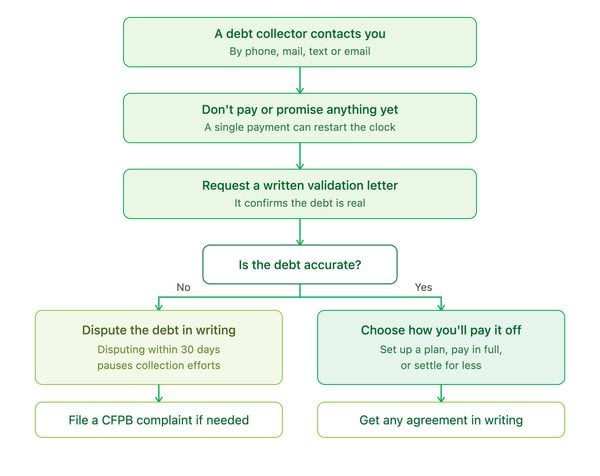
This graphic was created with the assistance of AI. It has been reviewed by our editorial team for accuracy and quality.
Article sources
NerdWallet writers are subject matter authorities who use primary, trustworthy sources to inform their work, including peer-reviewed studies, government websites, academic research and interviews with industry experts. All content is fact-checked for accuracy, timeliness and relevance. You can learn more about NerdWallet's high standards for journalism by reading our editorial guidelines.
- 1.Consumer Financial Protection Bureau. Consumer Response Annual Report. Accessed Aug 17, 2026.