A VantageScore is a credit score that predicts how likely you are to pay back money you borrow. Lenders, landlords and banks use it to decide whether to approve you for things like loans or credit cards.
It was created in 2006 by the three major credit bureaus — Experian, Equifax and TransUnion — as an alternative to the better-known FICO scores. Today, VantageScore uses the same 300 to 850 scale as FICO and is often available to consumers for free.
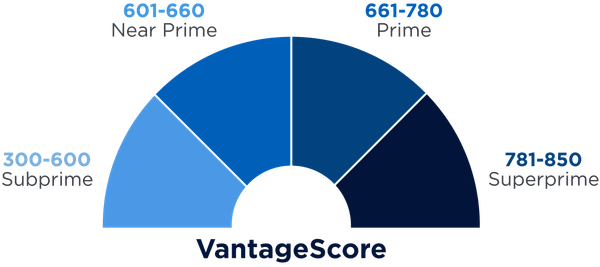
Your VantageScore is based on the information in your credit reports. Because not all lenders report to every credit bureau, the details in your reports can differ. That means your score may be slightly different at Experian, TransUnion and Equifax.
» Get your free credit report from NerdWallet
What matters most for VantageScores
VantageScore and FICO scores are based on similar factors. Paying your bills on time is the most important step for both.
Here’s how VantageScore 3.0 ranks what matters:
Payment history (40%)This is your track record of paying bills on time. Late or missed payments can hurt your score, while a consistent record of on-time payments helps the most.
Depth of credit (21%)This looks at how long you’ve been using credit. Older accounts and a mix of different types of credit — like credit cards and loans — can work in your favor.
Credit utilization (20%)This measures how much of your available credit you’re using. Using a smaller share of your credit limits is better for your score. A common rule of thumb is to stay under 30%.
Balances (11%)This is the total amount of money you owe across all your accounts. Carrying high balances can drag your score down.
Recent credit (5%)Opening several new accounts in a short time, or having many hard credit checks can slightly lower your score. Spacing out credit applications every six months can help.
Available credit (3%)This reflects how much unused credit you have on revolving accounts like credit cards. Having some room to borrow — without using it — can be a small positive.
» Learn more about which factors impact your credit score most
Meet MoneyNerd, your shortcut to smart money moves
NerdWallet's twice-weekly newsletter offers practical, no-fluff guidance to help you spend smarter, save more, and make confident money decisions. Delivered free to your inbox.
VantageScore vs. FICO: How they differ
⚖️ Scoring factors are weighted differently
VantageScore and FICO use the same factors, but they don't them weigh the same during the score calculation process. For example, VantageScore places more emphasis on payment history than FICO (40% vs. 35%) and credit history (21% vs. 15%), while FICO puts more weight on credit utilization (30% vs. 20%).
⏰ How quickly you can get a score
VantageScore can generate a score with as little as one to two months of credit activity. FICO scores typically require at least six months of credit history.
🪪 Scoring people with limited credit
Some consumers with a short credit history, also called a thin credit file, may not qualify for a FICO score, but can still receive a VantageScore.
🧾 Treatment of paid collections
VantageScore 3.0 ignores paid collection accounts. FICO 8 still counts paid collections against your score, but new models (FICO 9, 10, 10T) don't.
📊 Rate shopping for loans
VantageScore groups auto loan and mortgage inquiries made within a 14-day window as a single inquiry. FICO uses a longer 45-day window.
📌 The bottom line: Both scores respond to the same habits. Paying bills on time and keeping balances low help both FICO and VantageScore. Late payments and high credit use hurt both.


How to get a VantageScore
You can get a free VantageScore 3.0 from NerdWallet and from some other personal finance and banking sites. NerdWallet’s scores update every seven days and include a free credit report summary from TransUnion.
VantageScore also maintains a list of free credit score providers, along with information on which credit bureau’s score is offered and how often it updates.