








If you, like me, have become emotionally attached to a zoo animal via social media, then I don’t have to explain the Punch phenomenon to you.
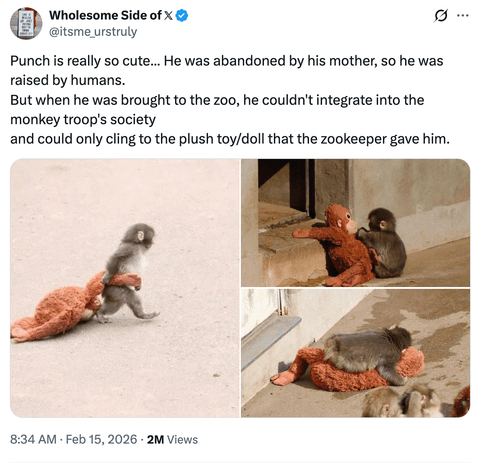
For everyone else, Punch is a baby macaque at Ichikawa City Zoo in Japan who had a sad start in life. After he was born, he was abandoned by his mother. The zoo staff stepped in to raise him, aided by a stuffed orangutan as his companion.
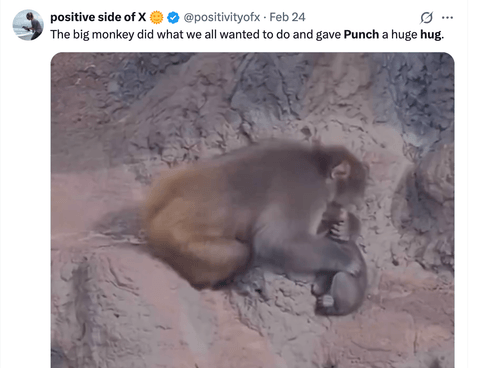
Punch went viral earlier this month after the zoo introduced him to the rest of the macaques. Videos and photos soon surfaced of a sad tiny monkey, rejected by other members of the troop. He sat forlorn with only his stuffed orangutan by his side to ease his days. Punch fever exploded after a video showed him being dragged and attacked by an older macaque, sending him fleeing to his orangutan for safety.
The surrogate mama monkey stuffed animal was identified as an Ikea Djungelskog orangutan and, like Punch, it has taken the internet by storm.
Last week I looked up the doll online and was surprised to see it hadn’t sold out yet. My brain — flooded with oxytocin brought on by the sight of a sad, lonely baby monkey being pushed around by bigger monkeys — nudged me to shell out $20 for the plushie. But pragmatism won out, and I shrugged it off as an impulse purchase that I didn’t need.
Ikea soon posted an ad with the same plushie being held around the neck by a stuffed Punch lookalike. The company now labeled the Djungelskog as “Punch’s comfort orangutan.” The Djungelskog quickly sold out. I blew it.
Scarcity fuels the frenzy
It was the second time in one month that I felt like I missed out on a cultural (albeit, consumerist) moment fueled by social media virality.
At the opening of the Winter Olympics earlier this month, Team Poland debuted its unofficial mascot — a pierog plushie. (Note: Pierog is singular. Pierogi is plural.) Demand quickly surged for the “Pieroguszki.” Fans found its origin at Luft, a shop in Katowice, Poland that runs classes teaching people with disabilities how to make the plushies. Sure enough, it sold out there — although Snoop Dogg managed to snag one.
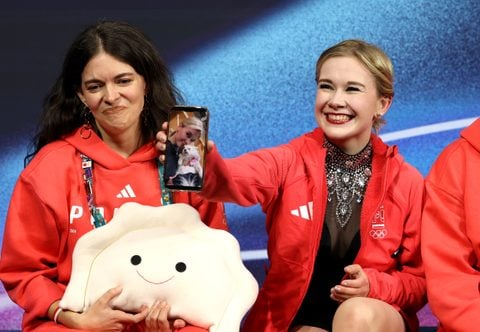
The pierog also sold out at Pierozek, a Polish restaurant in Brooklyn, N.Y. that happens to be just a few train stops away from me. I missed that opportunity, too, but I signed up for the waitlist. (Look, anyone who knows me knows I love pierogi.)
As with any viral toy sell-out, rival companies know a cash grab when they see it, and quickly put out their own versions. There’s a Temu orangutan available for around $12. Another lookalike sells for $30 on eBay. Similar pierogi to the Olympic sensation are sold at Walmart and Amazon for $22.99. And in an interview with CBS, Pierozek warned consumers of a $16.99 knock-off that was advertised using photos taken in its restaurant.
The scarcity effect of a sold-out toy can quickly give rise to a more exploitative resale market. Ikea orangutan plushies are being listed on eBay for up to $350, and some have sold for $100 or more.
» Stay informed:
- Check out NerdWallet's news hub for all the latest.
- Subscribe to one of NerdWallet's free newsletters.
It’s not clear how long either fad will last — the Olympics are now over and let’s face it, Punch is only going to get less adorable with age. Viral products follow a predictable pattern.
Last summer, PopMart’s $30 Labubu creatures had their moment in the sun as tennis player Naomi Osaka showed off her $495 custom, crystal-clad Labubus during the U.S. Open. A rare mint-green Labubu sold at auction for a record-breaking $150,000. On resale markets, the most rare Labubus have gone for tens of thousands of dollars.
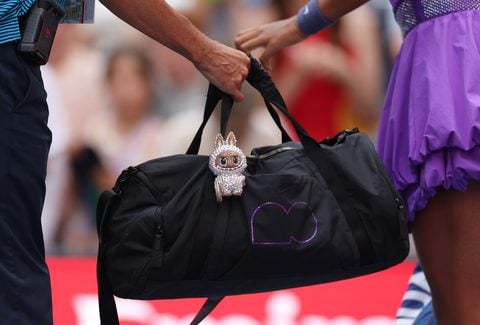
Another viral plushie brand, Jellycats, still sells out certain releases. But like Labubus, Jellycats don’t dominate the online toy discourse the way they once did. Or maybe it’s just that my feed is dominated by videos of Punch, who’s to say?
Go beyond the resale frenzy
There are ways to channel your Punch love into meaningful action that helps macaques and other monkeys. For example, you could consider supporting reputable primate welfare groups that fund rescue and longer sanctuary care. These may include Save the Chimps, International Primate Protection League or the Pan African Sanctuary Alliance.
You can also symbolically “adopt” a monkey through Born Free USA or Wild Futures. And if you really want a plushie, sponsoring an animal — like an orangutan — through the World Wildlife Fund comes with a matching stuffed animal for about $60.
Know when to let it go
There’s nothing wrong with indulging in something silly and of-the-moment every once in a while (have I mentioned, I’m on that pierog waitlist). But psychological desperation can push some consumers to do things they might not normally do — like spend far more than they should on a stuffed animal. (Two words: Beanie Babies.)
If you’re considering spending double, triple and many times more than the cost of the original product, then maybe it’s time to let it go. Even Punch is starting to leave his orangutan lying around more often as he integrates with the troop. He’s made friends with older macaques who can protect him more durably than his stuffed monkey mom can.
Meet MoneyNerd, your shortcut to smart money moves
NerdWallet's twice-weekly newsletter offers practical, no-fluff guidance to help you spend smarter, save more, and make confident money decisions. Delivered free to your inbox.