




Twenty-five years ago Friday, the Sept. 11 terrorist attacks hit an economy already in recession. Beyond the devastating loss of nearly 3,000 lives, the attacks set off economic shocks that would reshape markets, industries and government spending for years.
Here are some of the biggest economic effects of 9/11, from the immediate turmoil to changes that still reverberate today.
The attacks hit an already-fragile economy: The dot-com bubble burst in 2000 and sent the economy into a recession prior to the 9/11 attacks, but the event deepened that downturn. Consumer and business confidence plummeted in the weeks after the attacks.
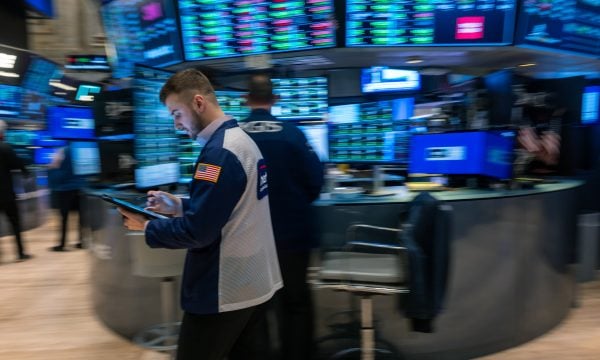
The stock market sank: For the first time since 1933, the New York Stock Exchange closed for four trading days. When the markets reopened on Sept. 17, 2001, the Dow fell 7% in a single day — the worst point drop in history up until that time — and declined 14% in the first week. Less than a month later, stocks returned to pre-attack levels.
The Fed sprung into action: The Federal Reserve first pumped the financial system with cash so banks wouldn’t run out of money in the days after 9/11. Over the following months, the Central Bank made multiple rate cuts to stabilize markets, including an emergency 50 basis point cut on Sept. 17. It made three more cuts and by the end of the year the target rate was 1.75%.
Meet MoneyNerd, your shortcut to smart money moves
NerdWallet's twice-weekly newsletter offers practical, no-fluff guidance to help you spend smarter, save more, and make confident money decisions. Delivered free to your inbox.
The air travel industry changed overnight: Airlines immediately grounded commercial flights for three days, and in the days after the airline and travel industry collapsed as demand for air travel declined. Soon after the attacks, Congress passed the Air Transportation Safety and System Stabilization Act. It provided $5 billion in direct aid and $10 billion in loan guarantees for airlines.
The Transportation Security Administration was also created by the Aviation and Transportation Security Act (ATSA), which became law in November 2001. Today, there are more than 60,000 TSA workers, and the TSA screens more than 2 million passengers a day.
It took until March 2004 for travel levels to return to pre-attack levels, according to the Bureau of Transportation Statistics. The industry laid off workers and continued to operate below pre-attack employment levels for years.
The government backstopped the insurance industry. It was one of the costliest insurance losses for the industry — an estimated $40 billion, according to the U.S. Government Accountability Office. In the aftermath of the attacks, many insurance companies soon withdrew from the terrorism risk insurance market entirely. In response, Congress passed the Terrorism Risk Insurance Act (TRIA) in 2002 to create a federal backstop so commercial policyholders could obtain terrorism insurance.
Homeland security spending ballooned: The attacks triggered a huge increase in federal spending, pouring billions into homeland security, defense and intelligence. The Homeland Security Act of 2002 led to the creation of the Department of Homeland Security, which has since grown to be the third largest department in the federal government.
The government’s spending shifts coincided with the wars in Afghanistan and Iraq and their related conflicts, whose costs ultimately reached into the trillions, according to Brown University’s Costs of War project.

New York City’s economy took a major hit: The attacks damaged or destroyed roughly 30 million square feet of office space in Lower Manhattan, caused nearly $31 billion in economic damage and resulted in a loss of 51,000 jobs, according to the New York City Department of City Planning. It also dealt a major blow to New York City’s tourism economy: Visitor spending fell nearly $1 billion in 2001.
In the two-and-a-half decades since, Lower Manhattan has transformed with a residential population above 70,000 for the first time ever, according to the Alliance for Downtown New York. Last year, office leasing reached its highest level since 2019.
The price tag kept growing: The U.S. has spent an estimated $8 trillion on post-9/11 wars and related costs, including future care for survivors, according to Brown University’s Costs of War Project.
In hindsight, some of the biggest economic changes set in motion by 9/11 have become so routine that we barely notice them. Twenty-five years later, we can still trace how profoundly the tragedy changed the way we travel, where we work and how the government spends.