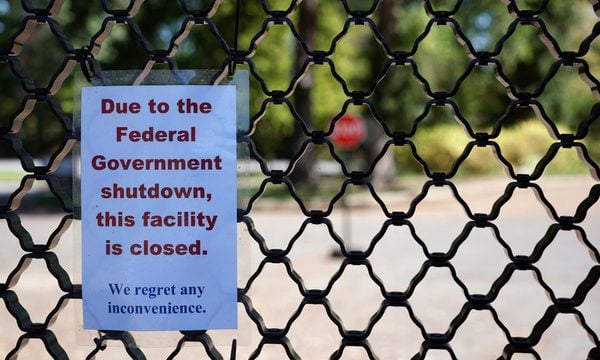





Saturday morning, after the Halloween tricking and treating, Americans will wake up in an unsettling new reality: the second month of a government shutdown that shows no sign of ending.
The shutdown began Oct. 1. If it lasts until Nov. 5 — as seems likely — it will become the longest in U.S. history.
So far, federal workers have borne the brunt, but the shutdown’s direct effects will soon be felt by millions more Americans. Here is some of what’s coming as the impasse staggers ahead.
1. Some 41.7 million Americans could lose food assistance
Due to the funding lapse, food assistance benefits through the Supplemental Nutrition Assistance Program (SNAP) won’t be available as of Nov. 1. By mid-month, 41.7 million people will go without SNAP, putting families in jeopardy of not having enough food to eat. It will also place additional strain on community food banks.
The Department of Agriculture has some emergency reserve funds earmarked for SNAP, which could partially fund the program for a limited time, but has indicated it will not disburse them during the shutdown. Late Thursday, a federal judge said she might order the administration to use those funds.
2. Military pay could be at risk
Millions of federal workers are already going without pay, including both furloughed workers and essential workers who have remained on duty. Soon, active service members may be in the same boat.
Members of the military are typically subject to the same interruption in pay as federal workers during a shutdown, but this time around the White House used a combination of a private donation from billionaire Timothy Mellon and existing government funds to pay members of the military. For a while, at least.
That makeshift arrangement won’t last much longer, officials warn, and there are reports that some service members have been underpaid already.
» Stay informed:
Check out NerdWallet's news hub for all the latest.
Subscribe to one of NerdWallet's free newsletters.
“I think we’ll be able to pay them beginning in November,” Treasury Secretary Scott Bessent said in a television interview that aired Sunday. “But by Nov. 15, our troops and service members who are willing to risk their lives aren’t going to be able to get paid.”
The United States has about 1.3 million active duty service members around the globe. All federal workers and service members will receive back pay when the shutdown ends, but checks could take weeks to land.
3. Travel service disruptions will worsen
Air traffic controller and TSA staffing shortages are likely to exacerbate flight delays and lead to more cancellations.
Meanwhile, national parks, monuments and public lands will remain closed or not maintained, inconveniencing travelers and damaging tourism revenue.
4. Service disruptions will deepen
All kinds of federal services will be delayed or entirely absent. That includes things like:
FDA food inspections.
EPA enforcement.
Public health monitoring and response.
Medicare and Medicaid applications and services.
FHA loans for home buyers.
Federal small business loans.
Safety inspections.
5. The economy will take a harder hit
Consumer spending could fall as household spending confidence declines. Federal workers missing paychecks and families missing food benefits have to tighten their belts. Ripple effects of the shutdown could also deepen business losses, particularly for government contractors and vendors.
The Congressional Budget Office estimated this week that real gross domestic product (GDP) could be reduced in the fourth quarter by 1 to 2 percentage points, depending on how long it goes on. Although some of that growth could be regained after the government reopens, up to $14 billion in growth will never be recovered, the CBO estimates.
We may not have a full picture of this shutdown’s effects, either. Federal data reports have also been delayed due to the shutdown, which impacts economic policy, the stock market and business decisions.
See more details on how a government shutdown could impact you.
Meet MoneyNerd, your shortcut to smart money moves
NerdWallet's twice-weekly newsletter offers practical, no-fluff guidance to help you spend smarter, save more, and make confident money decisions. Delivered free to your inbox.