We believe everyone should be able to make financial decisions with
confidence. While we don't cover every company or financial product on
the market, we work hard to share a wide range of offers and objective
editorial perspectives.
So how do we make money? Our partners compensate us for advertisements that
appear on our site. This compensation helps us provide tools and services -
like free credit score access and monitoring. With the exception of
mortgage, home equity and other home-lending products or services, partner
compensation is one of several factors that may affect which products we
highlight and where they appear on our site. Other factors include your
credit profile, product availability and proprietary website methodologies.
However, these factors do not influence our editors' opinions or ratings, which are based on independent research and analysis. Our partners cannot
pay us to guarantee favorable reviews. Here is a list of our partners.
Fleet Cards: What They Are, Best Options for Small Businesses
Fleet cards offer rebates on fuel, plus expense management tools, to businesses that operate several vehicles.
Many, or all, of the products featured on this page are from our advertising
partners who compensate us when you take certain actions on our website or
click to take an action on their website. However, this does not influence our
evaluations. Our opinions are our own. Here is a list of our partners and
here's how we make money.
Updated · 2 min read
How is this page expert verified?
NerdWallet's content is fact-checked for accuracy, timeliness and
relevance. It undergoes a thorough review process involving writers and
editors to ensure the information is as clear and complete as possible.
Kelsey Sheehy is a senior writer and NerdWallet authority on small business. She started at NerdWallet in 2015 and spent six years as a personal finance writer and spokesperson before switching gears to cover the financial decisions and challenges faced by small-business owners. Kelsey’s work has appeared in The New York Times, The Washington Post, Nasdaq and MarketWatch, among other publications. Kelsey has appeared on the "Today" show, NBC News and ABC’s "World News Tonight" and has been quoted by the Los Angeles Times, CNBC, American Banker, NPR and Vice, among other publications. Prior to joining NerdWallet, Kelsey covered college (and how to pay for it) for U.S. News & World Report. She is based in Washington, D.C.
Ryan Lane is an editor on NerdWallet’s small-business team. He joined NerdWallet in 2019 as a student loans writer, serving as an authority on that topic after spending more than a decade at student loan guarantor American Student Assistance. In that role, Ryan co-authored the Student Loan Ranger blog in partnership with U.S. News & World Report, as well as wrote and edited content about education financing and financial literacy for multiple online properties, e-courses and more. Ryan also previously oversaw the production of life science journals as a managing editor for publisher Cell Press. Ryan is located in Rochester, New York.
Rosalie Murphy has covered small-business banking, credit cards, insurance and lending at NerdWallet since 2021. She writes and edits the Starting Small newsletter, and her reporting has appeared in publications like the Associated Press, MarketWatch and Nasdaq. Rosalie is an MBA candidate at Kent State University and has a bachelor's degree in journalism from the University of Southern California.
Published in
Lead Writer & Content Strategist
SOME CARD INFO MAY BE OUTDATED
This page includes information about these cards, currently unavailable on
NerdWallet. The information has been collected by NerdWallet and has not
been provided or reviewed by the card issuer.
Fleet cards — also called fuel cards — are specialized business cards designed to cut fuel costs and control spending. They're best for businesses with multiple vehicles and employees on the road.
Most fuel cards offer volume-based discounts of 2 to 12 cents per gallon. The more gallons you buy, the bigger the discount. Others, like Coast and AtoB, offer location-based discounts that vary by truck stop and gas station. That's useful if your drivers frequent the same stations.
Fleet cards also include proactive controls that stop misuse before it happens — owners can restrict spending by gallon, time of day and location.
🤓Nerdy Tip
Most fleet cards are only available to registered businesses. Sole proprietors and independent contractors should consider a business gas card to maximize fuel rewards.
How do fleet cards work?
Fleet cards generally work like business charge cards: employees use them to purchase fuel, and the business owner pays the full balance each billing cycle. Most fleet cards are fuel-only, but some also cover maintenance, car washes, tolls and tires.
Applying for a fleet card is straightforward. Registered businesses can apply with their EIN — there's no personal credit check or personal guarantee. You may also need bank statements to verify revenue.
Once approved, owners and fleet managers control spending from a central dashboard. You can control what each card is used for — by time of day, location or fuel type — and pull expense reports for the whole fleet. Some cards also include telematics tools that show each vehicle's location and fuel level in real time.
Fleet fuel cards: benefits and drawbacks
Where can you use a fleet card?
Fleet card usage depends on the card’s issuer and partner network. Here are some examples:
Examples
Where you can use them
Branded fuel cards
Shell, Exxon, Circle K Fleet Card
Only at that brand’s gas stations.
Fleet cards that run on a major issuer network
Coast and AtoB
Any gas station where their partner network, Visa or Mastercard, is accepted.
Widely accepted fleet cards
WEX, Fuelman, Circle K Universal Card
Tens of thousands of gas stations, depending on the card issuer's partnerships.
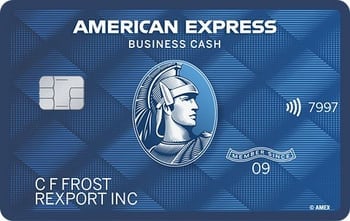
American ExpressThe American Express Blue Business Cash™ CardRates and Fees
4.5
NerdWallet rating
NerdWallet's ratings are determined by our editorial team. The scoring formulas take into account multiple data points for each financial product and service.
Businesses that operate five or more vehicles. A fleet card can be a great tool to save money and manage expenses across your company.
Companies whose employees are often on the road. If your team members usually fill up their own vehicles, a fleet card can save you the trouble of dealing with reimbursements.
If neither applies, a business gas credit card may be a better fit.
Fuel cards vs. business gas credit cards
If you operate a smaller business or mostly fill up your own tank, consider a business credit card with gas rewards instead of a fleet card. They often offer bigger rebates — up to 3% back on gas, depending on the card. But the reporting and spending controls are not nearly as robust as most fleet cards.
Business credit cards are available to sole proprietors and unincorporated businesses. But they do require a credit check and personal guarantee.
If employee purchases extend beyond fuel and maintenance, consider a corporate credit card program.
Like fuel cards, corporate cards let you monitor and control employee spending from a central dashboard — but you can use them for virtually any expense, from travel to restaurants to office supplies.
Some corporate cards can be used essentially as fleet cards. Ramp, for instance, markets its corporate card as a fleet card option. That card offers at least 1% cash back on all spending, plus spend controls comparable to a dedicated fleet card.
Best options for fleet cards
These are our top picks for fuel and fleet card programs.
AtoB Fuel Cards
Fees: For AtoB Flex, $15 per month for up to 5 cards plus $3 for each additional card. For AtoB Unlimited, $3 per active card for month.
Rewards:
Unleaded: Up to 12 cents per gallon.
Diesel: Average discount of 45 cents per gallon.
Gas station network: Anywhere that Mastercard is accepted.
Pros and cons Pros and cons
Pros
Potential for high fuel discount.
Cash back on select services when you use the AtoB app.
Can be used anywhere Mastercard is accepted.
Cons
Need to use app to find discounts.
Account setup fee.
Balance must be paid in full every month.
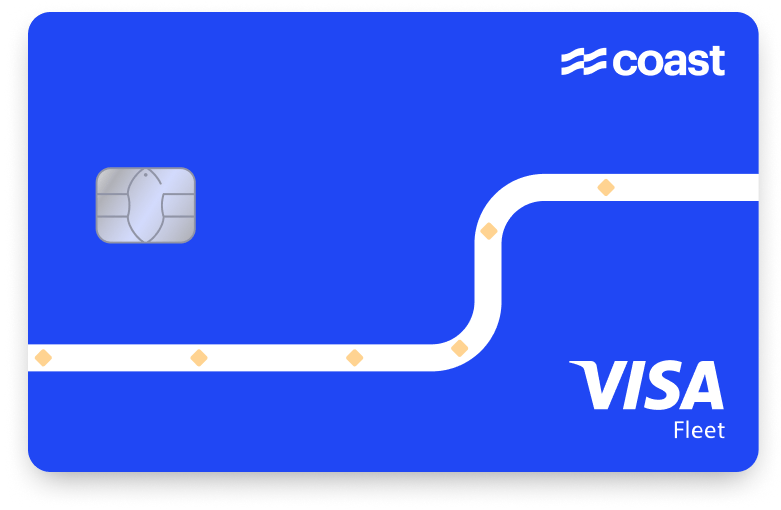
Coast Fleet Card
Coast Fleet Card
Rewards rate
1¢-10¢
Fuel rebate of 4¢-10¢ per gallon at 30,000+ partner stations nationwide and 1¢ non-partner stations. Earn 1% back on non-fuel purchases.
Rewards: Up to 9 cents per gallon at gas stations; 1% cash back on all other spending.
Gas station network: Anywhere Visa is accepted.
Pros and cons Pros and cons
Pros
Automatically captures number of gallons, grade, and receipts.
Cash back on nonfuel purchases (unless restricted to fuel only).
No account setup fee.
Cons
$35 fee for returned or late payments.
Balance must be paid in full every month.
WEX Fleet FlexCard
Fees: $2 per card per month for the WEX Fleet FlexCard.
Rewards: Up to 15 cents per gallon.
Gas station network: WEX has its own network, which includes 45,000 stations nationwide.
Pros and cons Pros and cons
Pros
Fuel discounts at more than 45,000 gas stations in the WEX network.
Promotional discount of 3 cents per gallon for the first 6 months.
No account setup fees or monthly card fees.
Can carry a balance (interest charges apply).
Cons
Can only be used at stations in the WEX network.
High fees for late and returned payments.
No rewards on nonfuel purchases.
Fuelman Mixed Fleet Card
Fees: $39 per month for the Basic package.
Rewards: Up to 8 cents per gallon, plus one point per gallon that you can redeem for other rewards.
Gas station network: Fuelman has its own network, which includes 40,000 stations nationwide.
Pros and cons Pros and cons
Pros
Promotional discount of 8 cents per gallon for the first 12 months.
Fuel discounts offered at 40,000+ gas stations in the Fuelman network.
No account setup fees.
Earn points that can be redeemed for travel, gift cards, etc.
Cons
$3 fee for using card at a station outside the Fuelman network.
High fees for late and returned payments.
Monthly fee of $39 to $99, depending on plan.
Balance must be paid in full every month.
Shell Small Business Card
Fees: None.
Rewards: Up to 6 cents per gallon.
Gas station network: Shell.
Pros and cons Pros and cons
Pros
Volume-based fuel discount of up to 6 cents per gallon.
No monthly card fees.
Can carry a balance (interest charges apply).
Cons
Top rebate requires purchase of more than 10,000 gallons per month.
Use limited to Shell stations and participating Jiffy Lube locations.
Article sources Article sources
NerdWallet writers are subject matter authorities who use primary,
trustworthy sources to inform their work, including peer-reviewed
studies, government websites, academic research and interviews with
industry experts. All content is fact-checked for accuracy, timeliness
and relevance. You can learn more about NerdWallet's high
standards for journalism by reading our
editorial guidelines.