




It’s a good time to travel by air. Each month so far this year, airfares have been cheaper than the same month in 2023. Plus, passenger satisfaction is at an all-time high.
That’s according to the American Customer Satisfaction Index (ACSI) Travel Study 2023-2024, which sought to understand consumer sentiment toward U.S. airlines. This year’s study found that satisfaction rates have improved for the second consecutive year.
ACSI’s scores are calculated based on benchmarks such as ease of making reservations and checking in, cabin cleanliness, employee helpfulness and boarding experience. The results are based on responses from over 16,000 people surveyed via email between April 2023 and March 2024.
The report found that every major U.S. airline improved its score year over year except for one: United Airlines.
Here’s what you need to know about the best and worst U.S. airlines for customer satisfaction — and why flying has gotten relatively better across the board.
The best-rated U.S. airlines for satisfaction
ACSI’s study ranked nine major U.S. airlines on a scale of 0-100. Here's each airline’s customer satisfaction score, from highest to lowest:
Alaska Airlines performed quite well, ranking as the airline with the best customer satisfaction for the second straight year in ACSI’s survey.
Notably, Alaska also came out on top in NerdWallet’s annual analysis of the best airline and best airline rewards programs.
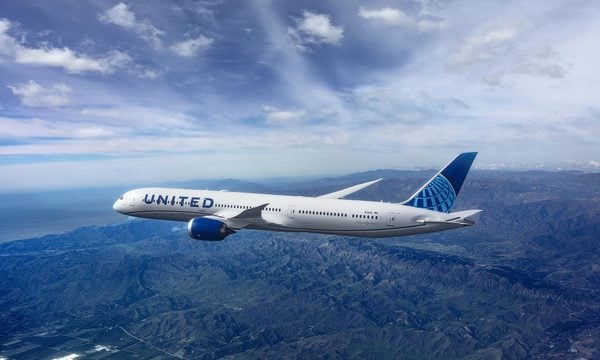
Unlike the rest of its peers, however, United Airlines' customer satisfaction score dropped year over year. Though United’s scores were the only ones to decrease, the airline isn’t the worst in terms of customer satisfaction. Frontier and Spirit, both budget airlines, still scored lower.
Why did United’s score drop?
Forrest Morgeson, a marketing professor at Michigan State University and director of research emeritus at the ACSI, said in an email that the drop in United customer satisfaction scores is due to the declining quality of the reservation system and low scores for in-flight service.
Morgeson also cited the growth in United’s basic economy passengers, which he said makes “for a less satisfying experience by design.” In 2023's fourth quarter, the airline reported its basic economy airfares recorded a substantial 20% revenue increase year over year.
While most airlines sell a basic economy option, offering fewer frills (e.g., usually a middle seat and the last boarding group) in exchange for a lower cost, United’s basic economy ranks among the worst.
In another customer satisfaction poll — this one the J.D. Power 2024 North America Airline Satisfaction Study — United scored the lowest of any full-service U.S. carrier in a ranking of basic economy offerings. The only U.S.-based carriers to score lower are Spirit and Frontier.
Why customer satisfaction has generally gotten better in 2024
Staffing levels have rebounded — and then some
Morgeson said higher customer satisfaction scores for other airlines were largely driven by increases in airline staffing levels from pandemic lows.
“This resulted in big score jumps for staff-driven aspects of the customer experience, such as check-in and boarding, in-flight service and staff courtesy,” he said in an email.
Airline staffing numbers are even higher than even before the pandemic. In November 2023, U.S. airlines employed 814,190 workers, according to the U.S. Bureau of Transportation Statistics. That’s almost 9% more than the 748,143 workers employed in November 2019.
Budget airlines are improving
Though they still generally performed poorly on customer satisfaction scores, budget airlines showed the biggest overall improvements. Spirit still ranks lowest overall in customer satisfaction of any airline, yet its score also saw the greatest increase. Frontier and Allegiant Air also saw big jumps.
Morgeson attributed the score increases to budget airlines’ value compared with full-service carriers.
“Customers are likely feeling more satisfied with their [budget airline ticket] purchase, particularly in light of legacy airlines’ additional fees,” he said.
Budget airlines notoriously charge high fees, but full-service carriers have recently piled on their own fees. In 2024, Southwest raised its EarlyBird check-in fees as high as an additional $99 per one-way airfare, depending on the flight (up from $25), and upgraded boarding fees as high as $149 per segment, depending on the flight (up from $80). As well, a slew of airlines raised their checked bag fees.
Still, budget airlines typically charge the highest fees, which can include upcharges for seat selection, checked bags and overhead carry-on bags. NerdWallet analyzed ancillary fees and found that a one-way fare on Frontier Airlines incurs, on average, $157 in additional fees. Spirit fees average $120 each way. Both figures are more than double the cost of other airlines’ average fees.
More arrivals are on-time
Airline reliability improvements also played a key role in this year’s higher customer satisfaction rates. According to data from the BTS, the average on-time arrival rate for U.S. airlines in 2023 was 78.2%, up slightly from 76.6% in 2022.
One standout budget airline, Allegiant, skyrocketed from its on-time arrivals rate of 63.4% in 2022 to 73.4% in 2023.
“Passengers noticed, because its on-time arrival score also skyrocketed in the ACSI Study,” Morgeson said.
How can air travel continue to improve?
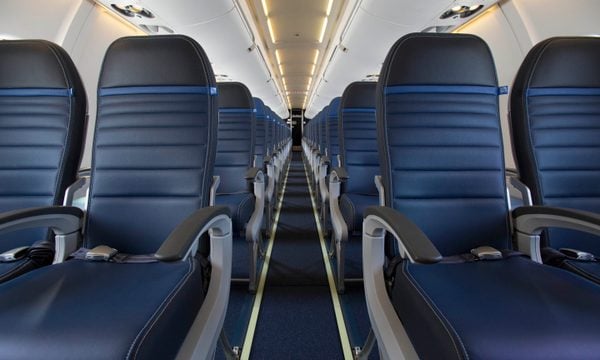
The lowest scores across airlines continue to be seat comfort and quality of complimentary in-flight food and beverages. If budget airlines or United Airlines want to increase customer satisfaction, it might be as simple as offering a little more than a free bag of pretzels.
How to maximize your rewards
You want a travel credit card that prioritizes what’s important to you. Here are some of the best travel credit cards of 2026:
Flexibility, point transfers and a large bonus: Chase Sapphire Preferred® Card
No annual fee: Wells Fargo Autograph® Card
Flat-rate travel rewards: Capital One Venture Rewards Credit Card
Bonus travel rewards and high-end perks: Chase Sapphire Reserve®
Luxury perks: American Express Platinum Card®
Business travelers: Ink Business Preferred® Credit Card