







EMV stands for Europay, Mastercard and Visa. It’s a technology and payment method designed to limit fraud by using embedded computer chips on credit and debit cards. Businesses that do not use point-of-sale systems that accept EMV cards may become liable for certain fraudulent card transactions.
advertisement

How do EMV chip cards work?
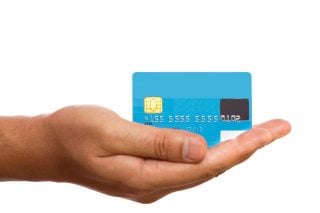
EMV chips use encryption and tokenization to encode card details. This method keeps the data confidential throughout the transaction, offering a more secure method for storing and transmitting information.
EMV chips have been slowly replacing magstripes — the magnetic strips commonly found on the back of credit cards.
Magstripes use static data, which means they don't encode information sent through a point-of-sale terminal. As a result, traditional credit cards have no way of protecting the data once a terminal has accessed it.

How do EMV chips protect against fraud?
EMV chips protect against card fraud by verifying that a card is authentic.
- In addition to encoding credit card information, EMV chips also change the code every time data is transmitted to the payment companies.
- Cards that only have a magstripe only are easy to skim and copy.hip cards are difficult to replicate, and transactions from an inauthentic card are easier to spot.
- Although EMV chips make in-person transactions more secure, they don't guard against fraudulent online transactions where the credit card isn't inserted or tapped at a POS terminal.
Starting Small: A newsletter to get your business off the ground
Subscribe for grant opportunities, product recommendations and no-nonsense advice from the Nerds.
What is the EMV liability shift?
The EMV liability shift refers to a change implemented on Oct. 1, 2015. As of that date, payment networks could hold most retail businesses liable for a fraudulent transaction if the business keyed in or swiped a card with an EMV chip instead of inserting or tapping it.
Locations that sell fuel, such as convenience stores, were granted an extension: They did not have to implement EMV technology to avoid liability until April 17, 2021.
Using EMV card readers is thus not a requirement by law, and businesses can continue to operate without accepting dipped or tapped cards. But doing so comes with increased liability that can lead to expensive chargebacks and other headaches if they process a fraudulent charge.
Businesses are not liable for fraudulent online transactions, such as purchases through a website, with a virtual terminal or in response to a digital invoice. Businesses are also not liable for in-person transactions made with a non-EMV credit card (a magstripe card).
Benefits of accepting EMV chip cards
Accepting credit cards with EMV chips comes with a few advantages that could save you money and bring in more customers. EMV chip cards:
- Reduce the potential for fraud. Credit cards with EMV chips are more difficult to copy and pose a larger obstacle for hackers.
- Minimize liability. If in-person card fraud still happens while using the EMV features of a card reader, you won’t be liable.
- Are becoming more common. Accepting EMV chip cards allows you to work with more customers who prefer to pay this way.
How to accept EMV chip cards
All major POS providers offer EMV chip-enabled credit card readers, and some offer options that combine technology to allow businesses to accept magstripe cards as well. Which type of model works best for your business will depend on how you expect your customers to pay for in-person purchases.
EMV chip card reader recommendations
SumUp
The SumUp Plus card reader is a handheld device that accepts every type of credit card: EMV chips and magstripes, as well as contactless methods such as Apple Pay and Google Pay. It connects to your smart device using Bluetooth and has a screen to display transaction details to the customer. It’s available for $19 and comes with the free SumUp app and dashboard.
SumUp |

Clover
Clover Go is a compact option that lets you process every type of credit card payment: EMV chip cards, magstripe cards and digital wallets, including Apple Pay, Google Pay and Samsung Pay. It has Bluetooth functionality, but no screen to share checkout details with customers. It’s priced at $49 and offers reporting as a free POS feature.
Clover |

Square
The Square reader for contactless and chip cards is sleek and simple. It accepts contactless and EMV chip cards, as well as Apple Pay and Google Pay. However, you can't use it to swipe magstripe cards. The Square reader uses Bluetooth to connect to your smart device, but it doesn't have a screen of its own. You can get the reader for $49 and take advantage of Square’s free POS features. Square also offers Tap to Pay on iPhone, which lets merchants accept card payments using only a regular iPhone with the Square POS app. Customers hold their cards or their own iPhone wallets near the merchant's phone to pay.
» MORE: Find a payment processor
Square Reader for contactless and chip |