




The drive to build more data centers — the massive, costly facilities powering the AI boom — has emerged as a lightning rod for candidates in the 2026 midterms.
"It's the confluence of hyper-localized concerns with broader worries about AI, and who controls it and who benefits from it," says Christopher Borick, professor of political science at Lehigh University.
Candidates running for election at every level of government and across party lines must navigate growing objections to data center growth among voters. Most people oppose their construction — roughly two-thirds — regardless of political affiliation, according to the findings of the latest New York Times/Siena poll (Sept. 8-13). Among Democrats, 75% oppose data center construction, 60% among independents and 47% among Republicans.
With no clear ideological alignment on the issue, it's a race-by-race scramble to deliver whatever messaging best appeals to state and local voters. And in some places, those visions look awfully similar.
In the Ohio governor's race, Democrat Amy Acton and Republican Vivek Ramaswamy are both presenting their own versions of a moratorium on data centers. Acton’s plan would require companies to fund project costs, disclose their building plans and meet environmental standards. Ramaswamy would impose a similar set of requirements, shifting cost burdens away from ratepayers and adding environmental protections.
Meet MoneyNerd, your shortcut to smart money moves
NerdWallet's twice-weekly newsletter offers practical, no-fluff guidance to help you spend smarter, save more, and make confident money decisions. Delivered free to your inbox.
In Michigan's hotly contested open Senate race, Republican Mike Rogers has called for a one-year moratorium, while Democrat Abdul El-Sayed has pushed for strict new standards, including requiring developers to fund energy costs.
Or take Virginia’s first Congressional district — located in the area known as “Data Center Alley” — where both candidates are throwing their weight behind stances that require tech companies to assume costs rather than foist them on ratepayers. On Aug. 8, Democrat Shannon Taylor wrote on X, “If data centers won’t pay for their energy costs we don’t want them. I’ve been clear, if data centers raise our costs, pollute our water or are built without local union labor, they aren’t welcome.” Meanwhile, on Sept. 16, Republican incumbent Rep. Rob Wittman voted on legislation that would require data centers to pay for their own infrastructure costs.
"People care about something that they at least think is going to affect them, that they can see, that is near them — more than more abstract concerns," says David Karol, associate professor of government and politics at the University of Maryland.
Local anxiety about cost of living gives candidates on both sides an easy target for their campaign strategies.
“No one’s going to say a data center is beautiful — it’s not debatable,” Borick says. “People don’t like them, and it meshes with localized concerns about costs of living, which are paramount right now — especially in this election cycle —and people have made the connection that these centers might drive up electricity prices for them.”
Anti-data center sentiment unites voters
There’s an aspect of NIMBYism — the “not in my backyard” ethos — at play in the backlash, Karol says. “That reaction of ‘don’t put this in our neighborhood’ has traditionally been one that has transcended partisanship,” he says.
What’s different in this case, Karol says, is how quickly public opinion turned on data centers. Just a couple of years ago, they were being pitched to towns as a source of jobs and economic progress, with deals often negotiated with little transparency as part of nondisclosure agreements. But residents soon saw they might be getting more than they bargained for.
Americans cite a range of issues in their grievances, primarily cost-related:
Higher electricity bills. Data centers draw enormous power, passing costs on to ratepayers. In Northern Virginia they consume roughly 25% of the state's electricity. People are also concerned about the potential pressure data centers put on aging electrical grids.
Strain on water supplies. Cooling data center servers requires enormous amounts of water. A mid-sized data center can use as much water as a small town, while larger, hyperscale centers consume millions of gallons daily. During the cooling process, water evaporates, which permanently removes it from the local water supply.
Noise and air pollution. Data centers emit a constant hum, disrupting quality of life for nearby residents. In addition, backup diesel generators that must be tested regularly emit nitrogen oxides and particulate pollution into the air.
Potential effects on property value. Homeowners near data centers have expressed concern that rezoning for a data center could hurt resale value, although research still remains limited.
Job creation promises are overblown. Data centers do tend to produce temporary jobs, mainly in construction, but research shows the permanent employment gains aren’t on par with promises made by developers.
However, even with those factors taken into consideration, most voters don’t oppose the very existence of data centers. The New York Times/Siena poll found that among those who oppose data centers, some 56% said they support limits as opposed to a total ban.
Republican candidates face a greater uphill battle
As noted, the data center issue doesn't fit neatly into the traditional left-right divide. Candidates must confront voters who are angry about AI more broadly and about the potential costs they may have to shoulder — forcing candidates to navigate that tension within their own parties. This is especially true for Republicans.
Karol says Republicans’ political challenges in the midterms extend far and above the data center question. GOP candidates are already in a trickier position than Democrats: For starters, their party is in power, and historically, the president’s party tends to lose seats in Congress during midterm elections.
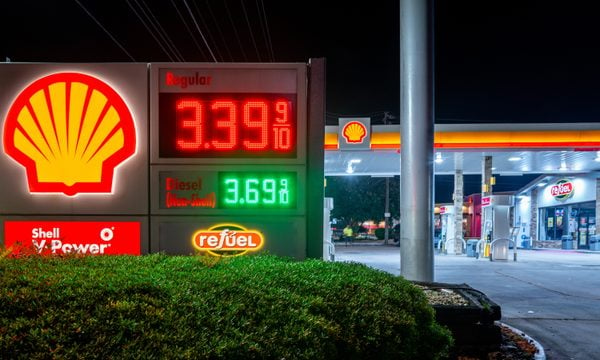
“[Data centers are] in the mix with a lot of other things,” Karol says. Namely, the economy and President Donald Trump’s low approval rating. Americans continue to be frustrated with prices and affordability due to persistent inflation stemming from tariffs and war-driven, sky-high gas prices. All are factors that are likely to weigh more heavily on voters’ minds than data centers.
“ It's the confluence of hyper-localized concerns with broader worries about AI, and who controls it and who benefits from it. ”
Still, data center backlash adds another wrinkle for some GOP candidates who are nervous about stoking the president’s ire. Trump has staunchly defended data centers as essential to U.S. competitiveness on AI. In an Oval Office appearance on Sept. 4, Trump said that communities that don't approve data centers are squandering an opportunity and could later regret it, saying, “I think if you want success, you have to go with the data center.” Ten days later, he wrote on Truth Social that the only “guardrails” AI needs is a “STRONG AND SMART (High IQ!) PRESIDENT,” adding, “There is a SICK conspiracy going on against AI and Data Centers, and the only one that is happy about it is China. WHOEVER WINS AI, WINS!f”
While Trump is all in on data center expansion, Republicans in many races are moving in the opposition direction. That disconnect could prove to be an additional liability to Republicans in states and local areas where data centers have frustrated and angered voters.
In Pennsylvania, Gov. Josh Shapiro reversed course on the support he expressed last year for a $20 billion Amazon investment in data center expansion, which at the time he called the "largest capital investment in commonwealth history.” His new position is more guarded: On Aug. 18, he signed an executive order imposing new standards for the industry, namely economic development, transparency, environmental protection and energy affordability. He has also launched attack ads targeting his Republican opponent, Stacy Garrity, over her past comments on AI and data centers.
Borick says Shapiro's own record on data centers has made the issue particularly important in the governor's race. “He’s vulnerable, so make her even more vulnerable,” Borick says of Shapiro’s attack strategy on the issue. Shapiro has spent millions of dollars on the ads, Borick says, repeatedly putting Garrity’s own words about AI and data centers in front of voters. Garrity, for her part, has advocated a pause on new data-center development and mandatory rules for the industry.
The issue is showing up in other major races, too: In Texas, Democratic challenger Gina Hinojosa has made Gov. Greg Abbott’s ties to the data center industry a target in her campaign, including over projects in rural counties. Abbott has paused permits on data center building and said he has implemented guidelines for how the facilities must operate.
And in Ohio’s Senate race, Democrat Sherrod Brown has cast Republican incumbent Jon Husted as the “face of data centers,” attacking his support for the industry and its tax incentives. Husted, meanwhile, has publicly pulled back his support for new construction, but wants to leave regulatory control in the hands of state and local governments.
Data centers opposition may not sway voters
Right now neither party has aligned itself firmly for or against either AI or data center growth, but ultimately, data centers are unlikely to be a deciding issue for voters — especially when candidate stances can be hard to differentiate.
Karol says he is also skeptical that voters’ negative sentiment about data center expansion could lead to meaningful broad political realignment.
“I don’t have any evidence that there are a lot of voters who are changing their partisan allegiances over data centers,” Karol says. “It seems more likely to me that this will be a one-off headache for politicians.”
Borick was somewhat more bullish in his assessment. "It might not be the issue that people carry at the very top of their mind into races, but in some places there's enough voters who will have it at the top of their mind and they could be really powerful in shaping outcomes in the fall," Borick says.
However, both experts cautioned against overplaying data centers as a defining issue this election cycle. Economic uncertainty is a far more powerful motivator. The Sept. 15 New York Times/Siena poll found that fewer than 1% of voters said AI or data centers were the top issue deciding their vote in November. For voters, the most critical issue remains the economy.