- Delta flies to more places in more countries than JetBlue.
- Delta has more airline-branded credit cards than JetBlue, giving SkyMiles members more opportunity to earn miles through everyday spending.
- JetBlue serves Northeast-based travelers well, given its large network from cities like Boston and New York, mostly domestically and down the East Coast.

By signing up, you will receive newsletters and promotional content and agree to our Terms of Use and acknowledge the data practices in our Privacy Policy. You may unsubscribe at any time.
In our analysis, Delta Air Lines edges out JetBlue Airways thanks to its extensive domestic and international network, strong operational efficiency and solid co-branded credit card options. That said, JetBlue holds its own, particularly for Northeast-based travelers who can take advantage of its robust East Coast presence and slightly more valuable rewards currency.
Understanding the key differences between their route networks, fees and loyalty programs can help you decide which airline is the better fit for your travel style.
Routes and destinations
Your top airline needs to fly where you want to go, either using its own aircraft or partner airline flights.
Winner for the most destinations: Delta
Delta's network dwarfs JetBlue's, offering 341 total destinations compared to JetBlue's 129. Delta is also a founding member of the SkyTeam alliance, which expands your options to nearly 1,000 destinations in 145 countries when flying Delta or an affiliated carrier.
Delta
Delta serves 213 domestic destinations and 128 international destinations. Through its SkyTeam partnerships, travelers can earn and redeem SkyMiles across a much broader global network spanning six continents.
Plus, with more than three times as many U.S. destinations as JetBlue, Delta offers far better coverage of the Midwest, South and Mountain West—regions where JetBlue's presence is limited or nonexistent.
JetBlue
JetBlue serves 65 domestic and 64 international destinations, with its route map focused heavily on the continental U.S. and extending to the Caribbean, Central America and South America. The airline's domestic destinations are primarily on the East Coast, with a handful of West Coast airports and a few scattered destinations in between.
The airline has also expanded its transatlantic presence with flights to cities like Paris and Madrid, plus service to Halifax and Vancouver in Canada.
» Learn more: The best airline this year
Reliability
Travelers want to fly on schedule and with their bags intact. That’s why on-time flight and lost luggage statistics can be helpful.
Winner for most reliable airline: Delta
Delta earned the second-highest reliability score among the six carriers analyzed by NerdWallet, while JetBlue ranked fifth. Delta's edge comes primarily from its on-time performance, though the two airlines are closer than you might expect on cancellations and baggage handling.
Delta
Delta's strength is getting you where you're going on time. Its 80.27% on-time rate was the best among all six airlines in NerdWallet's analysis. While its cancellation rate of 1.37% trailed JetBlue's slightly, Delta's overall operational consistency earned it the No. 2 spot in this category, behind only Southwest.
JetBlue
JetBlue's on-time performance lagged significantly behind Delta's, with 74.27% of flights arriving on schedule. However, JetBlue's cancellation rate was slightly better at 1.34% versus Delta's 1.37%. On baggage handling, the two airlines were nearly identical—0.47% of JetBlue's checked bags were mishandled compared to 0.46% for Delta.
» Learn more: What to do if an airline loses your luggage
Fees
Finding a low fare is only part of the equation, as extra fees for bags and seat selection can add up quickly. The good news is that both airlines offer ways to waive these charges through elite status, co-branded credit cards or premium fare classes.
Winner for the lowest fees: Delta
This one might surprise you: Delta has the lowest total fees among all six airlines in NerdWallet's analysis, while JetBlue ranks dead last.
When factoring in bag fees and seat selection costs, Delta passengers pay an average of $104.99 compared to $173.33 for JetBlue. The difference comes down to JetBlue's higher checked bag prices and steeper seat selection fees.
Delta
Delta charges $45 for the first checked bag and $55 for the second on domestic flights ($90 total).
Delta's seat selection policy is also more straightforward. Main Cabin passengers and above can select standard seats for free during booking, but preferred seats in more desirable locations cost extra. Basic Economy passengers receive a seat assignment at check-in, though they can pay a fee to choose in advance (the amount varies by route). Basic economy passengers don't have access to preferred seats.
SkyMiles Medallion members and Delta SkyMiles American Express cardholders can check bags for free. Also, some Delta credit cards and Medallion members can access preferred seating benefits, making Delta's already-lower fees easy to avoid. Terms Apply.
JetBlue
JetBlue's checked bag fees are among the highest in the industry. Prices will vary depending on when you're traveling (JetBlue has a calendar for peak and off-peak baggage fee pricing) and when you add your checked bag to your reservation. You can save up to $10 per bag if you do it before check-in opens.
For seat selection, JetBlue offers free standard seat selection on Blue, Blue Plus, Blue Extra and Mint fares. However, Blue Basic passengers must pay to choose their seat in advance, and the airline now charges extra for "Core Preferred" seats, which are closer to the front of the cabin, on all fare types. You'll also have to pay extra for EvenMore seats, which offer extra legroom and other perks. The cost for each varies depending on the route.
Mosaic elite members and JetBlue Plus Card, JetBlue Business Card or JetBlue Premier Card holders can check the first bag free, and Mosaic members get free access to Core Preferred and Even More Space seats when available.
» Learn more: Which airlines have the best (and worst) fees this year?
Rewards rate
A loyalty program rewards travelers for doing business with the airline and allows them to earn miles toward future travel and elite status for improved benefits. Credit cards can also help with accumulating miles and status.
The rewards rate reflects how many miles you earn per dollar spent and how much those miles are worth when redeemed.
Winner for the highest rewards rate: JetBlue
This is JetBlue's clearest advantage over Delta. NerdWallet's analysis found that JetBlue TrueBlue members receive an effective 8.4% return on airfare spending, compared to just 6% for Delta SkyMiles members.
That gap makes JetBlue the second-best rewards program among the six airlines analyzed (behind only Alaska Airlines), while Delta ties for last place with United.
JetBlue
JetBlue TrueBlue points are worth approximately 1.4 cents each when redeemed for award travel—the highest valuation among the airlines in NerdWallet's analysis. Combined with a base earning rate of 6 points per dollar on JetBlue flights (excluding Blue Basic fares, which earn just 2 points per dollar), that adds up to meaningful value for frequent flyers.
You can boost your earning potential further through elite status, JetBlue credit cards and booking directly on JetBlue's website, with bonus multipliers stacking up to 17 points per dollar on airfare.
Delta
Delta SkyMiles are worth roughly 1.2 cents each—solid, but below JetBlue's valuation. The base earning rate of 5 miles per dollar on Main Cabin fares and above also trails JetBlue's 6 points per dollar.
Delta's SkyMiles program shines when redeeming miles for international flights on SkyTeam partner airlines, where you can often find better value than on Delta-operated routes. Medallion elite members can earn up to 11 miles per dollar, which helps close the gap for frequent Delta flyers.
» Learn more: How much are travel points and miles worth this year?
Credit cards
The right airline credit card can transform your travel experience, offering perks like bonus miles on everyday spending, waived bag fees and a faster path to elite status.
Winner for the most valuable credit cards: Delta
This one is closer than you might expect. JetBlue's card portfolio actually delivers stronger earning rates—an average of 4.3% back across its cards, compared to 3.6% for Delta, according to NerdWallet's analysis.
But Delta takes this category overall thanks to a deeper card lineup and more premium benefits at the higher tiers. The standout difference: Delta's Platinum and Reserve cards include an annual companion certificate that can easily offset their annual fees with a single redemption. Terms Apply.
Delta
Delta's partnership with American Express yields seven co-branded cards—four personal and three business options—giving travelers more flexibility to match a card to their spending habits.
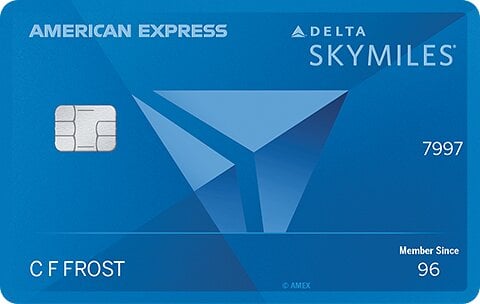
The no-annual-fee Delta SkyMiles® Blue American Express Card earns 2x miles on Delta purchases and dining (Earn 2X Miles per dollar at restaurants worldwide, plus takeout and delivery in the U.S.) but lacks free checked bags or priority boarding.
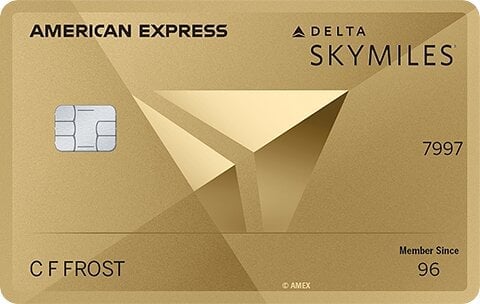
Most Delta flyers may gravitate toward the Delta SkyMiles® Gold American Express Card ($0 annual fee the first year, then $150), which includes the first checked bag free for the cardholder and up to eight companions on Delta flights worldwide, plus a second bag free for the cardholder on domestic Delta flights. Other benefits include priority boarding, a 15% discount on award redemptions and a $200 flight credit after spending $10,000 in a calendar year.
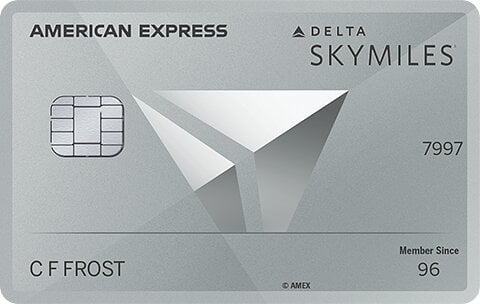
The Delta SkyMiles® Platinum American Express Card ($350 annual fee) adds an annual companion certificate valid for Main Cabin round-trip flights within the U.S. and to select destinations — a perk that can easily be worth more than the annual fee. It also accelerates status earning with Medallion Qualifying Dollar boosts.
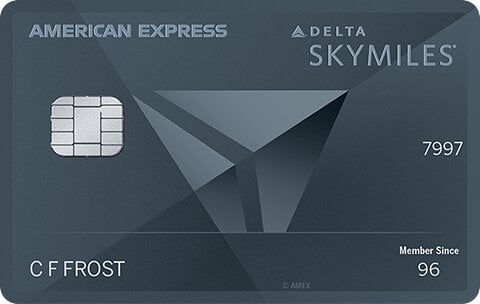
At the top, the Delta SkyMiles® Reserve American Express Card ($650 annual fee) provides access to Delta Sky Clubs and American Express Centurion Lounges when flying Delta, plus the companion certificate and an even faster path to Medallion status.
Terms apply.
Delta cards
Still not sure?
JetBlue
JetBlue offers four co-branded cards through Barclays—three personal options and one business card. While the selection is smaller than Delta's, the earning potential is strong.
The entry-level JetBlue Card carries no annual fee and earns 3x points on JetBlue purchases and 2x at restaurants and grocery stores. It's a solid starter card, though it lacks bag benefits or priority boarding.
The JetBlue Plus Card ($99 annual fee) adds the first checked bag free for the cardholder and up to three companions, a 5,000-point anniversary bonus, a 10% rebate on redeemed points and a $100 annual credit toward JetBlue Vacations packages. All JetBlue cards also include 50% off in-flight food and drink purchases—a higher discount than most airline cards offer.
For frequent flyers, the JetBlue Premier Card ($499 annual fee) unlocks Priority Pass lounge access for the cardholder and one guest, along with complimentary entry to JetBlue's own lounges at JFK and Boston Logan Airport (opening mid-2026). Cardholders also receive up to $300 in annual TrueBlue Travel credits and a Global Entry or TSA PreCheck fee credit.
JetBlue cards


Still not sure?
JetBlue vs. Delta recapped
Delta is the stronger airline overall, but the margin depends on what matters most to you.
Delta dominates in network reach, operational reliability and—perhaps surprisingly—fees. Delta's co-branded credit card lineup also offers more options and premium perks like companion certificates that can deliver outsized value.
JetBlue fights back on rewards. Its TrueBlue program delivers an 8.4% effective return on airfare spending compared to Delta's 6%, and its credit cards average a 4.3% earning rate versus Delta's 3.6%. For travelers focused on maximizing points, that's a meaningful edge.
The bottom line: Delta is the better choice for most travelers, particularly those who value schedule flexibility, a global route network and consistent operations. JetBlue makes sense if you're based in the Northeast, fly primarily to destinations on the East Coast, Caribbean or select European cities and want to squeeze more value from your rewards. But for sheer versatility and reliability, Delta has the edge.
How to maximize your rewards
You want a travel credit card that prioritizes what’s important to you. Here are some of the best travel credit cards of 2026:
Flexibility, point transfers and a large bonus: Chase Sapphire Preferred® Card
No annual fee: Wells Fargo Autograph® Card
Flat-rate travel rewards: Capital One Venture Rewards Credit Card
Bonus travel rewards and high-end perks: Chase Sapphire Reserve®
Luxury perks: American Express Platinum Card®
Business travelers: Ink Business Preferred® Credit Card