
If you're dreaming of a cruise, the right timing could save you a bundle. Each cruise destination has its own off-season and peak season, and fares can vary dramatically throughout the year. That's according to pricing data provided to NerdWallet by Cruise Critic, a cruise review site owned by Tripadvisor.
Cruise Critic looked at average starting fares for five- to seven-night cruises (seven nights for Alaska) on rates across all the cruise lines it tracks in four major regions: the Caribbean, the Bahamas and Bermuda; the Mediterranean; the Mexican Riviera; and Alaska. The data, all pulled in June 2026, hones in on cruises for 2027, so you can start planning for next year's vacation now.

By signing up, you will receive newsletters and promotional content and agree to our Terms of Use and acknowledge the data practices in our Privacy Policy. You may unsubscribe at any time.
The Caribbean, the Bahamas and Bermuda
Cheapest month in 2027: October.
Average inside room fare: $716.
Average balcony fare: $1,064.
Most expensive month in 2027: July.
Average inside room fare: $1,092.
Average balcony fare: $1,545.
The Caribbean, the Bahamas and Bermuda are popular places for cruising because of their warm weather and natural beauty. Many cruise operators have their own private islands — a trend Norwegian Cruise Line led the way on when it acquired Great Stirrup Cay, the cruise industry's first, in 1977. These islands can appeal to cruisers because meals on land are typically included with cruise fare, and the islands tend to be well-staffed with lifeguards. Private islands can also eliminate much of the hassle of international travel, such as exchanging currency.
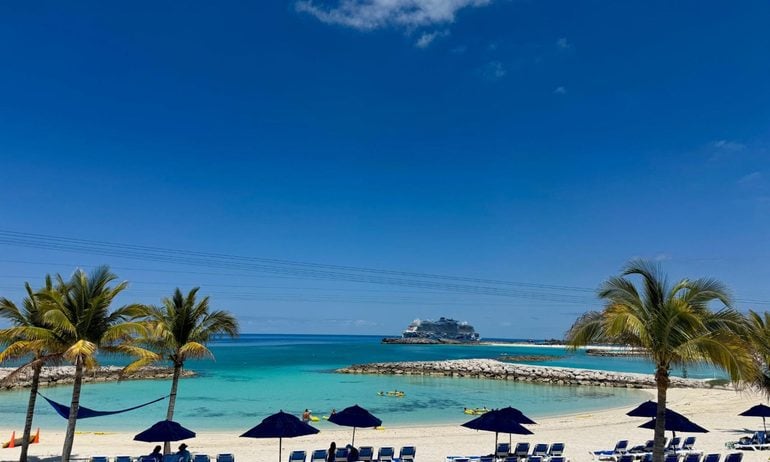
Fares peak in early summer both years, then fall to their lowest in September and October. That's a savings of more than 30% on an inside cabin in September versus June.
But sailing then comes with risks. The peak of the Atlantic hurricane season is mid-September, according to the National Oceanic and Atmospheric Administration. If you do sail then, have a good travel insurance policy and a strong backup plan.
Mediterranean
Cheapest month in 2027: January
Average inside room fare: $673.
Average balcony fare: $1,018.
Most expensive month in 2027: August.
Average inside room fare: $1,460.
Average balcony fare: $1,865.
Mediterranean cruises cover a large area that includes countries such as Greece, Italy, Spain and Turkey. Travelers often choose these sailings as an efficient way to see multiple countries without having to unpack multiple times.
The raw cheapest fares land in the dead of winter, but November is the practical sweet spot: You'll dodge the summer crowds and still get reasonable weather. Unsurprisingly, summer, when most kids are out of school, is the most expensive season, with August topping the charts, followed closely by July and September.
November is also cooler, with daytime highs generally in the high 60s and low 70s, letting you avoid the 80s and 90s typical of August.
Mexican Riviera

Cheapest month in 2027: February.
Average inside room fare: $551.
Most expensive month in 2027: December.
Average inside room fare: $930.
Average balcony fare: $1,568.
Mexico stands out as one of the most affordable cruise destinations in the fall, especially if you're willing to go for an interior room.
The Mexican Riviera lines the western coast of Mexico and includes cities such as Puerto Vallarta and Cabo San Lucas. December is pricey here, as snowbirds seek warmer temperatures. For the cheapest fares, sail in late summer or early fall — August and September are consistently the lowest.
Lower fares in September are also due in part to the region’s peak hurricane activity. Again, travel insurance can be especially useful for cruises during this time.
Alaska
Cheapest month in 2027: April.
Average inside room fare: $840.
Average balcony fare: $1,391.
Most expensive month in 2027: July.
Average inside room fare: $1,251.
Average balcony fare: $2,452.
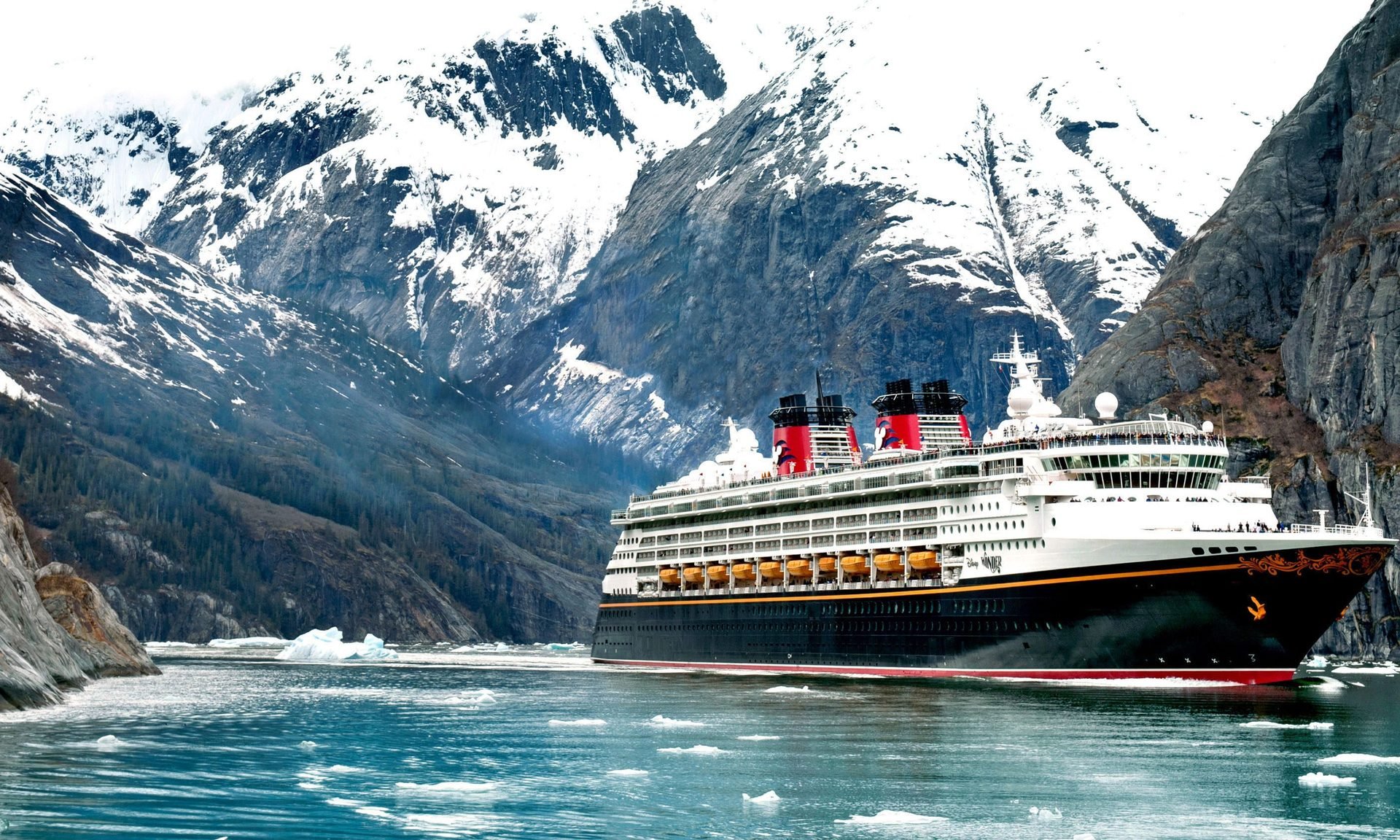
Alaska cruises are a great way to see breathtaking landscapes, including mountains and glaciers. Summer months are the most popular, given their nicer weather and longer daylight hours.
But summer is also the priciest time to go, especially for balcony cabins — and in Alaska, a balcony is worth considering, since you'll actually use it for glacier and wildlife viewing. In the 2027 season, a July balcony averages $2,452, versus $1,391 in April and $1,697 in October — early- and late-season shoulder months run roughly 30%–45% cheaper. The tradeoff for those sailings: shorter days, colder temperatures and rougher seas.
How to save on cruise fares
Compare prices across cruise lines
These are averages across all mainstream cruise lines. Individual cruise line pricing can vary dramatically — for example, Royal Caribbean sailings to the Caribbean, Bahamas and Bermuda in 2026 average more than 60% cheaper than Disney Cruises for most of the year, according to data provided by Cruise Critic to NerdWallet.
During peak summer months, Royal Caribbean averages around $550–$710 for starting prices, compared with Disney's $1,400–$1,900 for comparable three- to five-night sailings. So while these month-by-month trends hold true across the industry, your choice of cruise line matters just as much as when you sail.
Watch for lower prices
In the cruise world, "wave season" — typically January through March — is an ideal time to book a trip, as cruise lines offer deals to fill ships for the year ahead. But even outside that window, prices can vary widely.
"Check different times of the year, and be flexible with the date you sail," says Matt Roseboom, publisher of Attractions Magazine, a print and digital media outlet that covers vacationing. "Sometimes prices might be different even a week apart."
Compare package deals and add-ons
Cruise fares can be tough to compare because they tend to vary in terms of costs for additional guests, kids, alcohol packages and services like Wi-Fi.
"Oftentimes value-add deals — like third and fourth guests sail free, complimentary Wi-Fi and onboard credit — can outweigh the savings you might find from strictly lower fares," says Colleen McDaniel, editor-in-chief of Cruise Critic. "You may be able to save thousands on the final cost of your trip by taking advantage of those offers."
Skip the extras
But if you don’t drink a lot, or you need a vacation from the internet, you can easily skip that unlimited drink package or Wi-Fi add-on — they might not be worth the extra cost. The same goes for your cabin choice.
“Don’t get a bigger cabin than you need, as most people aren’t there that much,” Roseboom says. “Sure, some people like to sit on a balcony. But if you don’t care, then get a room without a balcony, as you’ll save a lot of money.”
How to maximize your rewards
You want a travel credit card that prioritizes what’s important to you. Here are some of the best travel credit cards of 2026:
Flexibility, point transfers and a large bonus: Chase Sapphire Preferred® Card
No annual fee: Wells Fargo Autograph® Card
Flat-rate travel rewards: Capital One Venture Rewards Credit Card
Bonus travel rewards and high-end perks: Chase Sapphire Reserve®
Luxury perks: American Express Platinum Card®
Business travelers: Ink Business Preferred® Credit Card