Wondering how to travel on a budget? While it may seem like traveling is exclusive to those with cash to spare, you don’t have to overspend in order to get out of town. There are plenty of ways to travel on a budget — including using reward points or miles and traveling during ideal times— that can end up saving you a lot of money. Here's travel guide for beginners on a budget.
Start planning early
If this is your first big trip, odds are you’ve already started planning. That’s good — the sooner you start, the more time you have to save money. Travel prices rise and fall with demand, and the cycle fluctuates as your travel dates get closer.
Beginning your planning early gives you the best chance of finding discounted hotel rooms, cheaper flights and other less-expensive activities. Although you won’t find the cheapest prices far out in advance (as we mentioned, it’s a cycle) keeping an eye on rates will allow you to jump on them and book when they drop.

By signing up, you will receive newsletters and promotional content and agree to our Terms of Use and acknowledge the data practices in our Privacy Policy. You may unsubscribe at any time.
Book at the right time
This bears repeating. Why? Because when you book and when you travel can make a huge difference in the price of your vacation. This applies to flights and hotels.
Confused about when the "right time" to book will be? There are multiple free tools available online to help you.
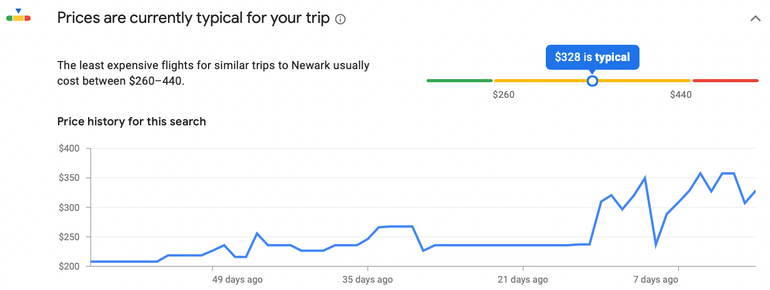
One of the easiest to use is the price tracking tool available via Google Flights. This service lets you know how the fare you’re looking at purchasing compares with past pricing. It also lets you know if rates are high or low compared with average costs.
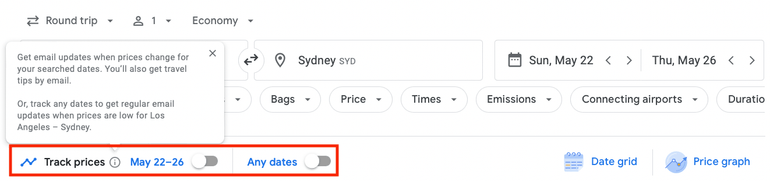
If the flight you’re considering does appear to be expensive, Google Flights also features a price tracker alert system that will email you when fares drop. You can toggle this feature on within the search bar.
🤓 Nerdy Tip
According to Expedia, the best day of the week to buy your airline ticket is on Sunday. Go where it’s cheap — not where it’s trendy
If you’re truly focused on saving money, don’t start by picking a destination and hoping for a deal — flip the script.
Instead, decide on where to go based on price. Use fare deal websites or tools like Google Flights’ Explore map to find the cheapest flights available from your home airport.
Then consider more than just airfares, but costs once you're there. A cheap flight to Orlando might be tempting, but that also might come with the temptation to splurge on Disney tickets (which are hardly cheap).
Some generally budget-friendly destinations include U.S. national parks, which often have low entrance fees (plus some free days) and inexpensive camping options.
Skip overpriced tours
There’s nothing like getting out into a new city to explore. But how much of that exploring can you do on your own? With the information available online, it’s simple and easy to conduct your own tour for free rather than paying for a guide.
If this doesn’t sound appealing to you, consider instead one of the many free tours that many major cities offer. These walking tours will give you tons of information about the area completely free of charge, though gratuities are welcomed.
Otherwise, apps such as Spotted By Locals, Tripadvisor and Rick Steves offer comprehensive information for many large cities. Often this is free, but sometimes you’ll need to pay a nominal fee.
Use reward points
One of our favorite ways to save money includes redeeming reward points for travel. Some of your biggest expenses, such as hotels and flights, can be wiped away by using reward points during your trip.
This type of travel takes planning; you’ll need to accrue enough points to make a travel redemption. Much of the time, this is accomplished through welcome bonuses earned when you open a travel credit card.
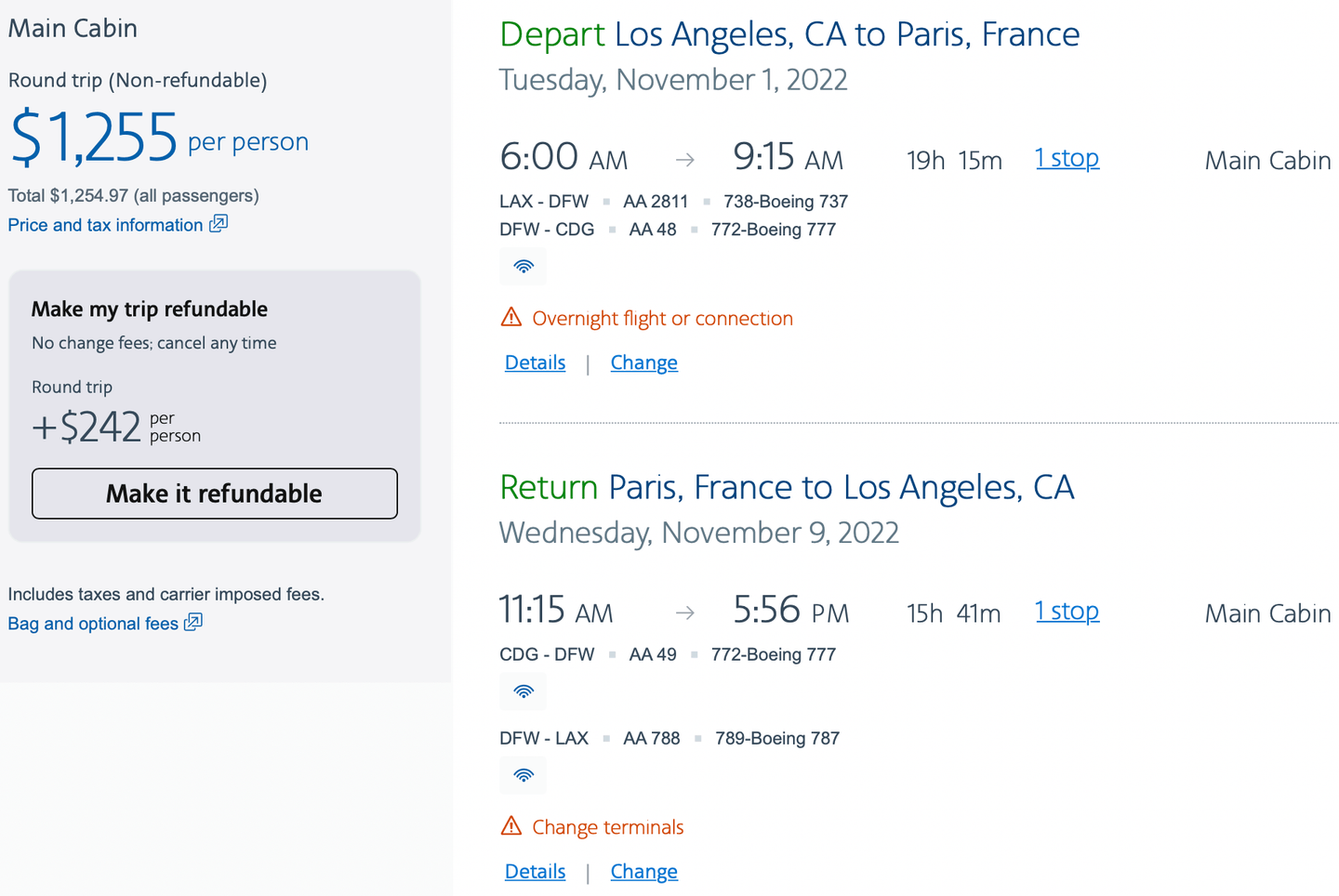
For example, a round-trip flight from Los Angeles to Paris costs $1,255 at the beginning of November 2022.
This same flight can be booked using 45,000 American Airlines miles.
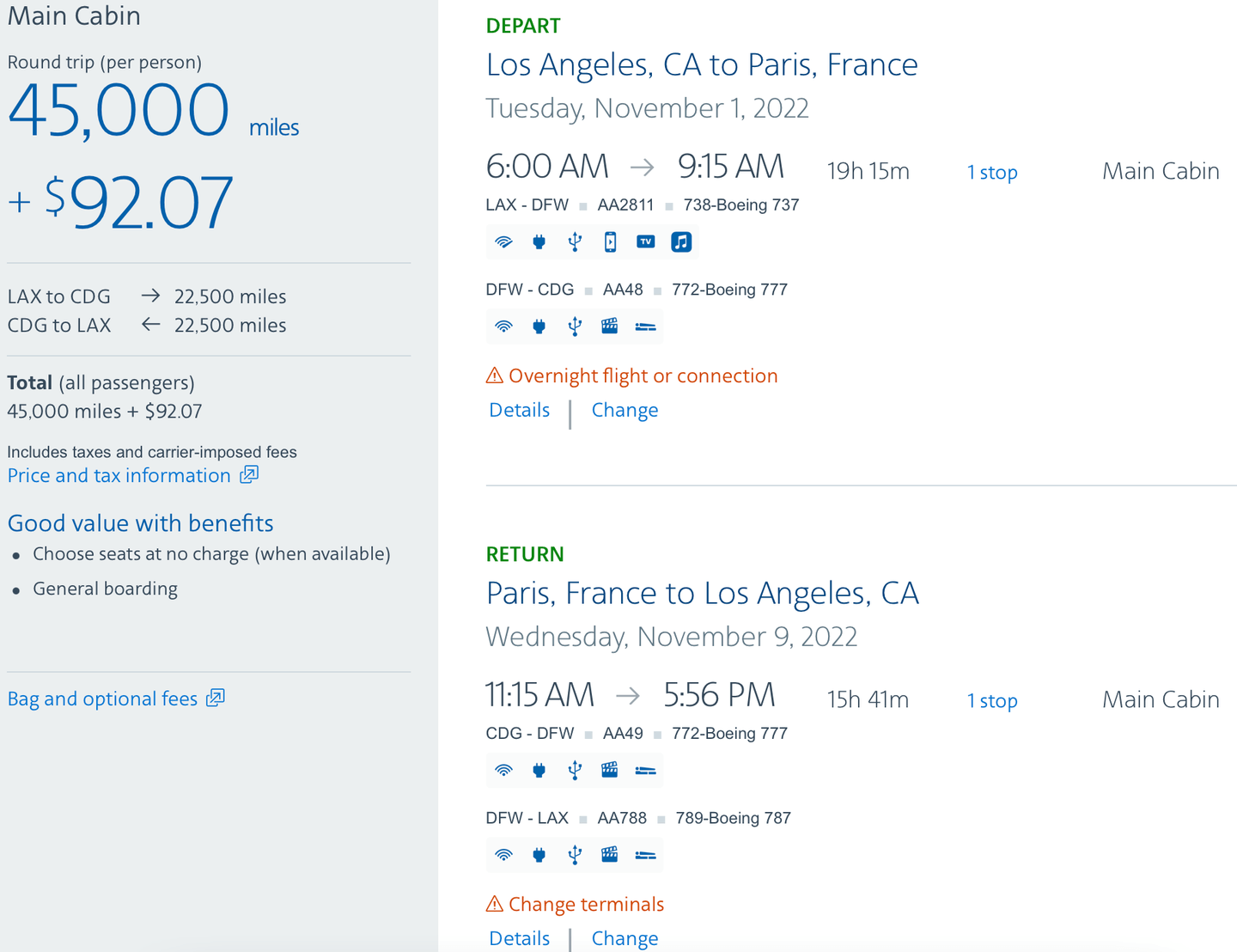
While 45,000 miles may seem like a lot, you can earn this amount of miles with the right welcome bonus. The Citi® / AAdvantage® Platinum Select® World Elite Mastercard®, for example, currently has this offer: Earn 50,000 American Airlines AAdvantage® bonus miles after spending $2,500 in purchases within the first 3 months of account opening.
🤓 Nerdy Tip
Many co-branded airline credit cards also offer perks like free checked bags and priority boarding, saving you time and money. The same can be said of hotel credit cards. Most major hotel chains have co-branded credit cards, including Hilton, Marriott, IHG, Hyatt, Choice and Wyndham. These credit cards — and their sign-up bonuses — can go a long way toward cutting costs on your vacation.
Even better, many of these credit cards offer complimentary elite status. Elite status can grant you perks such as free breakfast, room upgrades, free WiFi and late checkout.
It’s a good idea to consider booking hotel rooms using points, especially for budget family travel. Sometimes hotels charge more for additional people in your room, but these costs won’t translate to reward redemptions. You’ll generally pay the same standard price as long as you can all safely occupy the room.
» Learn more: The best travel credit cards right now
Travel in the off-season
Along with using reward points, taking your trip during the offseason is another excellent way to save money. Each destination has a peak period of demand during which prices will be inflated.
This will include flights, hotels, tours and even dining, making traveling on a budget difficult. In Europe, the high season is in the summer, when most people come to visit.
During this time, flights will be at their most expensive. Remember the above example featuring that flight to Paris for $1,255? A similar flight during peak season will cost $2,070 round trip.
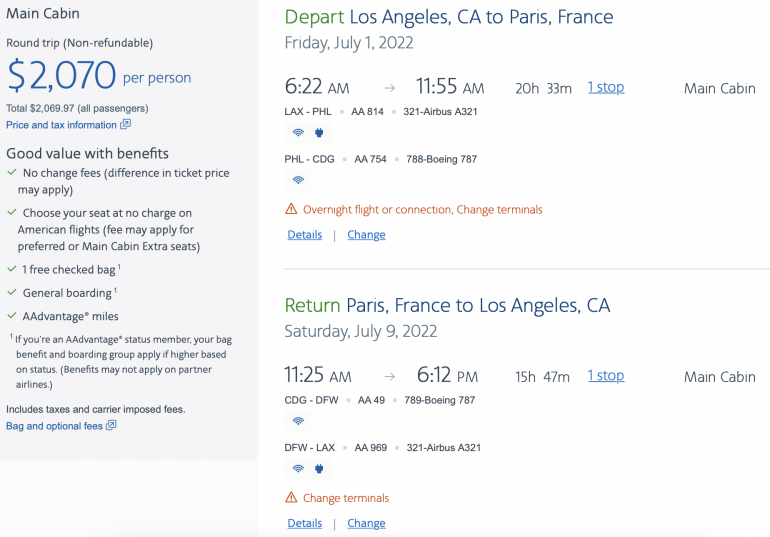
As you can see, even if you’re paying cash for your flights you’ll be saving over $800 by taking your trip when demand is lower.
» Learn more: Why "shoulder season" is the best time to travel
If you want to travel on a budget
Vacations don’t have to be expensive. Whether you’re a vacation veteran or a travel newbie, it’s easy to save on trips by starting planning early and keeping an eye on prices.
More importantly, taking advantage of reward points can significantly cut down on flight and hotel costs. Otherwise, traveling during the offseason can help drop expenses and allow you to travel on a budget.
How to maximize your rewards
You want a travel credit card that prioritizes what’s important to you. Here are some of the best travel credit cards of 2026:
- Flexibility, point transfers and a large bonus: Chase Sapphire Preferred® Card
- No annual fee: Wells Fargo Autograph® Card
- Flat-rate travel rewards: Capital One Venture Rewards Credit Card
- Bonus travel rewards and high-end perks: Chase Sapphire Reserve®
- Luxury perks: American Express Platinum Card®
- Business travelers: Ink Business Preferred® Credit Card
Explore more on
Article sources
NerdWallet writers are subject matter authorities who use primary,
trustworthy sources to inform their work, including peer-reviewed
studies, government websites, academic research and interviews with
industry experts. All content is fact-checked for accuracy, timeliness
and relevance. You can learn more about NerdWallet's high
standards for journalism by reading our
editorial guidelines.