Business owners with bad personal credit have two options for business credit cards: secured cards and corporate cards.
For most small businesses, a secured card will be your best bet. Secured cards require a cash security deposit, but are easy to get even if your credit score is low. Plus, paying your bill on time can help you build business credit.
Corporate cards typically don't require a credit check, but your business will need steady revenue and a five-figure bank balance to qualify. They’re a better fit for larger, more established businesses.
Whichever you choose, consider a secured personal credit card too. Using that responsibly will help build your personal credit over time. Personal credit almost always plays a role in business finances. The sooner you invest in it, the better.
≡ Show summary of bad credit business cards
Best bad credit business cards
Bank of America® Business Advantage Unlimited Cash Rewards Mastercard® Secured credit card: Secured business card.
First National Bank of Omaha Business Edition Secured Mastercard Credit Card: Secured business card.
Valley Bank Visa® Secured Business Credit Card: Secured business card.
Suncoast Credit Union Business Secured Visa: Secured business card.
Visions Federal Credit Union Secured Business Card: Secured business card.
Lili BusinessBuild Card: Business credit building card.
Nav Prime Card: Secured business credit building card.
Capital One Quicksilver Secured Cash Rewards Credit Card: Secured personal card.
Brex Card: Corporate card (not available to sole proprietors).
Ramp Card: Corporate card (not available to sole proprietors).
BILL Divvy Corporate Card: Corporate card.
Capital on Tap Business Credit Card: Business card for fair credit (not available to sole proprietors).
Capital One® Spark® Classic for Business: Business card for fair credit (including sole proprietors).
 Why trust NerdWallet
250+ small-business products reviewed and rated by our team of experts.
80+ years of combined experience covering small business and personal finance.
Objective comprehensive business credit card ratings rubric (Methodology).
NerdWallet's business credit card content, including our ratings, reviews and recommendations, is overseen by a team of writers and editors who specialize in business credit cards. Their work has appeared in The Associated Press, Washington Post, MarketWatch, Nasdaq, Entrepreneur, ABC News, MSN and other national and local media outlets. Each writer and editor follows NerdWallet's strict editorial guidelines to ensure fairness and accuracy in our coverage. We independently evaluate and rate dozens of small-business credit cards, scoring them on fees, rewards rates, bonus offers and other features to help you choose the best business card for your company.
Best business credit card options if you have bad credit
Secured business credit cards
A secured business credit card is the best way to establish and build your business credit if you can’t qualify for a traditional business card. Prioritize paying your card on time. Also, aim to keep your credit utilization relatively low to have a positive impact on your business credit score.
Here are some secured business credit cards from banks and credit unions. Eligibility may depend on where you live:
Secured business credit cards
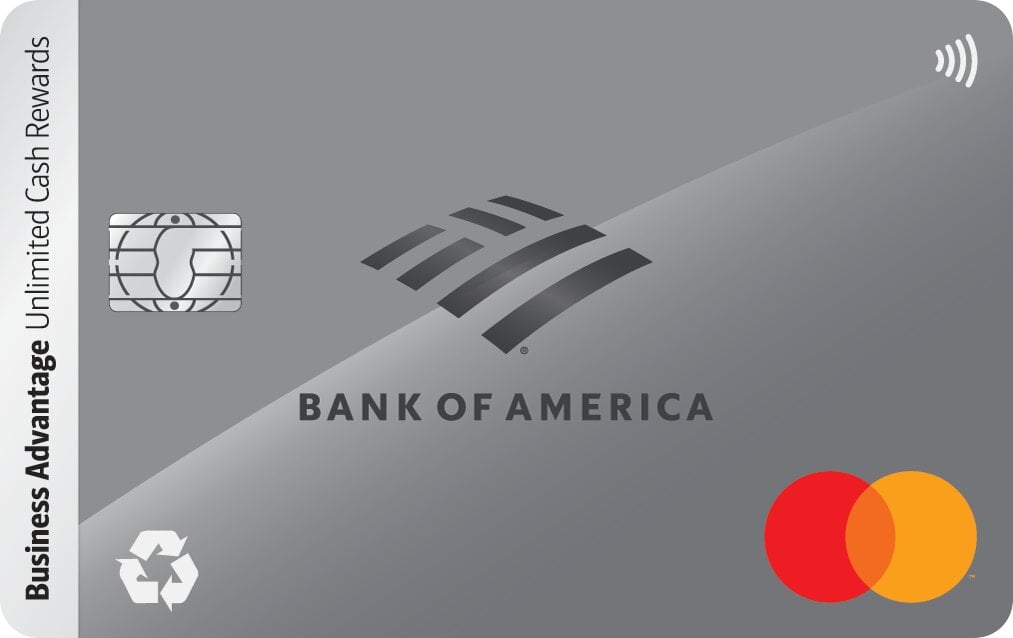
Bank of America® Business Advantage Unlimited Cash Rewards Mastercard® Secured credit card: This card is our pick for the best secured business credit card and is available nationally. It has no annual fee and earns 1.5% cash back on all purchases. You need a security deposit of at least $1,000, which is equal to your credit limit. Bank of America will periodically review your account and may upgrade you to an unsecured card if and when you qualify. Read NerdWallet’s review.
Valley Bank Visa® Secured Business Credit Card: Service area includes Alabama, California, Florida, New Jersey and New York. This card earns 1% cash back on all purchases and offers a six-month 0% APR introductory period. Learn more at Valley Bank.
Visions Federal Credit Union Secured Business Card: Service area includes parts of New York, Pennsylvania and New Jersey. This card pays 1% cash back (automatically credited to your account once you’ve earned $25) and has both secured and unsecured versions. Learn more at Visions FCU.
Suncoast Credit Union Business Secured Visa: Businesses located in the Florida-based credit union's 40-county service area can become members and apply. This card requires a minimum credit score of 560. You can earn one point per dollar spent and redeem points for travel and merchandise. Learn more at Suncoast CU.
First National Bank of Omaha Business Edition Secured Mastercard Credit Card: Service area includes parts of Colorado, Illinois, Iowa, Kansas, Nebraska, South Dakota, Texas and Wyoming. There must be an FNBO branch in your ZIP code to apply. This card has a $39 annual fee, while the others have no annual fee. But consider it if the other cards aren’t available to you. Learn more at First National Bank of Omaha.
Credit-building services
Some services focus on building your business credit. Business credit is different from your personal credit. But it’s based on some of the same factors — on-time payment history, credit utilization and length of your credit history. Your business credit scores grade your business’s ability to pay back debt on time and in full.
Good business credit may give your financing application a boost. But a good business credit score probably won't outweigh a bad personal credit score. The best credit builders help you build both types of credit at the same time.
Some business credit builder services include secured business credit cards in their packages.
Business credit building services
Lili BusinessBuild Credit Card: This secured business card is available to Lili business banking users. It's part of Lili's business credit building product suite, so the cost is higher than a business credit card alone. The first month is free, then it's $18 per month for the next three months. After that, the full rate of $30 per month kicks in. Activity on the secured card and payment of the monthly subscription fee are reported as separate trade lines to Dun & Bradstreet. Learn more at Lili.
Nav Prime Card: Like Lili’s card, the Nav Prime secured business card is part of a broader business credit building service. On-time payments will build both your personal and business credit. This is the most expensive option on our entire list of bad-credit options ($39.99 or $49.99 per month depending on your billing cycle). If your goal is building personal and business credit in tandem, Nav Prime's dual-bureau reporting may justify the cost. If you only need business credit, a free secured card like the Bank of America option almost always makes more sense. Learn more at Nav.
Corporate cards
Corporate credit cards are best for businesses with a bank balance of $20,000 or higher and substantial annual revenue. Most require you to operate as a corporation or LLC. And you'll usually have to pay down your balance in full at the end of every month.
These corporate card options may be available to newer, smaller businesses.
Corporate cards
Ramp Card: The corporate charge card has no annual fee, built-in expense management and card-level spending controls. Ramp also offers cash back on qualified purchases, but the actual reward rate varies by business. You’ll need strong revenue and at least $25,000 in the bank to qualify. Learn more and apply.
BILL Divvy Corporate Card: This card is available to sole proprietors, unlike Ramp, and the minimum bank balance is a bit lower at $20,000. If approved, you can earn up to 7x points on restaurants and 5x points on hotels, though weekly payments are required to hit the top tier. Learn more and apply.
Business credit cards for fair or average credit
The following business credit cards are available to business owners with fair or average credit (typically a FICO score between 630 and 689).
Fair credit business credit cards
Capital One® Spark® Classic for Business: This card has no sign-up bonus and the APR is high, but you’ll get 1% cash back on all purchases. It’s also one of very few options from major card issuers available to sole proprietors with fair credit. Learn more.
Capital on Tap Business Credit Card: The Capital on Tap Business Credit Card issued by WebBank offers 1.5% cash back on all purchases, no annual fee and may be available to entrepreneurs with fair credit. One important note: This card is not available to sole proprietors. Learn more and apply.
Other financing options for business owners with bad credit
Business owners with less-than-perfect personal credit have limited options for business credit cards and business funding. But there are a few options that exist beyond secured and corporate cards.
If you need more capital than a secured card allows:
There are some business loans you might qualify for. For example, Fundbox’s business line of credit goes up to $250,000, and business owners with a credit score of at least 600 and three months in business can qualify. Here’s NerdWallet’s list of the best business loans for bad credit.
You can also consider a personal loan for bad credit. We always recommend separating your personal and business finances, but most entrepreneurs have to rely on personal savings or personal loans at some point. A loan in your name can offer short-term financing plus the opportunity to strengthen your personal credit for future business borrowing needs.
If you don’t want to put down a deposit:
Invoice financing or a merchant cash advance could make sense. With both types of financing, your loan is secured by your future receivables. That means you pay the lender back with a fixed amount based on an invoice or with a fixed percentage of your sales.
In general, invoice financing and MCAs are more expensive than traditional business lines of credit. But they also tend to be easier to qualify for.
How do you apply for a business credit card with bad credit?
Follow these steps to make sure you’re finding the right product for your needs.
Know your credit score. Applying for a bunch of credit cards in a short time frame can hurt your credit score. It's also a red flag to issuers. So before you apply for a business credit card, check your personal credit score. Then you can focus on cards with the best chance of approval. You can get a free credit score from NerdWallet.
Identify your goals. Do you want to build your personal credit, your business credit or both? If the answer is both, you’ll have to look for products that report to both personal and business credit bureaus. (Nav Prime is one of the few.) Or you can apply for both a personal and a business card.
Talk to your business banker, if you have one. Your local bank or credit union may offer a secured business card. That may be a great option, especially if it doesn’t charge an annual fee. Plus, you’ll have the opportunity to start a relationship with a business bank right away.
Research fees. Unfortunately, your financing options are limited when you have bad credit. Some companies take advantage of that by charging very high fees or interest rates. If you don’t feel confident in your understanding of how a product works or how much you’ll be paying for it, don’t use it.
Apply. You can apply for most business credit cards online. This will temporarily hurt your personal credit. If your credit score is already low, you’ll want to avoid dinging it for no reason. You typically can’t prequalify for a business card, or understand in advance if an approval is likely. So double-check the requirements before you click “apply.”
Make your deposit. If you’re approved for a secured card, you can make your deposit via ACH transfer. Corporate cards don't require a deposit, but you will need to connect your business bank account and provide financial statements to prove things like revenue and time in business.
Frequently asked questions
Can you get a business card with a 500 credit score?
Yes, with a credit score of 500 or lower you can usually get a secured business credit card, like the Bank of America® Business Advantage Unlimited Cash Rewards Mastercard® Secured credit card or the Valley Bank Visa® Secured Business Credit Card.
What is the minimum credit score needed for a business credit card?
The minimum credit score to qualify for most business credit cards is 690, though some require excellent credit (720 or higher).
Do they run your personal credit for a business credit card?
Yes, almost all business credit cards require a personal credit check. This is true even for secured business cards (though you can qualify with a very low credit score). The hard credit inquiry will show up on your personal credit report; after that, most business cards don't appear on your personal credit unless you stop paying your bill.
💻 How I wrote this article
I'm Rosalie Murphy, and I've been writing about small-business finances at NerdWallet since 2021. I interviewed the following people in August 2025. Their insights helped inform the way I talk about personal and business credit on this page:
Gerri Detweiler, a business credit expert at Nav.
Sri Kaza, former CEO at BriteCap Financial.
Paul Cheetham, founder of M&A firm Vanla Group.
Dan Partika, a senior sales manager at NerdWallet Small Business.
Note: Nav and BriteCap Financial have business relationships with NerdWallet as of this writing. I have no involvement in those relationships and did not discuss their details with these sources. Here's our editorial independence policy.
Information for the Capital One® Spark® Classic for Business has been collected by NerdWallet and has not been reviewed by or provided by Capital One.
Methodology
NerdWallet's writers and editors monitor more than 70 business credit cards to select the best options without outside input from partners or other business interests. We evaluate business cards based on value and simplicity, weighing fees, sign-up bonuses and reward rates, alongside perks like interest-free periods, statement credits and elite status (for travel cards).
We consider more than 20 data points for each card we score, including detailed information about rewards, credits and fees. We gather this information from rates and fees documents, deposit account agreements, financial institution websites and company representatives.
Our editorial team regularly reviews and updates our data to ensure consistency and accuracy. We also update our scoring on an ongoing basis to reflect changing industry norms and business owner needs. For instance, in 2026, we added a small deduction for cards that don’t allow users to issue virtual cards and removed the small increase for cards with no preset spending limit.
Final star ratings range from one to five stars. A five-star score represents the best available product for the largest number of business owners. Learn how NerdWallet rates small-business credit cards.