




Updated on Oct. 15.
Inflation is the rate at which the price of goods and services increases. As a result of inflation, the purchasing power (value) of money decreases over time. Inflation affects the prices of everything around us.
Current inflation readings
CPI for September
The consumer price index (CPI) increased 0.6% in September, compared with a rise of 0.4% in August, according to the latest report from the U.S. Bureau of Labor Statistics. The year-over-year increase was 3.7%, up from 3.4% in August. The core CPI, excluding food and energy, was up 2.6% from a year ago, compared to 2.4% for the year ending in August.
Meet MoneyNerd, your shortcut to smart money moves
NerdWallet's twice-weekly newsletter offers practical, no-fluff guidance to help you spend smarter, save more, and make confident money decisions. Delivered free to your inbox.
PCE for August
The personal consumption expenditures (PCE) price index for August, released by the Bureau of Economic Analysis on Oct. 1, showed that prices rose at a 3.4% annual rate in July. Core PCE (excluding food and energy) rose at a 3% annual rate.
PPI for September
The producer price index (PPI), which tracks prices at the wholesale level, went up 1.3% in September, compared to an increase of 0.5% in August and 0.2% in July, according to the most recent data from the BLS released on Oct. 15. On an annual basis, the index rose 6.3% — the largest increase since December 2022 when the index rose 6.4%.
How inflation is measured
There are three separate reports released each month by individual government sources. Each one groups together different buckets of goods and services to measure how much prices have changed. Each index is used as a proxy for inflation:
Consumer price index (CPI)
Personal Consumption Expenditure (PCE) price index
Producer price index (PPI)
The CPI and the PPI are released each month by the U.S. Bureau of Labor Statistics (BLS), while the PCE is released by the Bureau of Economic Analysis (BEA). Typically, you’ll see the inflation rate reported for all items included in the reports. But it's also common to see it reported without energy or food price changes, because those categories tend to be more volatile. This version of the index is known as “core inflation.”
» MORE: Run the numbers with NerdWallet’s inflation calculator.
The CPI is the most commonly used inflation proxy so if someone says the inflation rate is 3.7% — the rate for September — they’re probably referring to the CPI.
However, the PCE — specifically the core PCE — is the preferred inflation measure used by the Federal Reserve Open Market Committee (FOMC) to make decisions on interest rates.
Why inflation measures matter
The CPI, PCE and PPI are indicators of how the U.S. economy is doing. Monetary policymakers consider a low, stable inflation rate to be the mark of a healthy economy. The Federal Reserve targets a 2% annual inflation rate because it encourages businesses and consumers to continue spending, saving, borrowing and investing.
When prices rise sharply, it can mean that the economy is overheated, with too much demand for or too little supply of goods and services.
And of course, higher consumer prices — whether on everyday necessities like eggs or big ticket items like cars — put a strain on household budgets, especially if salaries aren’t keeping pace with inflation.
What is the CPI?
The consumer price index, or CPI, measures the change in average prices paid by consumers for a set of goods and services that represent regular expenses, like groceries or gas.
The CPI is calculated by the U.S. Bureau of Labor Statistics and is used as a proxy for inflation. Every month, the BLS releases updated CPI data, showing monthly and annual changes in average prices.
September CPI report
The CPI climbed 0.6% over the one-month period from August to September, after rising 0.4% from July to August. Over the past 12 months, the index increased 3.7%, up from 3.4% in August.
Core CPI — a measure that excludes food and energy prices because of their volatility — rose 0.3% from August to September, and was up 2.6% over the past 12 months, compared to 2.4% in August.
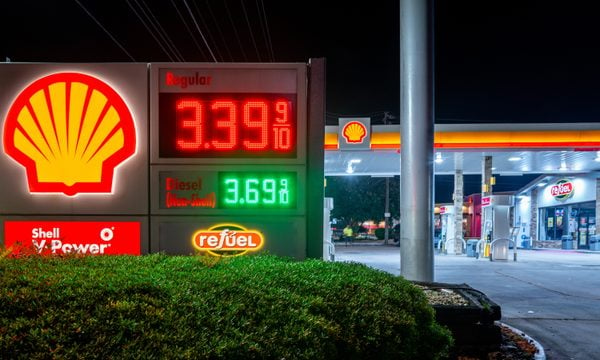
Energy prices rose 5.2% in September after a 2.1% increase in August, as volatile fuel prices continued to climb. Over the last 12 months, the index for energy is up 20.4%. Gasoline prices rose 9.1% in September and are up 34.2% over the last 12 months.
Food prices did not increase in September, compared to a 0.1% increase in August. Food overall is up 2.5% over the last year. Food at home (groceries) decreased 0.1% in September and food away from home rose 0.2%.
Shelter, which includes rent, increased at a rate of 0.4% in September, up from 0.3% in August. The shelter index is up 3.2% over the year. See below for a look at the CPI’s key indexes.
The latest CPI report shows prices increased in September for recreation, used cars and trucks, education, airline fares, medical care and apparel. Prices went down in other areas, including communication.
When is the next CPI report released?
The next CPI report will be released on Nov. 10 and show data for October.
What is the PCE?
The personal consumption expenditures price index, or PCE, measures changes in consumer spending on typical goods and services. It’s used to calculate inflation (or deflation) in the U.S. economy.
Updated each month by the Bureau of Economic Analysis (BEA), the PCE tracks what kinds of goods and services consumers buy and how much they pay for them, as well as how consumers change their spending habits when prices rise or fall.
For example, if rising gas prices lead consumers to drive less and cut down on fuel spending, the PCE will reflect that change in purchase frequency.
What’s the core PCE and why does it matter so much?
Core PCE is the Federal Reserve's preferred measure of inflation. Core PCE excludes food and fuel — two categories that frequently experience price swings. Increases in both PCE and core PCE can signal an increase in inflation; decreases may signal a decline in inflation. These results could also indicate that inflation is still growing, but at a cooler pace.
The Fed’s target for inflation is 2% on an annual basis.
In August, PCE rose 3.4% over the past year, compared to 3.7% in July.
In August, Core PCE rose 3% over the past year, compared to 3.3% in July.
When is the next PCE report released?
The PCE is released monthly in the BEA’s Personal Income and Outlays report. The next release, covering September, is scheduled for Oct. 29.
What is the PPI?
The PPI tracks the prices that producers and manufacturers receive for their goods from retailers and distributors. The PPI rises when producers and manufacturers charge higher prices for their products, likely to offset the rising costs of raw material or distribution.
In this way, PPI functions as another measure of inflation, similar to the consumer price index and personal consumption expenditures price index, which track the prices consumers pay for goods and services. But unlike those two indexes, the PPI shows how prices are changing for retailers who are buying at the wholesale level.
“In general, the PPI is about the price change from the perspective of the seller,” says Thomas McDonald, a senior economist at the BLS. That makes the PPI a leading indicator of inflation since higher prices on the producers’ end often lead to increased prices for consumers.
September PPI report
The index rose 1.3% in August. Compared to a year ago, the index increased 6.3%.
Here are highlights from the latest PPI report:
Core PPI, which excludes food, energy and trade services, increased by 0.5% in September, accelerating from the 0.3% increase in August. It rose 5.0% compared to a year ago, up from 4.7% in August.
Final demand goods prices rose 2.6% in September, the largest monthly increase since data were first calculated in December 2009. Much of that increase was driven by a 10.8% jump in final demand energy prices, including a 20.3% surge in gasoline prices.
Final demand services prices rose 0.8% in September. The gain was driven in part by a 1.4% increase in trade services margins and a 3.4% increase in transportation and warehousing services.
When is the next PPI report released?
The BLS releases a monthly PPI report showing how the index changed. The PPI report for October will be released on Nov. 13.
Why inflation matters
The effects of inflation are felt throughout an economy. As prices rise, what you can buy now will lessen over time. Being able to combat, or at least keep up with, inflation and sustain the purchasing power of your money is one of the main reasons to invest your money.
Consumers care about inflation because it affects costs and their standard of living. Businesses carefully watch the price of raw materials that go into their products, as well as what wages they need to pay their employees. Inflation affects taxes, government spending and programs, the level of interest rates and more.
A low, steady or predictable level of inflation is considered positive for an economy. It signals growth and healthy demand for goods and services.
As businesses generate more goods and services to keep up with demand, they need to hire more workers, which generally leads to higher employment and wage growth. Those workers then purchase things they need and want, and the cycle continues. However, when inflation gets too high or too low, it becomes dangerous because it’s hard to keep supply and demand, along with economic growth, in check.
This brings us to the importance of investing. Although you’ll earn interest from the bank on money in your savings account, the interest rate you receive usually won't match or even come close to beating the inflation rate. That’s why it can make sense to invest your money if you can afford to and grow that money’s value over time. That way, you can buy the same amount of goods and services in the future.
When creating a plan to reach your financial goals, it’s important to bake in a realistic inflation rate for future expenses so you’re saving enough to meet your needs. A financial advisor can help you do that.
Meet MoneyNerd, your shortcut to smart money moves
NerdWallet's twice-weekly newsletter offers practical, no-fluff guidance to help you spend smarter, save more, and make confident money decisions. Delivered free to your inbox.How to protect against inflation
Avoid hoarding cash
To make sure your money doesn’t lose too much value, it’s important to invest and not keep too much money in cash. Inflation means your money will probably buy less over time, so consider investing the money you don’t intend to use in the next three to five years so that you can avoid a decrease in purchasing power. For your short-term savings, high-yield savings accounts may help offset inflation. See our rate tracker that compares high-yield savings rates to inflation.
» MORE: How to invest $100,000
Diversify your portfolio
Another way to prepare for inflation is by having a well-diversified investment portfolio. Diversification, when you spread your investments across asset classes (stocks, bonds, cash, real estate, etc.), various industries and countries, helps enhance investment returns while simultaneously reducing risk, such as from inflation.
Certain investments are more inflation-tolerant than others or rise with inflation. Some of these natural inflation hedges include:
Real assets. Assets such as gold, silver or real estate, which may retain value or provide pricing power, may help withstand inflation. For example, landlords sometimes raise rents as inflation rises.
Stocks. Especially stocks with proven earnings growth and low debt. Interest rates tend to rise with inflation, causing companies with high debt to face higher payments.
Treasury Inflation-Protected securities. During inflationary times, rising interest rates negatively impact traditional bonds because bond prices and interest rates have an inverse relationship. TIPs are a type of bond indexed directly to CPI meant to help investors preserve purchasing power; I bonds are another option tied to inflation.
Have a strategy
Making sure your investments are set up to safeguard against inflation is important, and there are many factors to consider. Seeking a second opinion from a financial advisor can be useful to ensure that you’re on the right track and have prepared your portfolio to weather all seasons of varying economic environments.
NerdWallet writer Taryn Phaneuf and former NerdWallet writers Tiffany Lam-Balfour and Alieza Durana contributed to this article.