





If you’re a frequent rider, be it for daily work trips or for longer adventures, you might be considering an Amtrak credit card to help you lower your fares and keep you on the right track. But of the two versions of the card — both issued by First National Bank of Omaha (FNBO) — one offers more value, including better rewards and some lucrative side perks (such as a companion coupon) that can make up for its $99 fee.
Still, regardless of which card you hold, if you’re not hopping aboard frequently it might take you a while to rack up a pile of points. In that case, a general rewards credit card might make more sense.
Here are five things to know about the Amtrak credit cards.
1. There are two versions of the card
Amtrak offers two different cards, with different fees and rewards structures:
The Amtrak Guest Rewards Mastercard ($0 annual fee).
The Amtrak Guest Rewards Preferred Mastercard ($99 annual fee).
Both earn Amtrak Guest Rewards points, but as you might expect, the more expensive "Preferred" version offers richer rates:
3 points per $1 spent on Amtrak travel, including onboard purchases.
2 points per $1 on dining, eligible non-Amtrak travel, transit, and rideshare charges.
1 point per $1 on all other purchases.
The $0-annual-fee version earns 2 points per $1 spent on dining and Amtrak travel, including onboard purchases, plus 1 point per $1 on all other purchases.
If you’re a frequent Amtrak passenger, a 3X rate on those trips is pretty good. But beyond that, the rewards categories for both cards are underwhelming. You can find a number of credit cards that earn 2X back on all purchases, not just in narrow categories.
2. You'll get exclusive perks and benefits
The no-annual-fee version of the card offers a couple of perks, including a 10% rebate toward Amtrak food and drink purchases, plus a 5% points rebate when you redeem points for Amtrak travel.
But the $99-annual-fee Preferred card goes a lot further, including multiple benefits that can help defray that yearly cost:
Ongoing perks
A 20% rebate in the form of statement credit toward Amtrak food and drink purchases.
A 5% points rebate when you redeem points for Amtrak travel. (Redeem 100 points for an Amtrak ticket and you can expect to get 5 points back.)
1,000 Tier Qualifying Points or TQPs for every $5,000 in purchases with no cap. If you have a certain number of TQPs, you can qualify for elite status, which can get you a 25% to 100% points bonus.
Perks that renew annually
A companion coupon after opening an account and each year when you renew your card — a value of up to $300 when redeemed for Amtrak travel. This alone could offset the card’s $99 annual fee. Blackout dates apply.
A free one-class upgrade after opening an account and each year when your account is renewed. Again, blackout dates apply.
A single-visit Amtrak lounge pass after opening an account and each year when your account is renewed.
3. Redemption is flexible ...
if you hold one of the Amtrak credit cards, points don't expire as long as your card account remains open and active, meaning that you earn or redeem rewards within a 24-month period. (For non-cardholders seeking additional ways to keep points from expiring, check out some suggestions from Amtrak.)
Points can be redeemed for a variety of options, including Amtrak travel, car rentals, hotels and gift cards.
Redemption for travel will get you the most value for your points. (And as noted above, when you redeem for Amtrak trips this way, you’ll get a 5% point rebate.)
4. ... But point values vary
But the redemption process can be confusing because the value of your points will differ depending on what you redeem for and the amount of your redemption.
In June 2024, NerdWallet did a route simulation between New York and Washington, D.C., and found a trip on a Northwest Regional train costing $137 for a coach seat and $250 for business. That's equal to 5,138 and 9,375 points, respectively — a redemption value of roughly 2.7 cents per point. That's an outstanding value. (Typically, you want to aim for a value of at least 1 cent per point.)
When redeemed for other options, though, points seem to be worth much less. A $50 Airbnb gift card will set you back 6,000 points (as of June 2024) — a point value of around 0.83 cent apiece. Meanwhile, a $50 Amazon gift card will cost only 5,000 points (as of June 2024).
5. You'll be eligible for a sign-up bonus
Both versions of the card offer a sign-up bonus for new cardholders. As of September 2025:
For the $99-annual-fee version — earn 20,000 bonus points after you spend $1,000 in the first three billing cycles.
For the $0-annual-fee version — earn 12,000 bonus points after you spend $1,000 in the first three billing cycles.
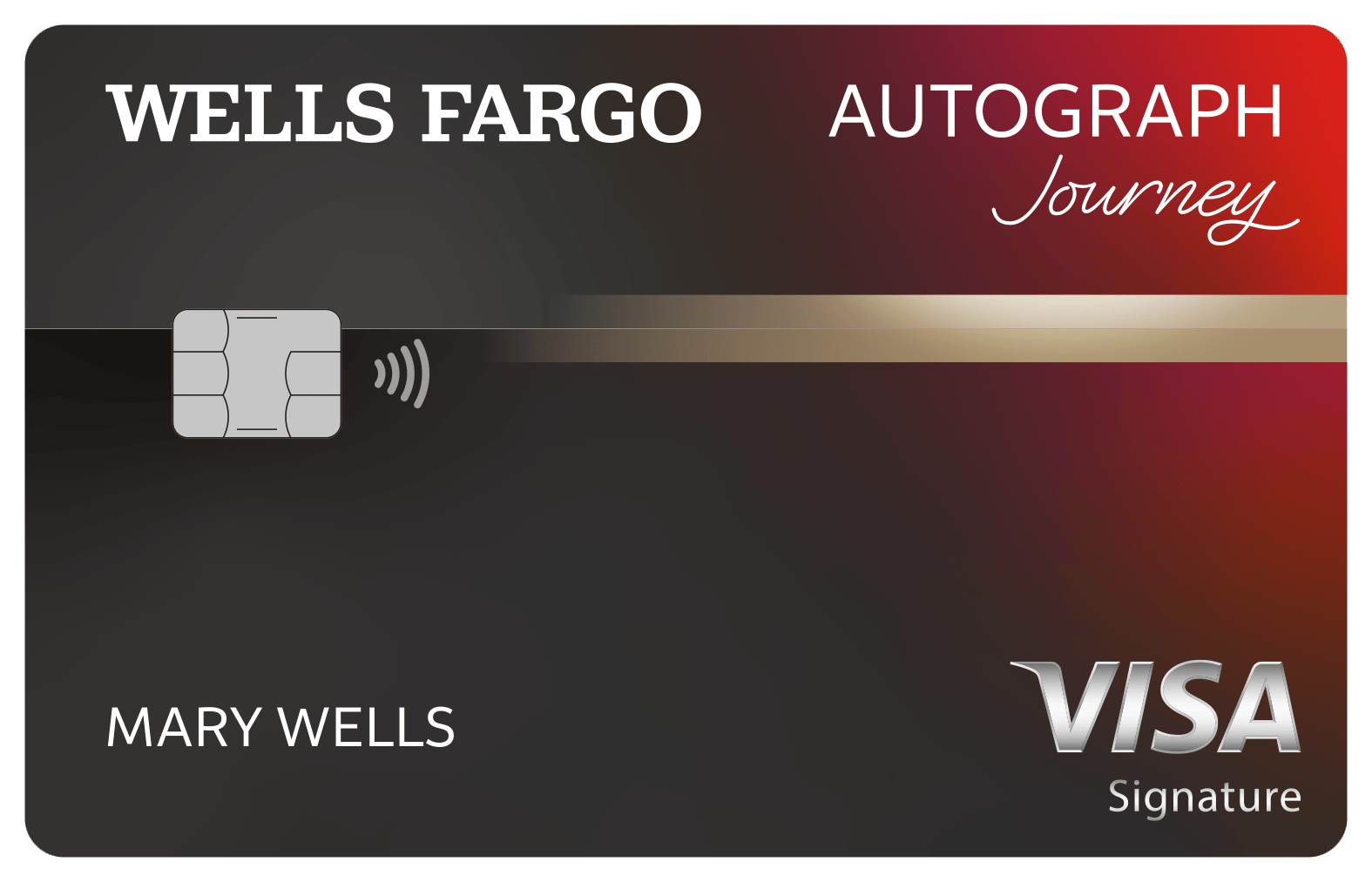
That's certainly not bad and can definitely cover some Amtrak trips. But it's worth noting that many travel credit cards offer higher bonuses, especially if you're considering the annual-fee version. For example, the $95-annual-fee Wells Fargo Autograph Journey® Card has this welcome offer: Earn 60,000 bonus points when you spend $4,000 in purchases in the first 3 months – that’s $600 toward your next trip.