


Every time.
We believe everyone should be able to make financial decisions with confidence. While we don't cover every company or financial product on the market, we work hard to share a wide range of offers and objective editorial perspectives.
So how do we make money? Our partners compensate us for advertisements that appear on our site or when you click to or take an action on their website. This compensation helps us provide tools and services - like free credit score access and monitoring. With the exception of mortgage, home equity and other home-lending products or services, partner compensation is one of several factors that may affect which products we highlight and where they appear on our site. Other factors include your credit profile, product availability and proprietary website methodologies.
However, these factors do not influence our editors' opinions or ratings, which are based on independent research and analysis. Our partners cannot pay us to guarantee favorable reviews. Here is a list of our partners.
Capital One Venture Review: Easy Earnings, Effortless Redemptions

The Bottom Line
4.7
A big sign-up bonus, high rewards and flexible redemption make this card worth the annual fee.

Rates, fees and offers
Rates, fees and offers
Annual fee
$95
Rewards rate
2x-5x
Bonus offer
Enjoy a one-time bonus of 75,000 miles once you spend $4,000 on purchases within 3 months from account opening, equal to $750 in travel.
Intro APR
N/A
Ongoing APR
APR: 19.49%-28.49% Variable APR
Cash Advance APR: 28.49%, Variable
Balance transfer fee
Balance Transfer Fee applies to balances transferred at a promotional rate
Foreign transaction fee
None
More details from Capital One
More details from Capital One
- Enjoy a one-time bonus of 75,000 miles once you spend $4,000 on purchases within 3 months from account opening, equal to $750 in travel
- Earn unlimited 2X miles on every purchase, every day
- Earn 5X miles on hotels, vacation rentals and rental cars booked through Capital One Travel
- Miles won't expire for the life of the account and there's no limit to how many you can earn
- Receive up to a $120 credit for Global Entry or TSA PreCheck®
- Use your miles to get reimbursed for any travel purchase—or redeem by booking a trip through Capital One Travel
- Enjoy a $50 experience credit and other premium benefits with every hotel and vacation rental booked from the Lifestyle Collection
- Transfer your miles to your choice of 15+ travel loyalty programs
- Top rated mobile app
Pros and Cons
Pros
High rewards rate
Flexible rewards redemption
Cons
Has annual fee
Requires good/excellent credit
Detailed Review
The Capital One Venture Rewards Credit Card is one of the most popular credit cards on the market — and for good reason. Unlike the airline-branded cards it was designed to compete against, it pays a high rewards rate on every purchase (not just on travel spending), and you can use its rewards to pay for any travel expense, without any restrictions on when you travel, which airline you fly or which hotel you stay at. Throw in a big bonus for new cardholders, and it's no wonder this card is a favorite of so many people.
The card was my first venture into travel rewards years ago. And it’s one I still recommend to many starting their travel rewards journey, mainly because its rewards are easy to understand and earn, and nearly effortless to redeem. And its annual fee is manageable if you're not ready to spring for a premium travel option.
Capital One Venture Rewards Credit Card: Basics
Card type: Travel.
Annual fee: $95 (see rates and fees).
Sign-up bonus: Enjoy a one-time bonus of 75,000 miles once you spend $4,000 on purchases within 3 months from account opening, equal to $750 in travel.
Rewards:
2 miles per dollar spent on purchases.
5 miles per dollar on hotels, vacation rentals and car rentals booked through Capital One Travel.
5 miles per dollar on Capital One Entertainment purchases.
Redemption options: Statement credit against travel purchases, travel booked through Capital One, and gift cards. You can also transfer your miles to more than a dozen partner airline and hotel programs. Note that per-mile value depends on the transfer partner and how you redeem the transferred miles.
Full list of Capital One transfer partners
Airlines
Aeromexico (1:1 ratio).
Air Canada (1:1 ratio).
Air France-KLM (1:1 ratio).
Avianca (1:1 ratio).
British Airways (1:1 ratio).
Cathay Pacific (1:1 ratio).
Emirates (1:1 ratio).
Etihad (1:1 ratio).
EVA (2:1.5 ratio).
Finnair (1:1 ratio).
Japan Airlines (2:1.5 ratio).
JetBlue (5:3 ratio).
Qantas (1:1 ratio).
Qatar Airways (1:1 ratio).
Singapore Airlines (1:1 ratio).
TAP Air Portugal (1:1 ratio).
Turkish Airlines (1:1 ratio).
Virgin Red (1:1 ratio).
Hotels
Accor (2:1 ratio).
Choice Privileges Hotels (1:1 ratio).
I Prefer Hotel Rewards (1:2 ratio).
Wyndham Rewards (1:1 ratio).
How much are Capital One miles worth? NerdWallet's analysis of Capital One miles determines that they are worth:
Exactly 1 cent apiece when redeemed for statement credit or used to book travel through Capital One.
An average of 1.6 cents apiece when transferred to partner programs and redeemed there.
Between 0.8 cents and 1 cent when redeemed for gift cards.
Interest rate: The ongoing APR is 19.49%-28.49% Variable APR.
Foreign transaction fees: None.
Other benefits:
(Note: Benefits may change over time.)
Credit of up to $120 for the application fee for Global Entry or TSA Precheck when you pay with the card.
Travel protections, including trip cancellation/interruption coverage, rental car coverage, and coverage for lost or damaged luggage. Terms apply.
Hertz Five Star status.*
$50 experience credit toward Capital One’s Lifestyle Collection, which offers hotel and vacation rental properties.
Extended warranty and purchase assurance on eligible items.
See our guide to Venture benefits for more details.
Compare to Other Cards
Vacation more, spend less. Subscribe to our free newsletter for inspiration, tips, and money-saving strategies – delivered straight to your inbox.
By signing up, you will receive newsletters and promotional content and agree to our Terms of Use and acknowledge the data practices in our Privacy Policy. You may unsubscribe at any time.
Benefits and Perks
A high rewards rate
Branded airline and hotel cards typically earn only 1 point or mile per dollar spent on most purchases other than those you make with the brand partner. The Capital One Venture Rewards Credit Card doubles that rate and keeps it simple, which was a big selling point for me when I opted for the card years ago. I was new to using travel rewards strategically and wanted uncomplicated rewards that wouldn't require lots of work to keep track of.
With the card, most purchases earn 2 miles per dollar. You’ll also earn 5 miles per dollar spent on hotels, vacation rentals and car rentals booked through Capital One Travel.
A generous sign-up bonus
The Capital One Venture Rewards Credit Card gives you a head start on your next trip with its bonus offer for new cardholders: Enjoy a one-time bonus of 75,000 miles once you spend $4,000 on purchases within 3 months from account opening, equal to $750 in travel.
Flexible redemption options
Co-branded airline credit cards — meaning cards that are tied to one specific airline — can be restrictive, in that they allow you to redeem rewards only with that airline. The Capital One Venture Rewards Credit Card is a good general option if you're not loyal to one specific airline, like me. And Capital One's rewards program doesn't have other restrictive requirements that can be daunting for new travel cardholders.
You can redeem your miles for travel in several ways:
Redeem rewards as a statement credit. With this option, you book travel however you want, then redeem miles for statement credit for some or all of the cost. There's no minimum redemption amount, and Nerds who have the card say your miles are worth 1 cent apiece when redeemed this way. That's a welcome difference from some other cards, which have minimums as high as $100. Any expense that Capital One considers "travel" is eligible for redemption. This includes not only flights and hotel stays, but also "rail lines, car rental agencies, limousine services, bus lines, cruise lines, taxi cabs, travel agents and time shares," according to the Capital One website.
Book through the issuer's travel center. This online portal offers flights, hotels, vacation rentals, rental cars and vacation packages. You can pay upfront with your miles, at a rate of 1 cent per mile.
Transfer miles to partners. Capital One lets you transfer your miles to the loyalty programs of a number of airline and hotel partners.
Travel-friendly perks
The Capital One Venture Rewards Credit Card offers additional benefits that frequent travelers will enjoy. (Note that benefits may change over time.) The card comes with the following:
A statement credit of up to $120 for the application fee for Global Entry or TSA Precheck.
Premium benefits when you book a hotel stay through Capital One's Lifestyle Collection like a $50 experience credit, complimentary WIFI and room upgrades when available.
Trip protection including rental car coverage, trip interruption/cancellation coverage and round-the-clock travel assistance services.
No foreign transaction fees for overseas purchases.
When I got this card, getting the fanciest travel perks wasn’t top of my list; I just wanted to get in the travel game. However, the perks that the card does come with are easy to use and convenient. The TSA PreCheck or Global Entry credit is one that’s useful to me.
MORE NERDY PERSPECTIVES
 | This was one of my first travel cards, and it's one I often mention to friends who are dipping their toes into the confusing ocean of travel rewards for the first time. There are no spending categories to memorize, redeeming miles is easy, and the annual fee isn't going to make your eyes water. Plus, the sign-up bonus is often generous, and you get a credit toward TSA PreCheck or Global Entry. Sara Rathner, writer/spokesperson, credit cards |
 | This is the card I recommend to friends who aren’t loyal to one airline or hotel brand and who are new to travel rewards optimizing. It was my first travel credit card for these reasons. It has a simple and uncomplicated rewards structure and straightforward redemption options. Plus, it’s annual fee is manageable if you don’t have the budget to pay for a pricier card. Funto Omojola, writer, credit cards |
 | This card's sign-up bonus funded a family vacation to Washington, D.C., last year, and we enjoyed its simple, straightforward rewards. The card has transfer partners, but because those partners are largely international airlines, you'll need to do some homework if you want to squeeze outsize value from your rewards. I don't have the patience for that, and the fee wasn't worth paying after Year One, since any number of cards offer 2% rewards for free. But it's a great starter travel card. Kenley Young, editor, credit cards |
Drawbacks and Considerations
Fewer perks than the Capital One Venture X Rewards Credit Card
The Capital One Venture Rewards Credit Card is a solid choice for most travelers. But if you want heftier perks, it's worth considering the card's higher-end sibling, the $395-annual-fee Capital One Venture X Rewards Credit Card (see rates and fees). Both cards earn similar rewards on most purchases and offer a statement credit to cover the cost of TSA PreCheck or Global Entry. But the Capital One Venture X Rewards Credit Card makes up for its higher annual fee with some significant perks:
Access to Capital One Lounges and Landings, plus participating Priority Pass lounges (according to the issuer's website).
Up to $300 annual credit for bookings made through Capital One Travel.
10,000 bonus miles every account anniversary.
It might feel a bit off-putting to pay hundreds of dollars a year just to carry a credit card. But as long as you don't mind booking travel through the issuer, the Capital One Venture X Rewards Credit Card's perks easily offset the higher annual fee.
Lack of domestic transfer partners
For travelers who like to squeeze every last drop of value out of loyalty programs, the growing roster of transfer partners for the Capital One Venture Rewards Credit Card is appealing. You can now transfer your Venture miles to more than a dozen airline partners — but most are non-U.S. carriers. In fact, JetBlue is the only domestic airline. For those just dipping their toe into transfer options, sending their miles off to a foreign carrier may be a bit daunting.
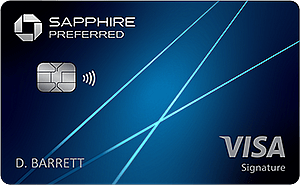
For these travel hackers, the Chase Sapphire Preferred® Card is a better choice. First, there's an option to transfer points to participating frequent traveler programs at a 1:1 ratio and those programs include domestic carriers United, Southwest and JetBlue, as well as the Marriott, Hyatt and IHG hotels programs. You can also use your points to book a trip directly with Chase's travel tool.
The Chase Sapphire Preferred® Card also offers a great sign-up bonus: Earn 75,000 bonus points after you spend $5,000 on purchases in the first 3 months from account opening. It earns bonus rewards in a variety of popular spending categories, including dining and travel. The annual fee is $95.
Poor cash-back option
If you want to use your miles for cash back or a statement credit for non-travel purchases, your miles are worth only half as much as if you were to redeem them for travel, according to NerdWallet's analysis. This can be an issue if you don’t travel often and want to turn your rewards into money in your pocket. You may get greater value out of a cash-back card like the Wells Fargo Active Cash® Card, which offers 2% cash back on all purchases with a $0 annual fee.
More from Capital One:
*Upon enrollment, accessible through the Capital One website or mobile app, eligible cardholders will remain at that status level through the duration of the offer. Please note, enrolling through the normal Hertz Gold Plus Rewards enrollment process (e.g. at Hertz.com) will not automatically detect a cardholder as being eligible for the program and cardholders will not be automatically upgraded to the applicable status tier. Additional terms apply.
For Capital One products listed on this page, some of the benefits may be provided by Visa® or Mastercard® and may vary by product. See the respective Guide to Benefits for details, as terms and exclusions apply.
How To Decide If It's Right For You
If you're serious about travel, the Capital One Venture Rewards Credit Card should be on your radar. With one of the highest sign-up bonuses and best ongoing rewards rates on the market, it can go toe to toe with any other travel card in its class. It's an especially good option if you want travel rewards without the need to navigate a complicated redemption system.
Still unsure about whether this card, or any travel card, is what you need? Peruse our best credit cards page for options across categories.
Flexible point redemption options
One of the Chase Sapphire Preferred® Card's biggest strengths hits the Venture card right where it's weakest: the airline and hotel programs you can transfer your points to. Chase's list of partners includes domestic airlines like United and Southwest, as well as JetBlue, and major hotel brands like Marriott, Hyatt and IHG. Flexible redemption options and a terrific bonus offer add to the appeal.
Looking For Something Else?
Methodology
NerdWallet reviews credit cards with an eye toward both the quantitative and qualitative features of a card. Quantitative features are those that boil down to dollars and cents, such as fees, interest rates, rewards (including earning rates and redemption values) and the cash value of benefits and perks. Qualitative factors are those that affect how easy or difficult it is for a typical cardholder to get good value from the card. They include such things as the ease of application, simplicity of the rewards structure, the likelihood of using certain features, and whether a card is well-suited to everyday use or is best reserved for specific purchases. Our star ratings serve as a general gauge of how each card compares with others in its class, but star ratings are intended to be just one consideration when a consumer is choosing a credit card. Learn how NerdWallet rates credit cards.
Frequently asked questions
How do Capital One Venture miles work?
How do Capital One Venture miles work?
With the Capital One Venture Rewards Credit Card, you earn 2 miles per dollar spent on all purchases. You can redeem those miles for any travel purchase — flights on any airline, stays at any hotel, auto rentals from any agency, and so on. Unlike with points from airline or hotel loyalty programs, there are no restrictions or blackout dates. You can also transfer these miles to one of Capital One's transfer partners.
How much are Capital One Venture miles worth?
How much are Capital One Venture miles worth?
Miles earned on the Capital One Venture Rewards Credit Card are worth 1 cent apiece when redeemed for travel. That means you get an effective rewards rate of 2% on all purchases.
Can I transfer Capital One Venture miles to airlines?
Can I transfer Capital One Venture miles to airlines?
You can use Capital One miles to pay for flights on any airline, but you also have the option of transferring those miles to about a dozen airline loyalty programs and combining them with frequent-flyer rewards earned in those programs.
Is the Capital One® Venture® Rewards Credit Card a Visa or a Mastercard?
Is the Capital One® Venture® Rewards Credit Card a Visa or a Mastercard?
The Capital One Venture Rewards Credit Card has been issued as both a Visa and a Mastercard. For new applications through NerdWallet, it will be a Mastercard.
What credit score do I need for the Capital One® Venture® Rewards Credit Card?
What credit score do I need for the Capital One® Venture® Rewards Credit Card?
You’ll need at least good credit to qualify for the Capital One Venture Rewards Credit Card. Generally speaking, “good credit” is defined as a score of at least 690. But a credit score alone isn’t enough to qualify for any credit card. Issuers take into account your income, existing debts and other information.
About the author

Funto Omojola
Lead Writer & Content Strategist
