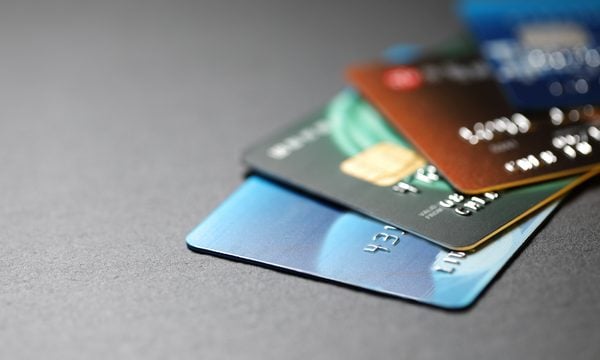
Have you ever tried to buy something small with your credit card, only to be told the store has a minimum purchase requirement? There's a financial reason behind that merchant's rule.
Whether you're using a rewards card, a cash-back credit card or any other type of card, the business you're buying from has to pay a fee to one of the card networks (Visa, Mastercard, Discover, American Express) to process the transaction. These charges are called interchange fees, aka "swipe fees," and they're set by those payment networks.
Paying those fees can eat into the already thin profit margins of a small business, which is why some stores set minimum purchase amounts for credit cards.

Why minimum purchase requirements exist
A minimum purchase amount allows a business to offset the interchange fee it must pay to the credit card network for processing a transaction. That fee is usually somewhere between 1% to 3% of the transaction price. In some cases, there will be a minimum interchange fee. For example, a fee might be 2.5% of the transaction or 40 cents, whichever is higher.
So if you're using your credit card to buy, say, a pack of gum for $1.50, that transaction could actually end up losing money for the seller, once the interchange fee is taken into account. It may not be worth it for a merchant to allow you to buy only that gum and nothing else with your card.
How interchange fees add up
Now, let's scale up the math. Say you own a corner store. You bought an item wholesale for $2. You sell it for $4. A minimum 40-cent interchange fee cuts your gross profit from $2 to $1.60.
Although it seems small, cumulatively the fees cut into your bottom line, especially if you have a business selling a lot of small or inexpensive items — a mom-and-pop grocer, for example, as opposed to a big chain store or a giant online merchant. Every penny lost to fees can have an adverse effect on the success of your business.
Of course, smaller merchants could just stop accepting credit cards entirely. But that could cost them customers who want the convenience of not carrying cash or the ability to earn rewards on a credit card.
Most merchants absorb interchange fees the same way they absorb any other cost of doing business — by including them in the prices they set. But those who sell mostly inexpensive items have less flexibility to do so, since minimum transaction fees can run to 40% or more of the price of an item.
A little more about interchange fees
Interchange fees are set by one of the four payment processor networks: Visa, Mastercard, American Express or Discover. The fees are divided among the multiple players involved in making sure your card is charged for the purchase amount and that the merchant gets paid.
The fees are split among the bank that issued the card, the payment processor network that handled the transaction (Visa, Mastercard, American Express and Discover), and the processor that handles credit card sales for the merchant.
Interchange fees vary based on multiple factors including:
Type of purchase.
The dollar amount being processed.
Card issuer, the bank that issued the credit card.
Card network (one of the four listed above).
Type of card (i.e., rewards card vs. no rewards).
How to avoid minimum purchase requirements
For merchants, swipe fees are a cost of doing business. If the retailer wants to be able to accept credit cards, it's a baked-in, unavoidable expense.
So if your favorite local store has a minimum purchase requirement, you'll need to either:
Aggregate your purchases so you meet that amount.
Be prepared to fork over cash, or;
Take your business elsewhere, likely to a larger retailer.