Tomo, established in 2020, is an online-only lender with a focus on digital efficiency and purchase loans. We’re impressed with its customizable mortgage rate tool. However, you won’t find home equity products. Mortgages are available in 41 states and counting.
Simplist is an online marketplace of mortgage lenders; human guidance is optional. You’ll make payments to a loan servicer, not to Simplist. Loans are not available in every state.
Home loans overall
NerdWallet rating
4.5
What we like
Loan origination process can be completed online.
Offers government-backed FHA and VA loans.
Offers module that compares mortgage rates among other lenders.
What we don't like
Offers loans in many states and Washington, D.C., but not nationwide.
Does not offer home equity loans or lines of credit.
Farmers Bank of Kansas City offers a strong variety of loan types, competitive APRs, and a convenient online application experience. Their web tool for customizing sample rates makes comparison shopping easy, and access to representatives is quick via live chat.
Home loans overall
NerdWallet rating
5.0
What we like
Scores highly for customer experience, with a full suite of application and loan tracking features available via mobile app and online.
Offers some less common loan types to support self-employed borrowers and physicians.
APRs are more competitive than average, according to the latest federal data.
What we don't like
Reported average time to close of 30 days is on the long side, compared to other lenders surveyed by NerdWallet.
Mutual of Omaha stands out for fast closings, a generous credit score threshold on conventional loans and strong customer support, though its average APRs tend to skew higher than competitors.
New American Funding offers a large menu of loan products, as well as programs like first-time home buyer assistance, but personalized mortgage rates aren't available on its website.
First Federal Bank stands out for its competitive APRs and its emphasis on government loans. Most likely to appeal to borrowers shopping for low rates and fees.
Midwest-rooted Central Bank offers an online application, which you can track via mobile app. But you’ll have to contact the bank for mortgage rates.
Home loans overall
NerdWallet rating
4.0
What we like
Among the best when it comes to online convenience.
Offers a full selection of mortgage types and products, including jumbo, home equity, and government loans.
Claims to offer preapproval within 24 hours of loan application.
What we don't like
You'll have to complete a loan application to see mortgage interest rates.
Bank branch locations limited to the Midwest.
Does not offer home equity lines of credit.
See more options
About these rates: The lenders whose rates appear on this table are NerdWallet's advertising partners. NerdWallet strives to keep its information accurate and up to date. This information may be different than what you see when you visit a lender's site. The terms advertised here are not offers and do not bind any lender. The rates shown here are retrieved via the Mortech rate engine and are subject to change. These rates do not include taxes, fees, and insurance. Your actual rate and loan terms will be determined by the partner's assessment of your creditworthiness and other factors. Any potential savings figures are estimates based on the information provided by you and our advertising partners.
Explore historical mortgage rate trends
See how rates have changed over time to understand past patterns and economic fluctuations
Today's mortgage rates | Tuesday, October 27, 2026
Last updated 9:38 AM EDT
On Tuesday morning, October 27, 2026, the average interest rate on a 30-year fixed-rate mortgage fell nine basis points to 7.11% APR, compared to yesterday.
The average rate on a 15-year fixed-rate mortgage rose one basis point to 6.64% APR. The average rate on a 5-year adjustable-rate mortgage held steady at 6.78% APR.
The 30-year fixed-rate mortgage rate is 12 basis points lower than one week ago and 103 basis points higher than one year ago.
A basis point is one hundredth of a percent, or 0.01%. We describe mortgage rates’ ups and downs in basis points because they simplify comparisons.
NerdWallet’s rates are expressed as an annual percentage rate, or APR, and our mortgage rates data comes from Zillow.
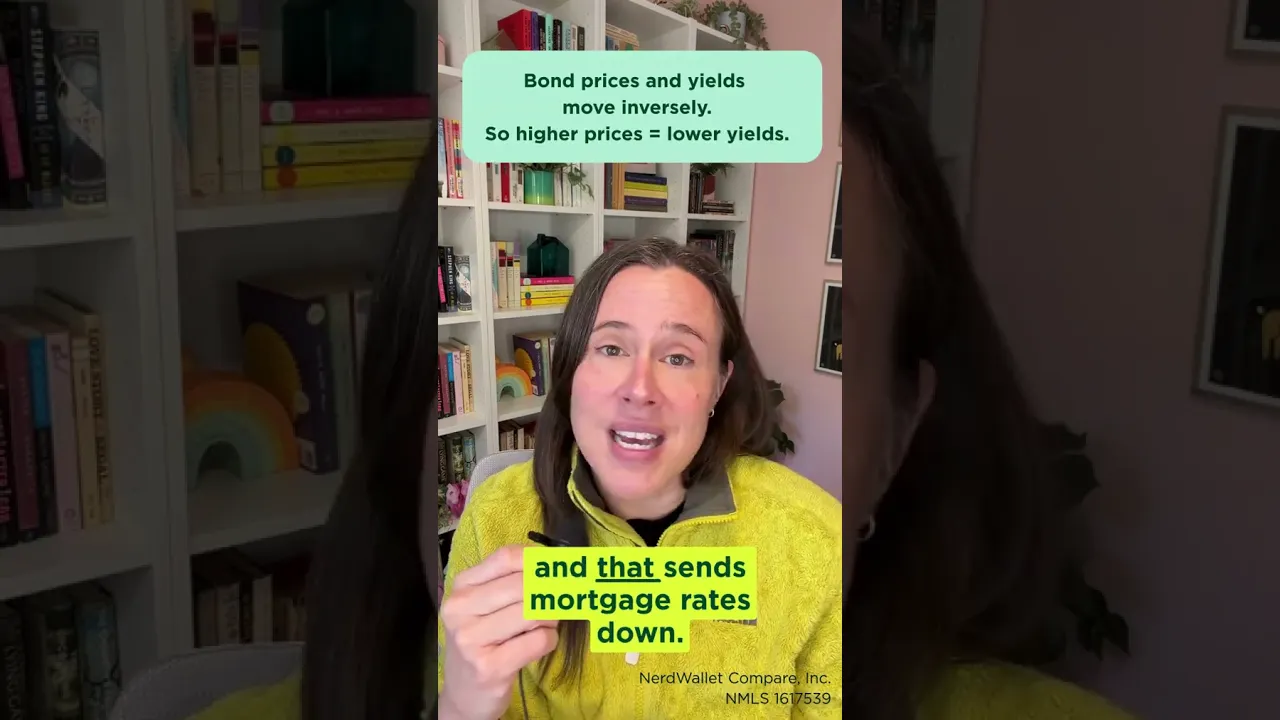
🤓 Kate on Rates, 10/22/26
What the nerds think
Our Nerdy take on the news
October 22, 2026: Mortgage rates eased a little this week, but any optimism about lower rates is probably premature. There are two big reasons. One, a lot of the softening we saw was because investors started to get anxious about the level of profit tech companies are going to need to churn out to actually make money off of AI. After all, those high-interest corporate bonds funding data centers will eventually need to be paid off. That nervousness abruptly had Treasuries once again looking like a safe harbor, driving prices up and yields (and mortgage rates) down. So on one hand, yay, lower rates. But on the other hand, think about what souring investor sentiment on AI could do to the stock market. The second is the potential for renewed fighting in Iran, which would bring us right back to the oil prices-inflation-bond yields dynamic we've seen throughout that conflict. There have been credible reports that the U.S. will resume strikes after the midterm elections. If that comes to pass, we'll likely see mortgage rates move higher.
What Moves Mortgage Rates? Factors at Play & How to Shop
Written by
, Reviewed by
, Edited by
and
Last updated October 27, 2026
Mortgage rates change all the time, as lenders adjust their offers up or down depending on what's happening in the world. Shifts in the economy, changes in markets, and big events like national elections are reflected in rates' movements.
Mortgage lenders take that big stuff into account in order to set base rates that are competitive but still earn them some profit. They adjust that base rate up or down for individual borrowers depending on how risky they seem.
For example, if you have a solid credit score, pay your bills on time and keep your debt manageable, a lender will probably see you as a safer borrower. You'd be more likely to get a lower interest rate than a borrower with shakier finances.
Mortgage lenders use credit score as a stand-in for risk. Higher credit scores are seen as safer, and are generally rewarded with lower interest rate offers.
Your down payment
Paying a larger percentage of the home's price upfront reduces the amount you're borrowing. A bigger down payment may help you score a lower interest rate.
Your loan type
What kind of mortgage you're applying for influences the rate you're offered. For example, jumbo loans tend to have higher interest rates.
How you'll use the home
A mortgage for a primary residence will usually have a lower interest rate than a home loan for a second home or an investment property.
Forces you can't control
The U.S. economy
Stock market trends, the rate of inflation and the job market can all put pressure on mortgage interest rates. Events like elections can influence rates, too.
The global economy
What's happening around the world affects U.S. markets, which can then push mortgage rates higher or lower.
The Federal Reserve
Decisions by the nation's central bank to raise or cut interest rates for short-term borrowing can ripple out to rates on longer-term loans, including mortgages.
The housing market
A hot housing market can make it harder to find lower mortgage rates. When lenders have plenty of business, there's less incentive to compete for buyers.
Will mortgage rates drop to 3% again?
Mortgage rates are constantly on the move, though sometimes those moves are barely visible — just a few basis points up or down.
After falling to their lowest point since September 2022 in February, average 30-year mortgage rates spiked upward in March as the Iran war stoked inflation fears. In April, we've seen rates plateau a bit as the conflict has dragged on.
This rate climate is frustrating if you're waiting for mortgage rates to be 3% again, as they were in 2020 and 2021. But it's important to understand not just that it was cheaper to borrow back then, but also why rates went so low. The Federal Reserve took extraordinary measures — including cutting the federal funds rate to near zero and buying billions of dollars in mortgage-backed securities — to try to avert an economic crisis brought on by the pandemic. This wasn't the normal ups and downs of the market, it was a serious outlier.
It’s smart to keep track of mortgage rate trends so you can nail down your budget, but home buyers shouldn’t feel pressure to time the market. Mortgage rates can't be predicted with complete accuracy — and if you're waiting for rates to hit a certain number, you could miss out on your perfect home.
DATA: What's the Homebuying Climate this month?
NerdWallet's Homebuying Climate Index puts a familiar weather label on how favorable conditions are for home buyers.
For September, our analysis puts the Climate Index at 53.5 out of 100, keeping the index in Partly Cloudy territory for the 50th straight month.
Read more about the factors affecting this month's index to gauge how they might affect your homebuying plans.
Here's a breakdown of what you're looking at when you view mortgage interest rate offers.
APR: APR stands for annual percentage rate. It includes the interest rate plus other loan costs, like fees. Because it covers more than just the rate, APR gives a better idea of the total cost of the mortgage.
Interest rate: This is the mortgage rate that the lender is offering. If you haven't entered details like your approximate credit score, location or down payment savings, the rate shown is just a sample. Sample rates are based on borrower characteristics chosen by the lender, so they may not match what you would be offered.
Est. mo. payment: The estimated monthly payment is how much principal and interest you would pay for the loan each month.
Total fees: These are the additional, one-time costs of getting a home loan. They can include lender fees, as well as other closing costs like the appraisal fee or title insurance. This number can also include discount points, which are units of prepaid interest. Points are optional — and pricey — but they lower the interest rate. Including discount points in the rate offer can make a lender's interest rates appear lower, but points will be reflected in the APR.
How to see personalized mortgage rates
Mortgage rates like the ones you see on this page are sample rates. The national average displayed here is the average of rates from multiple lenders, which are provided to NerdWallet by Zillow. That lets you know where mortgage rates stand today, but it doesn't show you the exact rate you'd be offered.
The same goes for rates you see advertised by individual lenders. Lenders use a set of sample borrower characteristics — like credit score, location and down payment amount — to generate the rates they show on their websites.
To see more personalized rates, you'll need to provide some basic information about you and your homebuying plans.
Credit score: Use the drop-down to choose your estimated credit score. Not sure what your score is? Check it for free with NerdWallet.
ZIP code: Enter the location where you're hoping to buy.
Purchase price: Put the amount you hope to spend on a home. Still figuring it out? Our affordability calculator can help you determine your homebuying budget.
Down payment: Enter your estimated down payment as a dollar amount or a percentage, and the other field will automatically adjust up or down. The default entry is 20%, but you don't have to make a 20% down payment. In 2025, the typical down payment for first-time home buyers was 10%, according to the National Association of Realtors.
Loan term: How long your mortgage will last. In this case, the default is 30 years, and almost all mortgages in the U.S. are 30-year loans.
Does a lower mortgage rate matter? Savings example
Whether you're looking at sample rates on lenders' websites or comparing personalized rates here, you'll notice that interest rates vary. This is one reason why it's important to shop around to get the best mortgage rate when you're looking for a lender. Borrowers who compare at least two lenders could save as much as $600 per year — and comparing at least four lenders bumps that savings to up to $1,200 annually — according to research from Freddie Mac.
Fractions of a percentage might not seem like they'd make a big difference, but you aren't just shaving a few bucks off your monthly mortgage payment. You're also lowering the total amount of interest you'll pay over the life of the loan. The longer you own the home, the more that savings will add up.
Here's an example: Say one lender is offering you a 7% fixed APR on a 30-year mortgage for $360,000, while another is offering 6.75% for the same loan. Let's compare.
Principal and interest on a $360K 30-year loan at 7%
Monthly … $2,395
12 months ….. $28,741
5 years ……… $143,705
Principal and interest on a $360K 30-year loan at 6.75%
Monthly … $2,335
12 months …... $28,019
5 years ………. $140,097
Savings with 25-basis-point lower rate
$60 per month
$722 per year
$3,608 after five years
You get where this is going — over the life of the loan, you'd pay almost $22,000 less interest in the lower rate scenario.
And this example uses a difference of just a quarter of a percentage point. If you've got a range of offers from a few lenders, you may find there's a substantial difference between the highest and lowest quote. If you can knock your interest rate down half a percentage point, you're keeping more money in your pocket.
How to compare mortgage lenders
💰Determine your budget: Before you start looking at lenders, you need to know what you can spend. Figure out how much house you can afford to create your home shopping budget.
🔎 Research lenders: Browse lenders online and check out their sample interest rates. If you can, personalize the rates by entering details like your down payment savings and where you live.
✅ Get preapprovals: Apply for mortgage preapproval from at least three lenders. Preapproval doesn't affect your credit score, plus it's helpful for home shopping.
📊 Compare Loan Estimates: Within three business days, each lender that preapproves you will send you a Loan Estimate. You'll be able to compare rate offers and lender fees side by side.
Don't want to do all that work? A mortgage broker can do the research, presenting you with loan options that fit your needs. They'll continue to work with you throughout the homebuying process, too, interacting with the lender and other parties in the transaction to keep things running smoothly.
If you'd prefer to be more hands on, that's fine, too. You can make an informed choice by asking brokers about their fees and services and weighing those costs and benefits against researching lenders on your own.
The interest rate is what the lender charges for borrowing the money, expressed as a percentage. The APR, or annual percentage rate, is a measure that's supposed to more accurately reflect the cost of borrowing.
APR includes fees and discount points that you'd pay at closing, as well as ongoing costs, on top of the interest rate. That's why APR is usually higher than the interest rate.
Will mortgage rates ever be 3% again?
It's unlikely mortgage rates will fall to 3%, and that's actually a good thing. On one hand, yes, in 2020 and 2021 we had really low mortgage rates, but on the other hand, we got those rates because of a global crisis.
The historically-low mortgage interest rates we saw in 2020 and 2021 were created by the Federal Reserve's response to the pandemic. The Fed slashed short-term borrowing rates plus began buying billions of dollars' worth of Treasuries and mortgage-backed securities in order to stave off economic collapse.
Markets don't follow the rules of physics, so what goes up doesn't have to come down, and we aren't "due for" lower mortgage rates. If you're serious about homebuying, figure out how much house you can afford at today's rates — not the mortgage rate you're hoping to see.
What is a mortgage rate lock?
Mortgage rates not only vary from day to day, but hour to hour. In order to know what interest rate you'll pay, you need the rate you're offered to stop changing. A mortgage rate lock is the lender's guarantee that you'll pay the agreed-upon interest rate if you close by a certain date. Your locked rate won't change, no matter what happens to interest rates in the meantime.
It's a good idea to lock the rate when you're approved for a mortgage with an interest rate that you're comfortable with. Consult with your loan officer or mortgage broker on the timing of the rate lock. Ideally, your rate lock would extend a few days after the expected closing date, so you'll get the agreed-upon rate even if the closing is delayed a few days.
When is it worth it to refinance?
At NerdWallet, we believe that if mortgage rates today are 0.5 to 0.75 of a percentage point lower than your current mortgage rate, you could consider refinancing.
The old 2% rule of refinancing doesn't make sense anymore for most homeowners. If your mortgage rate's north of 7%, you'd probably be thrilled to get near 6% — forget about hoping for rates to hit 5%. It's impossible to time the market, and all that time you spent waiting for mortgage rates to hit a magic number is time you could have been paying less mortgage interest if you'd refinanced sooner.
That said, it's important to make sure your refi math works beyond interest rate considerations. You'll pay refinance closing costs, and you aren't really making money on the refi until you've hit the break-even point, when the amount you saved outweighs what you had to spend. You need to feel fairly confident you'll stay in the home at least until you hit the break even.
Use NerdWallet's refinance calculator to see how much you could save by refinancing at today's mortgage rates and when you'd hit the break-even point.