There’s no shortage of rewards credit cards that offer enticing perks worth real money — potentially hundreds of dollars each year.
But if the rewards program is complicated to navigate, it can be tough to get value out of your card. Instead of saving money, you’re left with a pile of points that were hard to earn and even harder to cash in. That’s why the Nerds consider how easy it is to use a rewards program when making our picks for the best credit cards.
There will always be those who relish the challenge of optimizing more complicated cards, especially if it means earning outsize rewards. These cards fit that bill well.
LOOKING FOR SIMPLE CREDIT CARD REWARDS? |
|---|
Cash-back cards
Chase Freedom Flex®
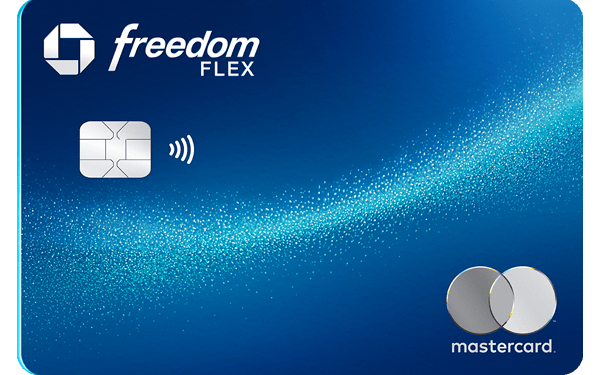
The Chase Freedom Flex® essentially combines two rewards structures into one card. You get tiered rewards that are fixed, on top of 5% bonus categories that change every quarter:
Earn 5% cash back on travel booked through Chase.
Earn 3% back at drugstores and restaurants.
Earn 1% back on everything else, except when you ...
Earn 5% back on up to $1,500 in combined purchases in bonus categories each quarter you activate (1% back after that).
Oh, and you can also earn 2% back on qualifying services purchased through the Lyft app through September 2027. That's potentially a lot of value — but also a lot to track.
U.S. Bank Cash+® Visa Signature® Card
The U.S. Bank Cash+® Visa Signature® Card takes the quarterly bonus cash-back concept and mixes in the ability to customize your rewards categories. You'll earn:
5% cash back on two categories of your choice from a list of several options, on up to $2,000 spent per quarter on combined purchases. (See full list below.)
2% back on an everyday category of your choice, such as gas and electric vehicle charging, groceries or restaurants.
1% back on other purchases.
Full list of 5% categories on the U.S. Bank Cash+
Fast food.
Home utilities.
TV, internet and streaming.
Department stores.
Cell phone providers.
Electronics stores.
Sporting goods stores.
Movie theaters.
Gyms/fitness centers.
Furniture stores.
Ground transportation.
Select clothing stores.
As with the Chase Freedom Flex®, you'll have to activate your bonus categories every three months and keep track of multiple categories. But with the U.S. Bank Cash+® Visa Signature® Card, your customizable options are narrower. "Fast food" may qualify for 5% back, for example, not all restaurants. Or "select" clothing stores may net you 5% back, but not every single one.
Bank of America® Customized Cash Rewards credit card
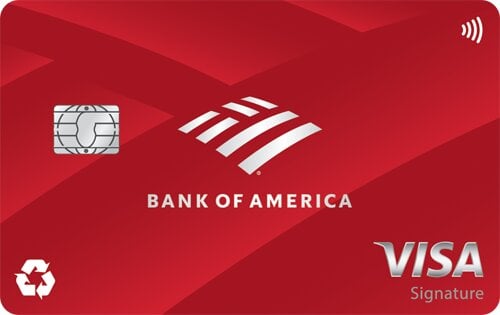
The Bank of America® Customized Cash Rewards credit card also offers the ability to customize your quarterly rewards:
Earn 3% cash back in one of these categories: gas/EV charging stations, online shopping, dining, travel, drugstores or home improvement/furnishings.
Earn 2% back at grocery stores and wholesale clubs.
Earn 1% back on everything else.
But those 3% and 2% cash-back earnings are capped each quarter at a combined $2,500 in spending. After that, you’ll earn 1% back in those categories. While your spending caps are measured by the quarter, you can actually change your bonus category once a month.
Redeem your rewards in the form of a statement credit, check, direct deposit into a Bank of America® checking or savings account, or as a contribution to a qualifying Merrill cash management or 529 account. You can also pay with points on Amazon.com, or when you check out with PayPal.
Speaking of having an existing relationship with Bank of America® or Merrill, if you’re a member of the BofA Rewards™ program, you can earn up to 75% more cash back on every purchase.
Also worthy of mention ...
Sometimes, a card's complications come less with earning rewards and more with burning them.
For instance, the Fidelity® Rewards Visa Signature® Card technically earns 2X back on all purchases — but only if you opt to deposit your earnings into eligible Fidelity accounts. If you redeem for travel, merchandise, gift cards or a statement credit, point values will vary.
Travel and rewards cards
Bilt credit cards
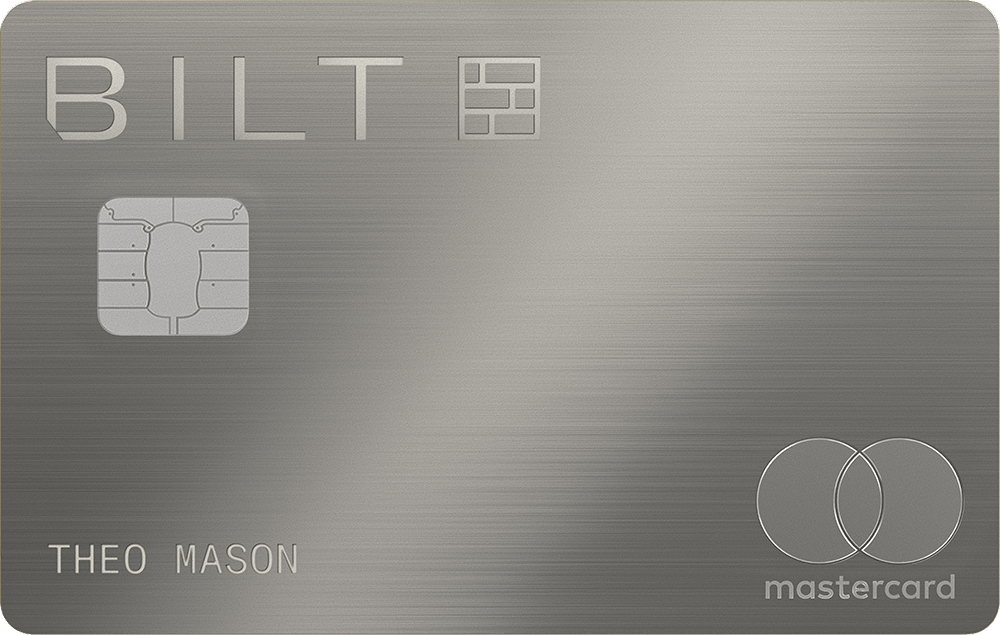
Bilt wrote the book on credit cards that earn rewards on rent with its original card, the Bilt World Elite Mastercard® Credit Card. That version of the card is no longer available, though. In January 2026, Bilt announced the launch of three new cards:
The Bilt Blue Card ($0 annual fee).
The Bilt Obsidian Card ($95 annual fee).
The Bilt Palladium Card ($495 annual fee).
You can still earn rewards on rent, and now mortgage payments, but it's not nearly as straightforward as before. For starters, the cards earn two different rewards currencies — Bilt Points and Bilt Cash — that are each redeemable in different ways (and despite its name, Bilt Cash can’t be redeemed for cash back).
Secondly, aside from tracking two types of rewards, you'll also have to choose between two options for earning those rewards on housing expenses:
Option 1: You can earn Bilt Points on rent/mortgage payments for no fee, but your earning rate on those housing payments will be based on how much you use your Bilt card for other (non-housing-related) spending. You won't earn Bilt Cash through spending this way, though there are other ways to amass it.
Option 2: Under this option, you'll earn both Bilt Points and Bilt Cash on non-housing-related spending — but you'll have to use your Bilt Cash to "unlock" Bilt Points on housing payments. (Each 1,000 in Bilt Points you earn this way requires you to spend $30 in Bilt Cash.)
Note that Bilt Cash expires at the end of the year, though $100 will rollover to the next year.
Got all that? Yeah, we're not sure either.

The Chase Sapphire credit cards
One of the most beloved features of the Chase Sapphire cards was that points were worth more when redeemed for travel through Chase. With the Chase Sapphire Preferred® Card, points were worth 1.25 cents each when redeemed this way, while the higher-end Chase Sapphire Reserve® let you redeem points for 1.5 cents each.
But that changed in June 2025, when Chase introduced Points Boost. Now, points might be worth up to 1.75 cents each with the Chase Sapphire Preferred® Card, and up to 2 cents each for the Chase Sapphire Reserve® — but the base value for points is a notably lower 1 cent each. To get a higher value, you'll have to catch a good deal when it’s available. And the good deals are ever-changing.

If you enjoy the thrill of the hunt (when it comes to booking travel, anyway), this might intrigue you. But it adds a layer of complexity that may make simpler cards more appealing.
Barclays’ cruise line credit cards
Barclays issues several co-branded credit cards for cruise lines, including:
Terms and conditions vary slightly among the cards, but in general, you redeem rewards in the form of a statement credit to cover eligible purchases, which can include cruise bookings, onboard purchases and, in some cases, airfare.
Simple enough on the surface, but here’s where the water gets choppy: The value of your points can range from 1 to 2.5 cents each depending on how large of a statement credit you request, and on what you choose to redeem the rewards for. For example, with the Holland America Line Rewards Visa® Card:
Redeem $50 to $499.99 for a statement credit redemption value of 1%.
Redeem $500 to $1,499.99 for a redemption value of 1.25%.
Redeem $1,500 to $2,000.99 for a redemption value of 1.50%.
Redeem $2,001 to $4,000.99 for a redemption value of 2.00%.
Redeem $4,001 and up for a redemption value of 2.50%.
But that’s only when you redeem to cover the cost of a Holland America cruise. You can also redeem for airfare or cruises on other World’s Leading Cruise Line brands (including Carnival, Costa, Princess Cruises and more), but the redemption value in that case will only be 1%.
Most travel credit cards do not feature such complex tiered point redemption values, instead offering points that have a fixed redemption value.
Also worthy of mention ...
Several Citi-issued credit cards earn Citi ThankYou rewards, and while such rewards can be valuable — especially for travelers — the rewards program itself can be hard to navigate compared with similar programs from major issuers.
Point values are hard to nail down: Redeeming ThankYou rewards toward travel can potentially earn you outsize value, but redeeming them for cash back/statement credit might slash the value in half.
Transfer ratios vary: Depending on your card, you may be able to transfer your ThankYou points to partner travel programs. And in some cases, the transfer ratio is 1-to-1, meaning 1,000 ThankYou points would be equal to 1,000 miles or points in a partner program. But in other cases, 1,000 ThankYou points may equal only 700 points or miles, depending on the loyalty program and the specific Citi card you have.
Store credit cards
Sam's Club® Mastercard®
The Sam's Club® Mastercard® earns up to 5% cash back at Sam’s Club, but there are several caveats.
First, to earn that rate, you must be a Sam’s Club Plus member, which costs $120 a year. (At the lower-tier Club membership level, which costs $60 per year, you’d earn only 1% back on Sam’s Club purchases, quite a poor rate. Any number of cards earn at least 1.5% back on all purchases.)
Secondly, the card's 5% rate at Sam's Club is actually a combination of rates: 2% back for being a Plus member, and 3% back for using the Sam's Club® Mastercard®. And that split means there's even more to keep track of:
While the 3% back from the card applies to Sam's Club purchases in-store or online, the 2% back via your Plus membership doesn't apply to purchases made via samsclub.com.
The 2% rate you earn as a Plus member is capped at $500 in rewards a year. (Total rewards-earning ability for all purchases is capped at $5,000 a year.)
As if all that weren't enough to manage, the card also earns 5% back on gas on up to $6,000 in spending per year (then 1%). Plus, you'll earn 3% back on dining.
Also worthy of mention ...
When it comes to store credit cards, the fine print makes the difference between whether you're actually saving money or simply being tricked into spending more.
The Victoria's Secret Credit Card, for example, manages to boost its appeal with perks like 10 points per $1 spent at Victoria’s Secret and PINK (even more points for bra purchases, specifically). The real secret, though, is that rewards are automatically issued in $10 increments, and once issued, those $10 rewards expire in 90 days. That makes it nearly impossible to save up points and cover the full cost of a purchase. In fact, given the prices of most Victoria's Secret apparel, you could easily end up spending more than you save.
The American Eagle Credit Card carries a similarly complicated rewards structure, with earnings rates that vary widely based on your loyalty level and even what you buy. Rewards are issued in $5 increments with an even shorter redemption window of just 60 days. None of this makes for a user-friendly experience for American Eagle's target demographic of young shoppers.