Yes, it's true — opening, or simply applying for, a new credit card can cause a brief drop to your credit score. That’s because when you apply, the lender checks your credit report to decide whether to approve you. This check is called a hard inquiry (or “hard pull”) and its effects on your credit are temporary.
But getting a new card can also come with a few advantages for your credit, such as raising your available credit. Here’s what to know.
Does applying for a credit card hurt your credit?
Yes, but just briefly. When a card issuer looks at your credit information because you’ve applied for a credit card, it is a hard inquiry. This peek into your credit file by the lender can lead to a slight drop in your credit score, whether you are approved or not.
A new inquiry typically takes less than five points off your FICO scores, according to FICO. The stronger your credit score, the less likely your score will be impacted by a credit application.
The impact of a hard inquiry on your credit score fades over time — likely after six months — while the record of the inquiry remains on your credit reports for two years.
To review which lenders have made hard or soft inquiries into your credit file, request your free weekly credit reports from AnnualCreditReport.com or directly from the three major credit bureaus: Experian, Equifax and TransUnion.
💡 Pre-approvals typically only require a soft inquiry, which doesn't affect your score. Soft inquiries are used for non-credit related inquiries like background checks or loan pre-approvals.
Meet MoneyNerd, your shortcut to smart money moves
NerdWallet's twice-weekly newsletter offers practical, no-fluff guidance to help you spend smarter, save more, and make confident money decisions. Delivered free to your inbox.
Why does applying for a credit card hurt your score?
Hard inquiries on your credit file show that you’re seeking new credit. These inquiries are interpreted by FICO and VantageScore as a sign that you might be in financial distress or engaging in risky behavior. The small point penalty to your score reflects that view.
Your score can drop more if you apply for several cards or loans in a short time.
💡To protect your score, try to space out applications — NerdWallet suggests waiting about six months between them.
Before you apply for a credit card
Consider these factors:
Whether your application is approved or denied makes little difference to your score. That’s why it pays to be almost certain you will qualify before applying. Don’t risk losing points without getting the credit you wanted.
Your starting point affects the impact of the application: For example, someone with a high credit score and a long history of on-time payments is unlikely to lose as many points as someone with a lower score and less-than-perfect track record.
The credit score dip is temporary. If you're planning to apply for a bigger loan, like a car or mortgage, hold off on other credit applications for at least six months beforehand so your score can bounce back.
» See how applying could affect your score with our free credit score simulator on the NerdWallet app
Pros and cons of opening a new credit card
Opening a new credit card isn’t all good or bad for your credit score — it depends on how you use it. Here are the key pros and cons to weigh before you apply.
Pros
Build credit through on-time payments, added available credit and responsible use.
Increase available credit that lowers your utilization ratio.
Improve credit mix or adds variety if you only have loans or a few accounts.
Earn rewards, like access to cash back, points or travel perks.
Cons
Temporary dip in credit score due to hard inquiry.
Shorter credit history, because the new account lowers the average age of your accounts.
Temptation to overspend, which can lead to unmanageable debt.
Higher interest costs if you carry a balance month-to-month.
Annual fees, if you apply for a credit card.
How opening a new card can help your credit
It can give you a better track record
Paying on time, every time is essential for good credit. Payment history accounts for 35% of FICO credit scores, the ones most commonly used in credit decisions. Competitor VantageScore says it makes up 40% of your 3.0 score.
If you’re trying to build credit, nothing is more important than consistent, on-time payments. A new account gives you another opportunity to build up a record of on-time payments.
It gives you more room on credit cards
A new card will increase your overall credit limit. If your spending stays the same, your overall credit utilization will be lower, and that could help your score.
It can create credit diversity
Credit scores award points for showing you can manage more than one type of credit. If you have an installment loan but do not have an existing credit card, successfully managing your new credit card is likely to help. But if you already have several credit cards, adding one more is not as likely to have much of an impact.
» See our picks for the best credit cards
Meet MoneyNerd, your shortcut to smart money moves
NerdWallet's twice-weekly newsletter offers practical, no-fluff guidance to help you spend smarter, save more, and make confident money decisions. Delivered free to your inbox.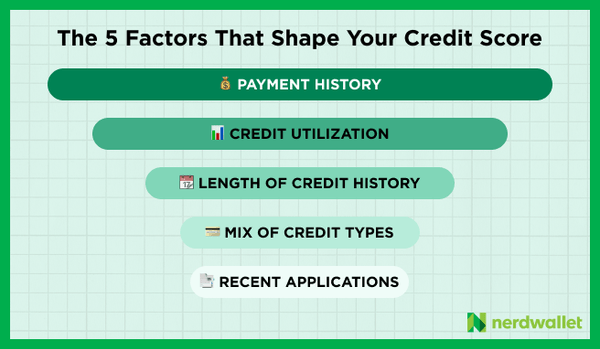
How opening a new credit card can hurt your credit
It can lead to higher balances
Your score can drop if you use too much of your newly available credit. This causes your credit utilization to spike. Experts recommend going no higher than 30% on any card, and lower is better.
It may lower the average age of your accounts
Getting a new card can also negatively impact your score if you have a limited credit history. Because a big part of your credit score is how long you’ve had credit, a new account lowers your average account age, which can cause a drop to your score.
Length of credit history makes up 15% of your FICO score. VantageScore weights “depth of credit” more heavily — 21% — making it the second most important factor in your VantageScore 3.0 calculation.