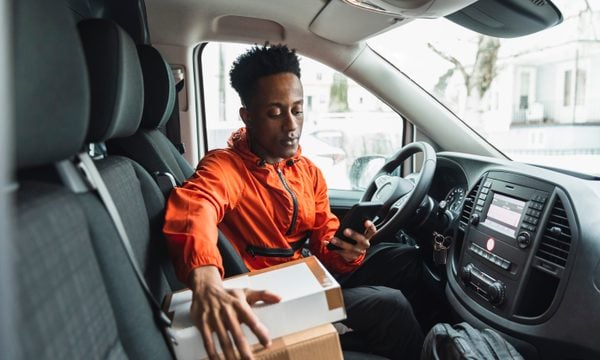
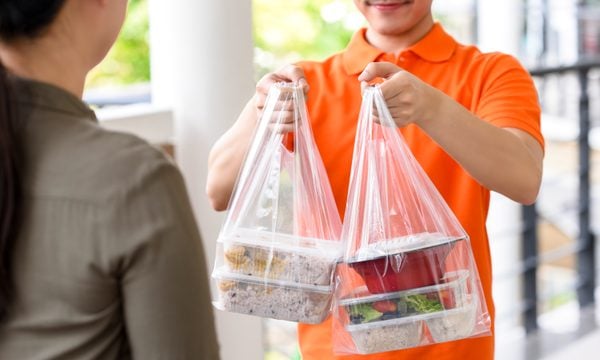
Instacart shoppers make money by buying groceries at local stores the company has partnered with and delivering those items directly to customers.
Gig working shoppers earn by accepting and executing a “batch” (the company’s term for a unit of work), where you'll pick, pay for, load and deliver an order of groceries.
The average pay for Instacart shoppers is about $18 per hour nationwide, according to ZipRecruiter. But pay depends on several factors, like order size, trip distance and time of day.
» The real deal: We tried Instacart shopping, this is what happened.
About Instacart
Instacart is a national grocery delivery service that partners with local stores. The service relies on independent contractors and part-time workers to shop for and transport orders.
The hours are flexible and orders arrive through the Instacart Shopper app. Key details, like job responsibilities and the way you earn money, will depend on whether you’re a full-service or in-store shopper.
Full-service shoppers: Shop (or pick up) and deliver when you want
Can shop for and deliver groceries (car needed).
Are independent 1099 contractors (you handle taxes).
Are able to work when they want.
Can earn tips on top of pay.
Option is available wherever Instacart operates.
In-store shoppers: Shop on an assigned shift
Do in-store shopping only (no delivery, so a car isn't required).
Are part-time employees of Instacart (the company handles taxes).
Work shifts up to 29 hours per week.
Option is available in many areas (but not all) to help meet increased demand.
For full-service shoppers, Instacart is like Uber for groceries. The Shopper app makes it seamless to set your availability, pick up gigs, track earnings, and communicate with customers.
The money moves that matter, delivered free to your inbox
We filter the financial headlines down to what actually affects your money. Practical, no-fluff advice from the NerdWallet team, free to your inbox, twice a week.
Where can you work for Instacart?
Instacart operates in cities across all 50 states. To see whether there are full-service or in-store shopper openings in your area, download the Shopper app and enter your ZIP code.
How much do full-service shoppers make?
While in-store shoppers earn a fixed, hourly wage, full-service shoppers earn by the order with varying amounts.
The Instacart app shows an estimate of potential earnings for every order. Just how much you'll make per batch depends on "the size of the order, driving distance, and effort involved in shopping and delivering," according to the company.
Earning potential is higher when customer demand spikes, so working on Sundays and during popular events, like the Super Bowl, can mean more money. You can earn tips on top of batch pay as a full-service shopper.
You can also earn extra pay for longer-distance shops, and on batches where "heavy pay" is designated, meaning multiple heavy items in the batch total 50 lbs or more.
(See below for ideas on how to worker smarter, not harder, at this gig.)

» Another option: How to make money with DoorDash
The money moves that matter, delivered free to your inbox
We filter the financial headlines down to what actually affects your money. Practical, no-fluff advice from the NerdWallet team, free to your inbox, twice a week.What you need to work for Instacart
There are a handful of basic requirements you have to meet if you want to make money with Instacart:
Be at least 18 years old. If you want to deliver alcohol, which can result in larger tips, you have to be at least 21 in some states.
Be able to lift 40-plus pounds.
Have a smartphone. An iPhone or Android device capable of running recent software.
Pass a background check. Sterling, a third-party company that performs background checks for Instacart, says most shoppers are cleared within one business day but can vary based on record availability.
Have a bank account. Paychecks come via direct deposit, so you'll need a checking account to collect your earnings.
Full-service shoppers also must have the following:
A valid driver’s license and access to a car. You also need insurance coverage that meets state requirements.
A set of insulated bags. Instacart recommends using insulated bags or hard coolers to keep food cold (or warm) while on the move.
Drivers are on their own for gas, which has gone down recently, but is still expensive. Over on Reddit, some posters say driving for Instacart is decent if you're looking for a temporary side hustle, but the extra cash might not be worth the wear and tear on your car. (People post anonymously, so we cannot confirm their individual experiences or circumstances.)
How to sign up for Instacart
Getting started on Instacart is a simple process:
Create an account and download the Shopper app. You’ll provide basic information, like your name and location, and give the company permission to perform the background check.
Fill out the paperwork. As a full-service shopper, you’ll sign a contractor agreement and W-9 tax form. As an in-store shopper, you become an Instacart employee, and will sign an offer letter and W-4 tax form.
Register your Instacart payment card. Instacart gives you a preloaded payment card to check out with customer orders. New shoppers can expect to receive their card within five to seven business days.
How to work for Instacart
You’ll be assigned shifts each week based on personal availability as an in-store shopper, and can expect to work up to 29 hours per week.
As a full-service shopper, you're free to make your own schedule. Look for orders up for grabs in the app or set your app to notify you whenever an order is available in your area. Factors such as your average customer star rating and delivery time can influence which orders you see. You can review the details — store location, number of items and estimated payment — and accept the order.
In either role, you’ll be required to update your progress as you shop, noting any changes or refunded items, through the Shopper app so customers can track their orders. When your cart is complete, check out with the preloaded payment card provided by Instacart. If you’re a full-service shopper, you’ll deliver the order to the customer.
How do Instacart shoppers get paid?
Instacart issues paychecks weekly via direct deposit.
Instant Cashout, a feature you can use as a full-service shopper, allows for an immediate payday for a fee of $0.50 as long as you have at least $5 in earnings.
Keep in mind: Since you’re acting as an independent contractor, Instacart won’t withhold taxes, and you may need to make estimated quarterly payments.
» Thank you, next? For other side hustle ideas, read our guide on how to make money
The money moves that matter, delivered free to your inbox
We filter the financial headlines down to what actually affects your money. Practical, no-fluff advice from the NerdWallet team, free to your inbox, twice a week.Article sources
- 1.ZipRecruiter. Instacart Shopper Salary. Accessed Jul 2, 2026.
- 2.Reddit. Doordash, uber eats, instacart good side hustle?.